
New Zealand is about to undertake a conservation operation on a scale rarely seen before: three large islands will be subjected to an ambitious plan to eliminate invasive species and return space to some of the most unique species on the planet. The goal is to recover damaged ecosystems and create new refuges for animals like the kākāpō, in addition to protecting flora and fauna that do not exist anywhere else on Earth. How far will this enormous intervention go to recover nature?
The project does not only seek to eliminate introduced animals, but also to recover the balance of ecosystems that evolved for thousands of years without these predators. If completed successfully, it could open the door to the recovery of species that today survive in some of the country’s last safe havens.
Three islands and one enormous goal: eliminate invasive species
New Zealand wants to take its strategy against invasive species to an unprecedented scale. The plan focuses on three large territories such as Maukahuka (Auckland Island), Rakiura (Stewart Island) and the Chatham Islands, where the aim is to eliminate different introduced species and recover ecosystems that have suffered for decades from pressure from predators and herbivores.
The magnitude of the project represents a significant leap compared to previous campaigns. New Zealand has already managed to complete more than 110 pest eradication operations on islands, but the new objectives have an area much larger than that of Campbell Island, the largest island in the country where this type of species has been eliminated until now.
In each territory, measures adapted to the species present will be applied. On Maukahuka, a subantarctic island of about 46,000 hectares, the goal is to end populations of feral pigs, cats and mice, which have affected both fauna and vegetation. On Rakiura, the project involves the removal of rats, possums, feral cats and hedgehogs, while on the Chatham Islands work is underway to remove possums, cats and rats.
The kākāpō could find one of its greatest refuges here
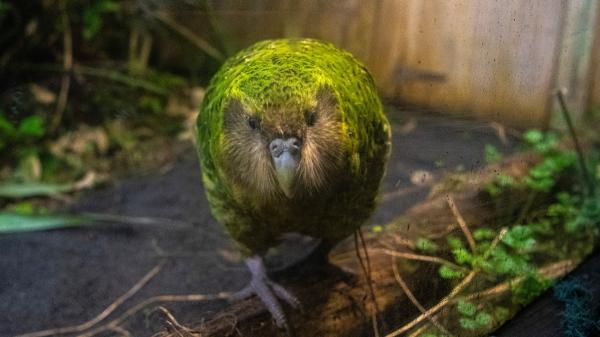
The kākāpō evolved for millions of years in a territory practically free of predatory mammals. The arrival of invasive species such as rats, cats, and other introduced predatory animals radically changed that balance. These predators can attack their eggs and chicks, as well as compete for some of the resources the species depends on. For this reason, kākāpō conservation has been closely linked to the creation of predator-free islands.
Rakiura, also known as Stewart Island, could play an especially important role in this process. The intention is that once the pressure from invasive species is reduced or eliminated, the territory can become a new safe space for the kākāpō. The island also has communities and ecosystems that could benefit from large-scale restoration, so the project is not limited to favoring a single species.
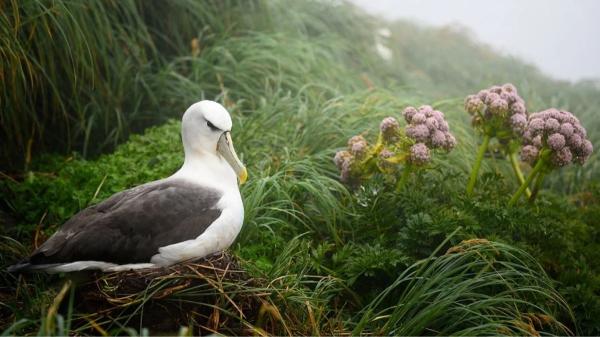
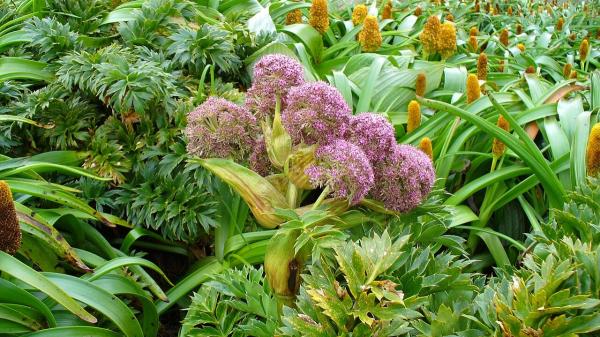
In Maukahuka the scene is different. Located in the subantarctic region of New Zealand, the island preserves a set of especially valuable ecosystems. The absence of invasive mammals would allow bird populations to recover and favor the expansion of native vegetation. Among the most striking images expected of an eventual recovery are extensive communities of subantarctic plants, some of them capable of reaching considerable heights.
The Chatham Islands are also home to numerous endemic species. Reducing the presence of introduced predators could provide them with a more stable environment to reproduce and recover their populations.
The enormous challenge of acting on three islands on a scale never seen before
The main difficulty of the project is not only in locating and eliminating invasive species, but in doing so on territories of an area and conditions very different from those of the islands where New Zealand has already carried out similar campaigns. The country has extensive experience in pest eradication and has completed more than 110 operations of this type, but the three new initiatives represent a considerable leap in scale. The islands involved have between four and fifteen times the surface area of Campbell Island, the largest New Zealand island where this type of species has so far been eliminated.
Added to the difficulty of working on large surfaces is the isolation, rugged terrain and weather conditions of some of these territories. In addition, Rakiura and the Chatham Islands are inhabited by people, so actions will have to be developed with local communities in mind as well.
The cost also reflects the magnitude of the challenge. The three projects have been jointly valued at approximately NZ$202 million. The Government has already committed 54 million and another 11.5 million had been obtained through donations, while international collaboration seeks to raise the remaining approximately 137 million. The funding is channeled into the Island-Ocean Connection Challenge, an international initiative that aims to restore at least 40 globally important island and ocean ecosystems by 2030.
The kākāpō will not be the only ones to benefit: these species could also recover
The elimination of introduced predators could benefit a wide range of native species, many of them exclusive to New Zealand and some that have disappeared from the islands where they originally lived. Apart from the kākāpō, in Rakiura the tokoeka kiwi, the kākā, the kererū, the kakariki, the mohua, the tītipounamu, and different species of bats could also recover ground.
On Maukahuka the benefit could extend especially to seabirds and subantarctic vegetation. The island is home to more than 500 species of native plants and animals, more than a hundred of which are found nowhere else. Among its main values are the colonies of seabirds and four species of albatrosses.
Finally, the Chatham Islands are home to species such as the Chatham petrel or tāiko, the Chatham albatross and the Chatham black robin, as well as numerous plants and invertebrates that do not occur naturally anywhere else. The restoration aims to especially benefit seabirds and recover an ecosystem in which these species once again play a fundamental role.
If you want to read more articles similar to New Zealand prepares a massive operation on three islands to eliminate invasive species and recover the kākāpō, we recommend that you enter our Biodiversity category.
