
Thousands of Christmas trees ended up buried by the sea, but it was neither a mistake nor a way to get rid of them. Their mission was much more surprising: to trap the sand that the wind carried and help rebuild a coast that the sea had been eroding for years.
What began as a simple solution to reuse discarded trees ended up becoming a natural barrier capable of recovering dunes and protecting the coastline. Decades later, the result demonstrates how something destined to end up in the trash can become an unexpected ally against coastal erosion.
And it’s not just a story of the past: similar projects are still being used today to restore dunes and reinforce some of the most vulnerable coastlines.
The problem that led to thousands of Christmas trees being buried by the sea
Although it may seem like an unusual practice, the goal is not to dispose of spruce trees in the sea, but rather to reuse them as an environmental restoration tool. Since the 1990s, states such as Louisiana and Alabama have developed a program that collects natural Christmas trees once the holidays are over to use them in the recovery of wetlands and coastal areas affected by erosion.
After being collected, the trees are transported to areas where the sea is gaining ground and are grouped together forming barriers. Its branches reduce the force of the currents and help retain sediments, favoring the progressive recovery of the land and the growth of vegetation.
In addition, the system reduces the number of natural trees that end up in landfills after Christmas.
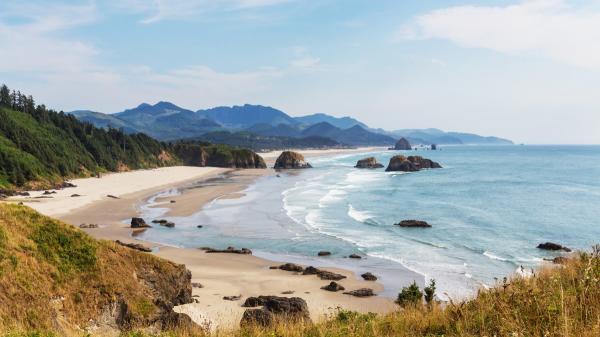
Trees act as a barrier: this is how they recover the land that the sea carries away
Tree branches act as a natural barrier that reduces the force of the water. When currents and waves pass through these structures, their speed slows and the sediments they carry, such as sand and mud, are deposited between the branches instead of continuing out to sea. In this way, the land begins to progressively recover height.
Over the years, this accumulation of sediment creates the necessary conditions for plants typical of wetlands and marshes to grow again. Vegetation helps anchor the soil with its roots, stabilizes the terrain and offers additional protection against erosion caused by tides and storms. The result is a gradual recovery process in which trees serve as temporary support until the ecosystem can sustain itself.
This recovery is especially important because wetlands and coastal areas act as a natural barrier against tides, storms and erosion. In addition to helping to protect the land from the advance of the sea, these dune ecosystems are home to numerous species and play a fundamental role in the conservation of coastal biodiversity.
Not just any Christmas tree will do: these are the ones you can use
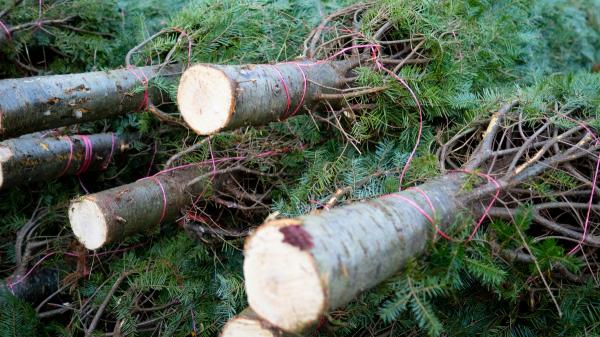
Not all Christmas trees are suitable for this type of initiative. Coastal restoration programs accept only natural trees, since their trunks and branches decompose gradually without generating waste that is harmful to the marine environment. Before being used, they must be completely clean and free of any decorative elements.
Before using them, lights, balls, tinsel, hooks, artificial snow and any other decorative elements must be removed. Trees made of plastic or other synthetic materials are also not allowed.
Once checked, the trees are moved to coastal areas where they are used to build natural barriers. Thus, an item destined for the landfill acquires a second life.
30 years later, nature had recovered much of the land
More than three decades after this coastal restoration program began, its effects can already be observed in different areas of the Gulf of Mexico. The placement of thousands of Christmas trees has allowed sediment to be retained continuously, favoring the recovery of land that had been eroded for years by waves, tides and rising sea levels.
As these sediments have accumulated, characteristic wetland vegetation has recolonized many of the restored areas. This process has strengthened the stability of the land and created new habitats for fish, birds and other species that depend on these coastal ecosystems for food or reproduction.
However, these types of solutions cannot be applied in the same way on any coast. Its effectiveness depends on factors such as wave strength, currents, sediment availability and terrain characteristics. Furthermore, the placement of trees must be properly planned to prevent storms from displacing them and causing problems in other areas of the coast.
Those responsible for the program emphasize that trees, by themselves, do not solve the problem of coastal erosion, but they do represent an effective tool within a broader restoration strategy. In addition to protecting certain areas from the advance of the sea, the initiative demonstrates that the reuse of natural materials can provide long-term environmental benefits when combined with other wetland conservation and management measures.
An idea from 30 years ago that is still used to protect the coast
What happened with those Christmas trees did not remain an experiment from the past. Decades later, the reuse of trees and plant remains continues to be used in some restoration projects for dunes and coastal areas. The branches can act as a barrier that reduces wind speed and helps retain sand, gradually favoring the formation of new dunes.
The technique does not serve the same way for any coastline nor does it replace other restoration measures. Its effectiveness depends on the characteristics of each beach, the availability of sand and the wave and wind conditions. For this reason, it is currently proposed as one more tool within strategies aimed at recovering and reinforcing the natural barriers that protect the coast against erosion.
If you want to read more articles similar to Thousands of Christmas trees were thrown into the ocean to stop the advance of the sea and 30 years later they managed to recover the coast, we recommend that you enter our Ecosystems category.
