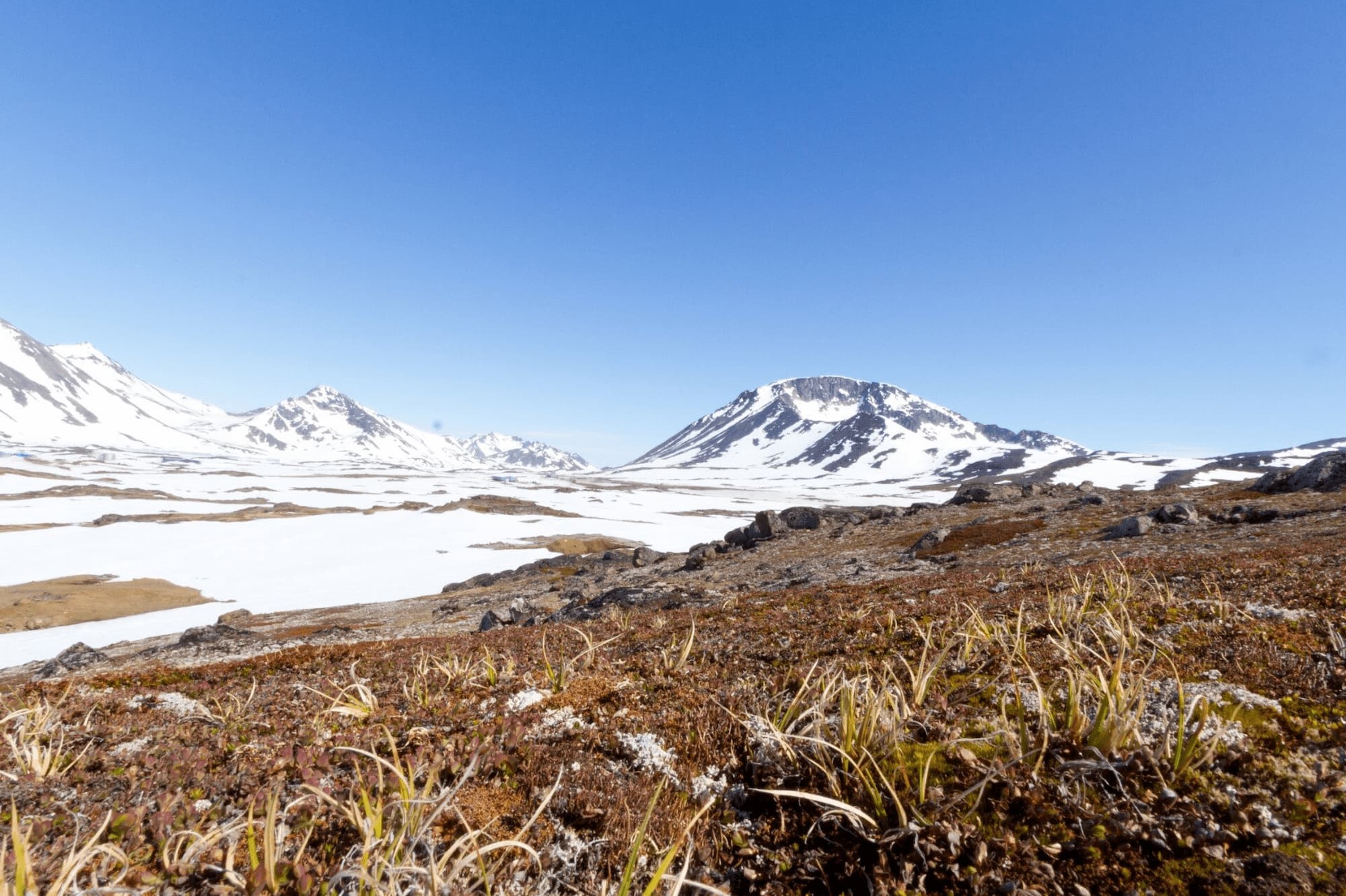
Analyzing samples in the 1960s at a secret US military base, a study revealed that 416,000 years ago summers in Greenland were 4.7°C warmer than today (but this should not reassure us).
416 thousand years ago, where today there is an ice field, the summers were warmer than today. This was revealed by ancient sediments extracted from the Greenland subsoil in the 1960s, at the center of a new study by the University of Buffalo. The site of a former US military base in Greenland was ice-free at a time when summers were a few degrees higher than today, research suggests. The location is Camp Century, where the US Army was carrying out a secret Cold War plan: hiding nuclear missiles under the ice.
The researchers determined that, during that ice-free period, summer temperatures were 4.7 degrees Celsius higher than in modern summers. For the site to remain uncovered, the Greenland ice sheet would have had to retreat more than 97 kilometers from its current edge in that region. “It is surprising that a period of moderately warmer temperatures coincided with such a large retreat of the ice sheet,” notes John Michael Aguilar, first author of the study and a postdoctoral researcher at the UB RENEW Institute.

Projections for the future of the Arctic
The results, published on September 28 in the journal Climate of thAnd Pastcome as scientists predict substantial warming across the Arctic in the coming decades. According to the Intergovernmental Panel on Climate Change (IPCC), average annual temperatures in the region could rise by 3.3 to 10 degrees Celsius by the end of the century, depending on emissions.
“This study allows us to better understand how the ice sheet reacts to prolonged warming and what could happen in the future,” underlines the lead author, Elizabeth Thomas, associate professor in the Department of Earth Sciences of the university’s College of Arts and Sciences.
To get there they analyzed the fat molecules produced by bacteria and stored in the sediments. “The types and proportions of these molecules change depending on the temperature,” explains Aguilar. “By comparing them with similar molecules found in modern Arctic lakes, we were able to estimate the temperature at Camp Century.”
The molecules that tell the story of summers
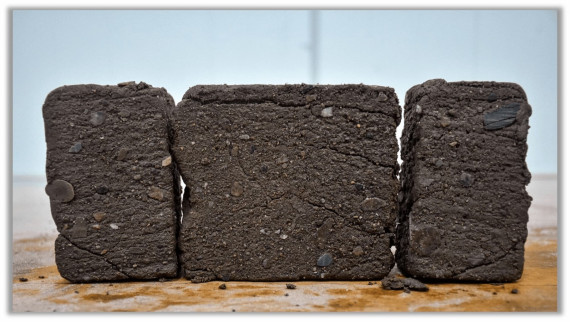
The sediments were recovered about 1.5 kilometers below the ice cap during the failed Iceworm Project. In addition to the data obtained above, the research is however only the first to use the ice from those cores for in-depth studies.
The researchers believe this is the first quantitative estimate of Earth’s summer temperatures in Greenland during that ancient warm phase, a figure that is difficult to obtain because the subsequent advance of the ice sheets has eroded much of the sediments of that era.
The duration of the heat also matters
The results surprised the researchers themselves. Between 5,000 and 10,000 years ago, after the last ice age, Greenland had experienced equally hot summers, yet Camp Century remained completely covered in ice. This suggests a fairly obvious point, that the duration of warming may be as important as the extent to which temperatures rise: longer warming gives ice more time to melt. The warm conditions of 416,000 years ago may have lasted much longer, potentially tens of thousands of years.
Thomas warns, however, that the study should not be read in a reassuring way. “The current human-caused warming is more intense than the warm period 400,000 years ago,” he says. «And climate projections suggest that this situation could persist for hundreds or thousands of years. Both the magnitude and duration of warming are important for understanding how the ice sheet will react.”
The long journey of champions
Also featured in an Emmy Award-winning documentary, these sediments have a long history with the University at Buffalo. They were first brought to the university in 1975 by Chester Langway, who had directed ice core drilling at Camp Century. They remained at the university’s Ice Core Conservation and Information Exchange Center until Langway’s retirement in the mid-1990s. For more than two decades they were then largely forgotten at the University of Copenhagen, Denmark, until a chance freezer cleaning brought them back to scientists’ attention in 2018. Thomas has been studying them together with collaborators at the University of Vermont ever since, and considers the new study the culmination of his and Aguilar’s work.
“The type of molecular analysis we conducted is something we do all the time in my lab, but interpreting the results was unusually complex,” he says. “We had to take into account how the altitude of the terrain changed as the ice sheet grew and melted, which affects the ability to compare temperatures over time. What might seem like a routine analysis took years to understand. It was a long and complex journey, not dissimilar to the journey that these sediment samples took to get here.”
