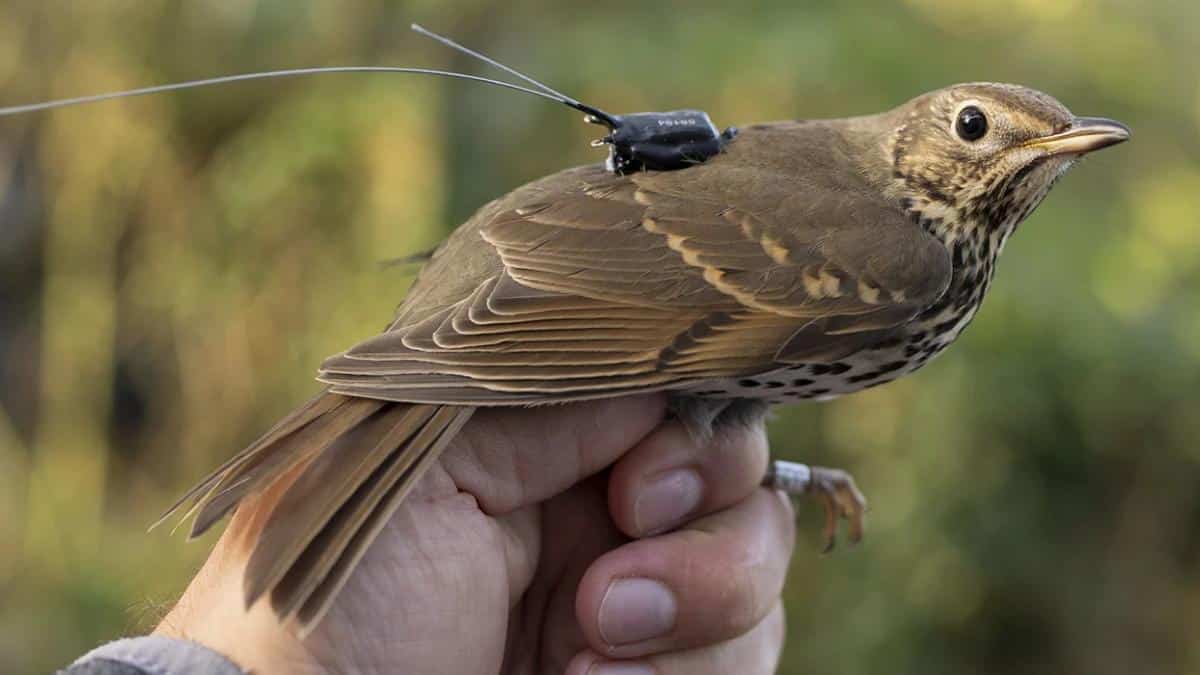
A small bird may be playing a much more important role than it seems in the expansion of forests and other plant formations. The common thrush (Turdus philomelos) is capable of transporting seeds during its migratory movements and dispersing them hundreds of kilometers from the plant from which they come.
An international study led by the University of Cádiz (UCA) has calculated for the first time how far these seeds can travel during migratory journeys. The results show that, depending on the plant species, some can reach a maximum estimated distance of 521 kilometers.
The thrush can carry seeds much further during its migration
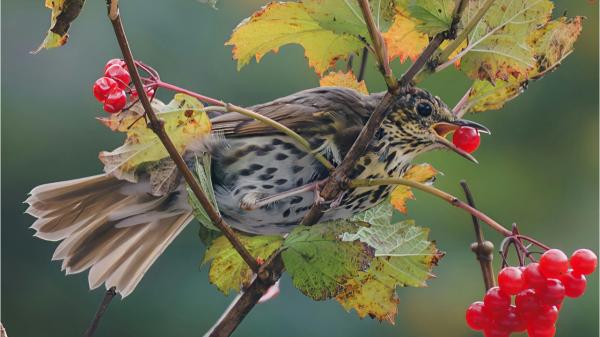
The song thrush is a bird that feeds, among other resources, on fleshy fruits. When consumed, you mainly use the pulp, while the seeds continue their journey through the digestive system until they are later expelled through feces or regurgitation.
In this way, the plant achieves a natural mechanism to transport its seeds far from where it grew. What is striking is that the distance can multiply during migration.
According to the study, the average dispersal distances calculated for the different plants analyzed ranged between 9 and 45 kilometers during migratory flights. In the most extreme cases, the maximum estimated distance reached 521 kilometers.
The difference with the movements that these birds make outside of migration is enormous: for these non-migratory movements, 99.9% of the calculated dispersal distances were within a radius of one kilometer.
Scientists followed thrushes with GPS devices
To find out how far the seeds can travel, the researchers didn’t just observe the birds’ movements. Between 2019 and 2023, they marked 55 song thrushes with GPS devices in different parts of Europe.
Tracking with GPS devices made it possible to know when their migratory flights began and how far they could travel. The work also incorporated data on flight speed, the moment in which the birds ingested the fruits and the time that the seeds remained in their digestive system.
Part of the experiments for the UCA study on seed retention was carried out at the Zoobotánico de Jerez, in Cádiz. By combining all this information with mathematical models, scientists were able to estimate where in the journey a seed might end up after being ingested by a thrush.
The researchers carried out monitoring campaigns in the Cádiz countryside to study spring migration towards the north and in various points in northern Europe to analyze autumn movements towards the south.
Small seeds can travel further
Not all plants have the same possibilities of taking advantage of this transport system. One of the keys is the size of its seeds.
Smaller seeds can remain in the birds’ digestive system for longer. This increases the chances that the thrush will undertake a migratory flight before expelling them and, therefore, that they will end up much further away from the mother plant.
The study found very clear differences between species. In the case of yew, for example, only a very small fraction of the seeds would have the possibility of exceeding 50 kilometers. On the other hand, strawberry tree seeds, which are smaller, have a much greater dispersal potential: for 0.1% of the seeds, the estimated distance exceeds 138 kilometers.
This means that migration does not act as simple random transport. The characteristics of each plant and its seeds determine how far they can go.
A journey that can help plants colonize new places
The ecological importance of this behavior goes far beyond the thrush itself. By moving seeds between distant regions, migratory birds can help certain plants colonize new territories and maintain genetic exchange between separate populations.
This mechanism may also acquire special importance in the face of climate change. If environmental conditions change and some plant species need to move to areas with more suitable temperatures, the ability of migratory birds to transport seeds over long distances can favor this redistribution.
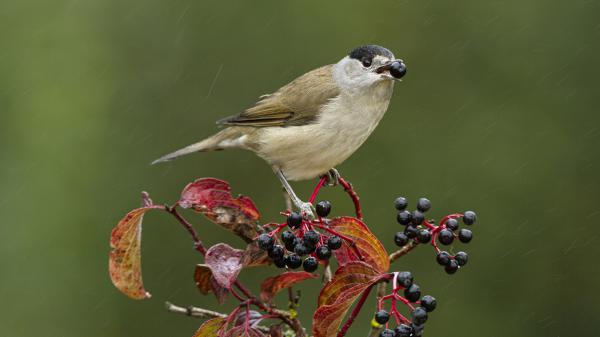
The study, published in Proceedings of the Royal Society B in 2025, points out that the migration of fruit-eating birds can generate numerous dispersal events over 100 kilometers each year. The work focused on the song thrush, but reveals a process that can also occur in other birds that consume fruits, such as blackbirds, robins, warblers, redstarts and flycatchers.
Thus, each migration is also an opportunity for seeds that would otherwise fall near their mother plant to end up hundreds of kilometers away, connecting ecosystems and helping plants spread across Europe.
If you want to read more articles similar to The little thrush that can transport seeds more than 500 kilometers: this is how it helps plants expand, we recommend that you enter our Ecosystems category.
