The Seychelles are an earthly paradise, as anyone who has had the fortune of visiting them will confirm; and before the arrival of humans in the 15th century it was even better: a biodiversity hotspot in which the lack of large predators allowed many animal species to thrive.
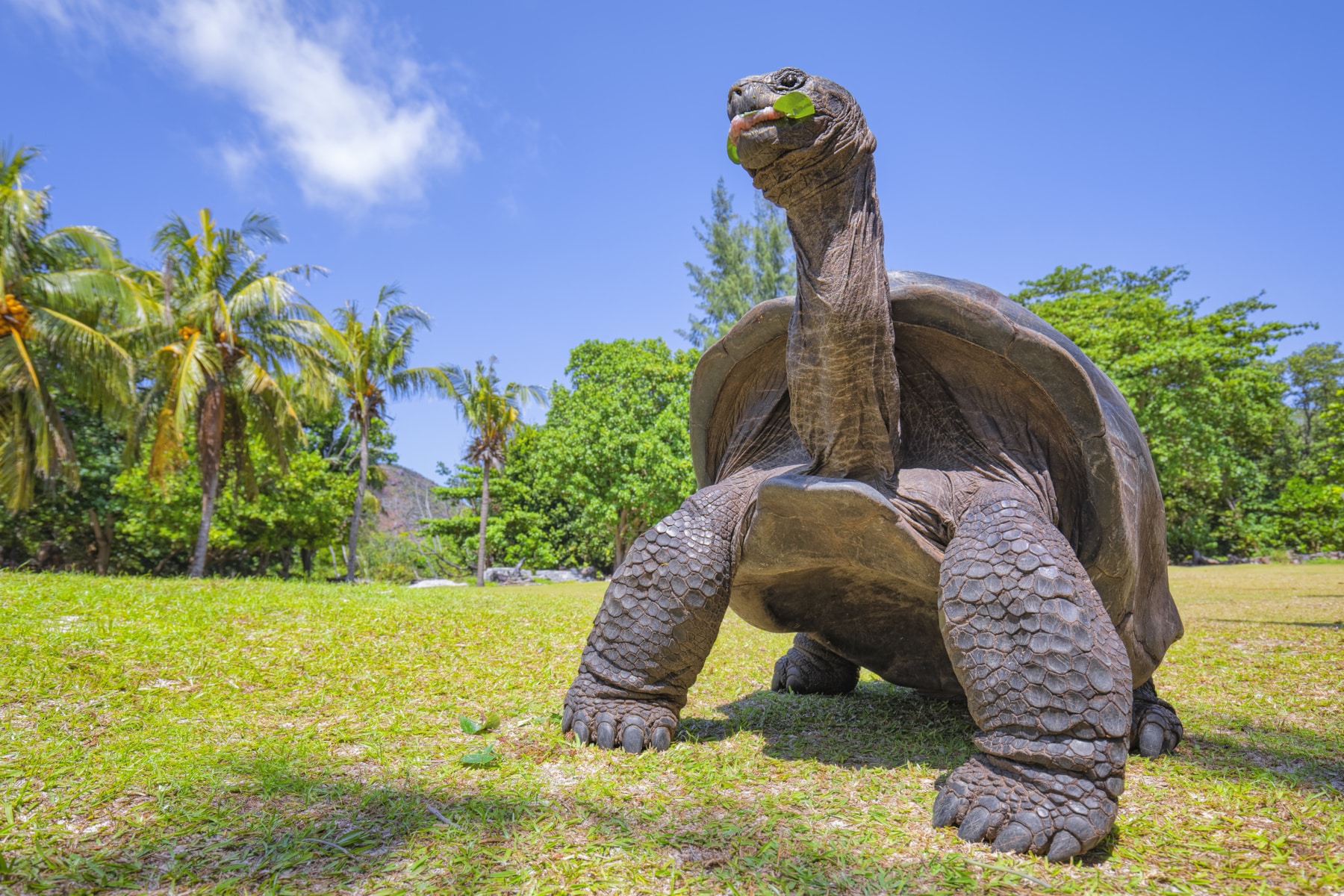
The most famous is probably the Aldabra giant tortoise, endemic to the atoll of the same name (the second largest in the archipelago): over one meter long, weighing 250 kg, it can live up to 200 years or more. Or at least it could, until the arrival of the first Europeans, who almost brought it to extinction. Now, after decades of protection and conservation, the giant tortoise is back: according to a new study published in Ecology and Evolutionthe population of Aldabra now numbers around 180,000 specimens, a figure that leads it to surpass even the humans living in the Seychelles.
Almost extinct…
We do not know how numerous the Aldabra giant tortoise was when Europeans first arrived in the Seychelles in the 15th century. However, we know that the atoll became a sort of obligatory stop for sailors and pirates: it offered an enormous quantity of food that humans could obtain without much effort, given that these turtles are slow and not particularly aggressive. Specimen by specimen, European explorers brought Aldabra’s population down to fewer than 1,000 by the end of the 19th century.
Since then, the race for its conservation began, which reached its peak in the 1980s, when the giant tortoise was placed under the protection of the Seychelles Islands Foundation; then in 1982, the entire atoll became a UNESCO heritage site, and therefore untouchable.
This does not mean that it is easy to monitor the health of the species: many parts of the atoll are difficult to reach, and we had to wait until we had the right technology to have a complete census (the previous one even dated back to the 1990s).
…more numerous than humans
The study just published, a collaboration between the University of Exeter and the Seychelles Islands Foundation, cross-referenced satellite data, field observations and other monitoring techniques to finally obtain a number: 180,000 specimens, a record growth that leads the giant tortoise to officially be more numerous even than humans (the inhabitants of the Seychelles are around 135,000).
It’s not over yet
This doesn’t mean the Aldabra giant tortoise is out of danger. Climate change threatens the atoll, which risks being submerged by rising sea levels, and the islands of Aldabra are populated by rats and wild cats, brought by humans and who (also) feed on turtle eggs.
As the authors of the study explain, 180,000 specimens is not the end of the work, but an excellent basis from which to continue protecting these reptiles.
