We don’t notice it because we have a relatively weak sense of smell, but our body odor says a lot about our state – and animals know it. This year we told you for example how horses smell our fear, and obviously dogs are specialists in the field. And the study published on is talking about dogs Animal Cognition which we tell you about here.
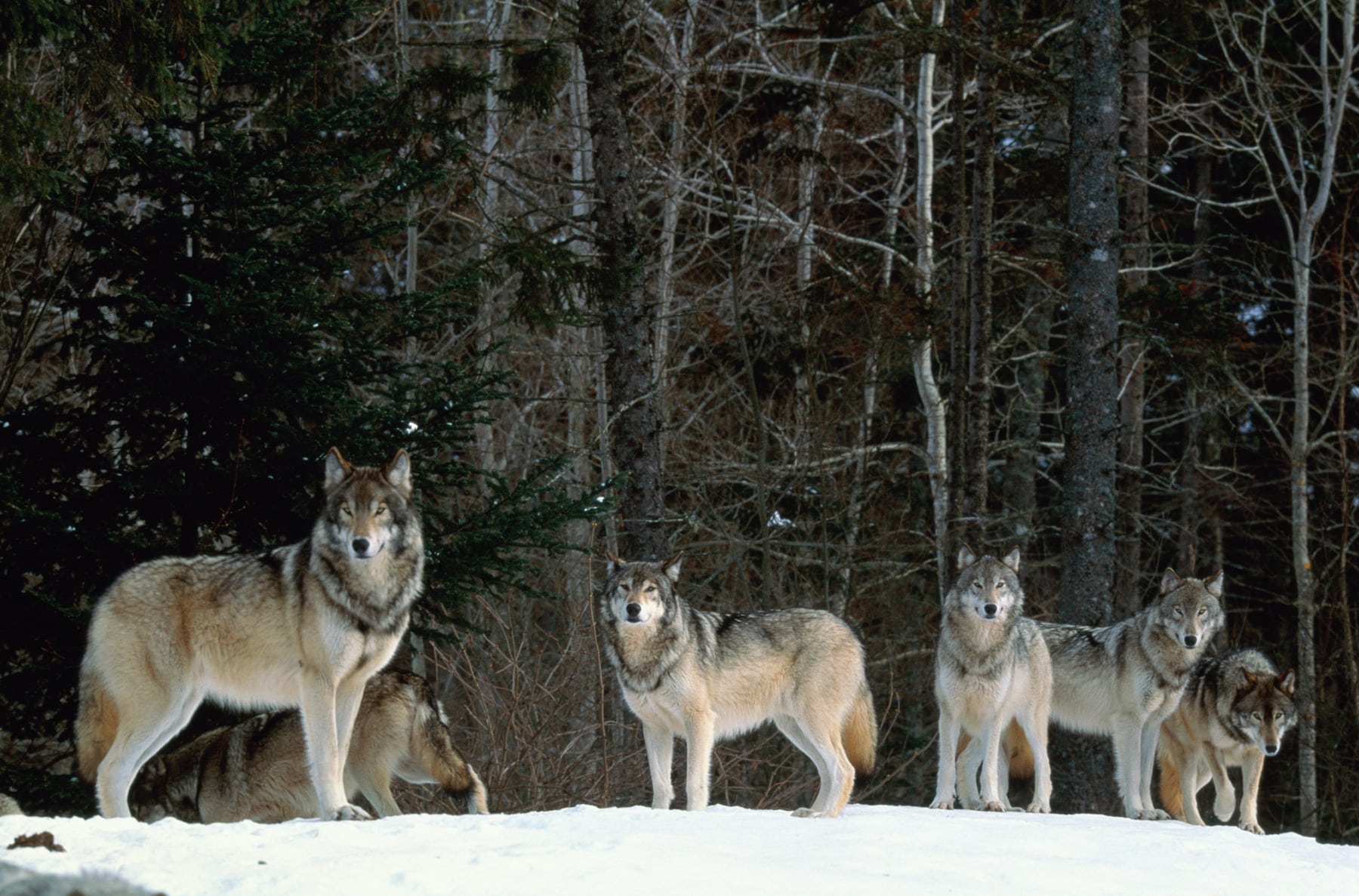
Of dogs, but not only: the team from the Konrad Lorenz Institute of Ethology that conducted it tested the ability of wolves to smell and recognize our fear, discovering that it could have deep evolutionary roots and not be, for dogs, just the result of millennia of domestication.
Good sweat and bad sweat
The experiment involved 10 women, who were shown two videos of approximately twenty minutes: the first was a particularly relaxing nature documentary, the second a collection of scenes from horror films.
After both viewings, the researchers collected sweat samples, which were then used to test the reaction of 11 dogs and 8 wolves, none of which had ever interacted with humans before.
Both dogs and wolves reacted exactly the same. They showed no particular preferences when it came to choosing which odor to smell: whether it was “good” sweat or caused by fear, they still approached the samples to “sniff”.
Faced with the “horror” sweat, however, both dogs and wolves had the same reaction: moving away from the sweat after a few sniffs, and looking towards the humans. Not the students who had donated their sweat, but their trainers.
Smells as a universal language
And here lies the real limitation of the study: both the dogs and the wolves tested were domestic, or at least raised in captivity. We therefore do not know whether wild wolves would react in the same way to the smell of fear.
This doesn’t mean that the experiment doesn’t still tell us something interesting: if the hypothesis that dogs have learned to identify our odors following millennia of domestication were true, the wolves in the experiment, although accustomed to humans, would still have had to react differently from their domesticated counterparts.
Instead, both dogs and wolves, although accustomed to humans, reacted in the same way: they identified the smell of fear and stayed away from it, probably because they read it as an indicator of a situation to avoid.
According to the authors, these results tell us that the ability to respond to our chemical signals has very deep evolutionary roots, which pre-date the moment in which we domesticated wolves into dogs. Or more simply, smell is a universal language.
