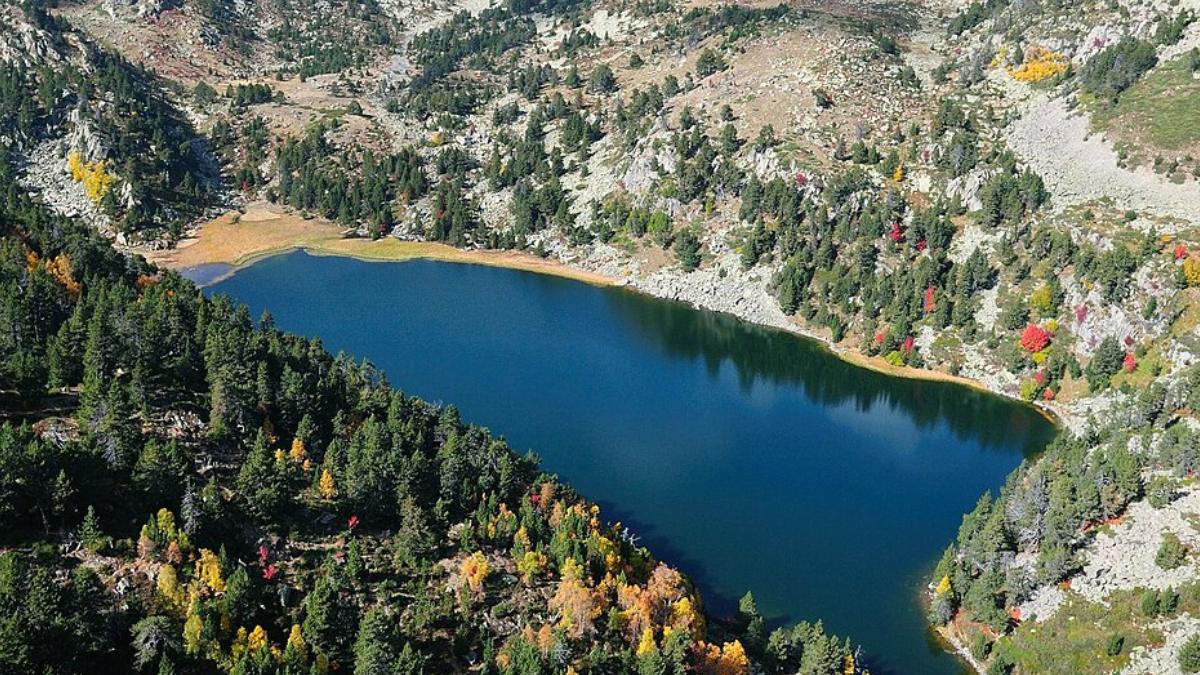
For years, two high mountain lakes in the Catalan Pyrenees were affected by the presence of a small fish, the minnow, which was not part of their natural ecosystem. In September 2025, action was launched to eliminate it and recover the ecological balance of these spaces.
Ten months later, the first results have surprised by the speed of the response: the water has recovered a good part of its transparency and amphibians and invertebrates that had not been observed since the first monitoring programs began in 2014 have been detected again.
Two lakes in the Pyrenees once again show signs of recovery
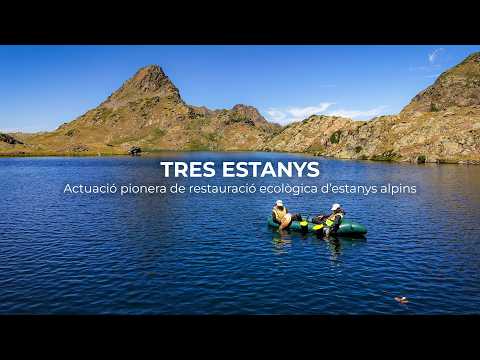
The performance took place in the lakes of Tres Estanys del Mig and Tres Estanys de Baix, located in the Alt Pirineu Natural Park, in Pallars Sobirà. The goal was to completely eliminate the minnow (Phoxinus spp.), a fish introduced to these high mountain environments.
Sampling carried out ten months after the intervention confirms that the fish has disappeared from the two lakes. At the same time, researchers have observed a notable recovery in water transparency and biodiversity.
One of the most striking results is the return of amphibians and aquatic invertebrates that had not been detected since the beginning of the first monitoring in 2014.
It is not yet a question of ending the recovery. Those responsible for the project maintain scientific monitoring to check how biological communities evolve over the coming years.
The small fish that was disturbing the balance of the ecosystem
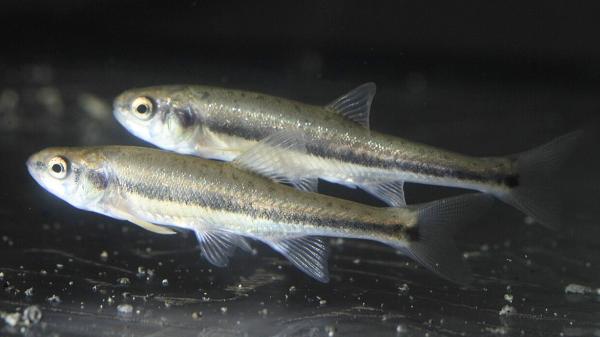
The minnow is a small fish that has established itself in numerous lakes in the Pyrenees after its accidental introduction as live bait used in recreational trout fishing. In these high mountain lakes, their presence can have important consequences on the fauna that lives in the water.
The problem is not limited to the fish competing with other species. The minnow can feed on aquatic organisms and prey on amphibian eggs, in addition to altering the relationships between different levels of the food web.
Scientific research previously carried out in Pyrenean lakes had already shown that the removal of introduced fish can allow the natural recovery of amphibian communities. In a study published in Biological Conservationresearchers observed that lakes in which non-native fish had been removed quickly recovered their amphibian community, without the need to reintroduce them.
The effects also reach invertebrates. Another study on 54 high mountain lakes in the Pyrenees concluded that minnow density was the variable that most negatively explained the structure of coastal macroinvertebrate communities.
The solution was to use a biodegradable ichthyocide
To achieve the eradication of minnow in Tres Estanys, rotenone, a biodegradable ichthyocide, was used within the European project LIFE RESQUE ALPYR.
It was not the first experience of this type in the Pyrenees. In 2024, a pilot action was carried out in Lake Manhèra, in the Val d’Aran, also with the aim of eliminating the minnow and restoring the ecosystem. The good results of that experience allowed the methodology to be tested in a larger and more complex system.
In Tres Estanys, furthermore, the challenge was especially important because they are interconnected lakes. Before resorting to rotenone, mechanical methods such as nets, traps and electrofishing had already been used to control minnow in Tres Estanys del Mig. These actions kept its population under control, although they did not manage to eliminate it completely.
Subsequent monitoring has also made it possible to verify what happened to the product used. According to IDAEA-CSIC data, rotenone had a half-life of between 10 and 20 days and no remains were detected in the river located downstream of the treated lakes.
Amphibians returned without the need to reintroduce them
The recovery observed in these lakes is especially interesting because it has not been necessary to relocate the amphibians again to achieve their return.
When the pressure exerted by introduced fish disappears, native species can recolonize these environments from nearby populations. This is precisely what monitoring of other Pyrenean lakes affected by non-native fish had already shown: amphibian communities recovered their richness and abundance after reducing or eliminating these species.
In Tres Estanys del Mig, researchers also propose a possible explanation for the speed of recovery. The mechanical controls carried out over the years could have contributed to conserving a reservoir of species in the sediment, which would now be favoring the recolonization of the ecosystem.
A model to recover other high mountain lakes
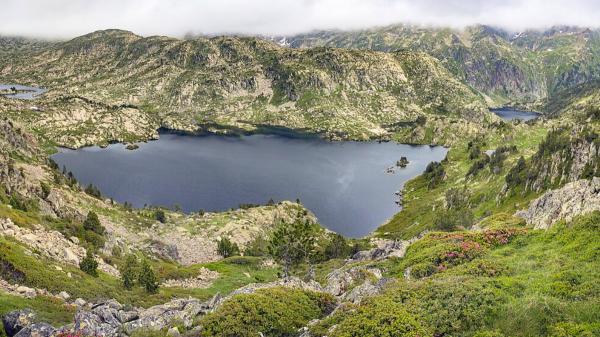
The objective of these actions goes beyond recovering two specific lakes. The results provide information to assess whether this methodology can be used in other high mountain ecosystems affected by the introduction of fish.
In fact, other conservation projects already contemplate the restoration of 10 high mountain lakes in the Pyrenees through the eradication of introduced fish, combining chemical and non-chemical methods and carrying out scientific monitoring of the recovery.
The two lakes of the Alt Pirineu are, therefore, an example of how the elimination of an introduced species can trigger a natural recovery of biodiversity. But the process is not over yet: researchers will continue monitoring these ecosystems to see if the first positive signs are consolidated in the long term.
If you want to read more articles similar to In 2025, an invasive fish was eliminated from two lakes in the Pyrenees: 10 months later, amphibians and invertebrates have returned, we recommend that you enter our Ecosystems category.
