
A small green bird measuring just about ten centimeters has become one of the most revealing examples of the risks that the introduction of species to control pests can entail. In 1929, the Japanese little spectacle (Zosterops japonicus), also known as mejirowas deliberately brought to Hawaii with the intention of reducing populations of insects harmful to agriculture.
The experiment, however, took a very different turn. The bird native to East Asia adapted extraordinarily well to the islands, expanding its distribution and even penetrating native forests. It is currently considered the most abundant land bird in Hawaii, according to official information from the state itself. Its success poses a problem: it shares food and feeding spaces with numerous native species, some of them already threatened.
The bird that Hawaii brought back in 1929 to combat insect pests
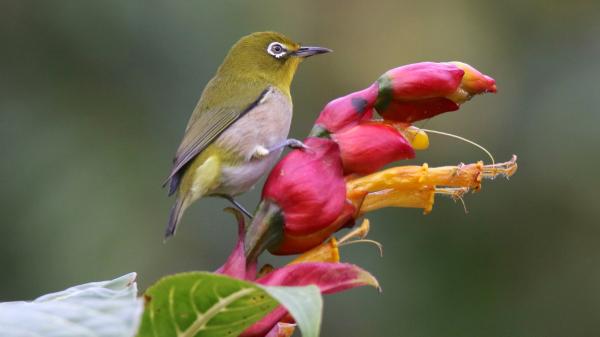
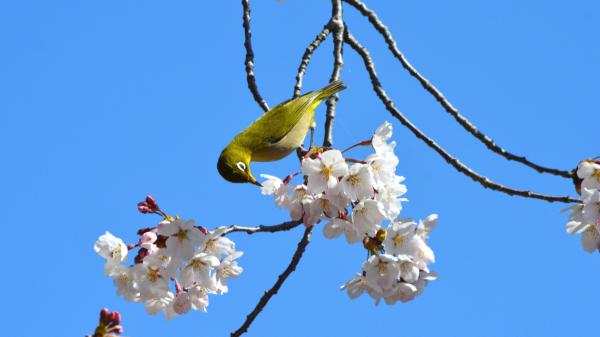
The Japanese whiteeye is easily recognizable by the ring of white feathers that surrounds its eyes and contrasts with the greenish plumage. Its natural distribution includes areas of eastern Asia and its diet is particularly flexible: it can consume insects, nectar and other plant resources. Precisely that diet was one of the reasons that motivated its introduction.
In 1929, the then Hawaii Board of Commissioners of Agriculture and Forestry introduced specimens to Oahu. The organization was interested in using insectivorous birds as a method of controlling harmful insects. Subsequently, new introductions occurred, some of them poorly documented, until approximately 1937.
The problem was that the mejiro It did not remain limited to agricultural fields nor did it concentrate its activity exclusively on the pests it was intended to combat. Its ability to take advantage of different foods and environments favored enormous expansion.
Over time it colonized the main Hawaiian islands and became a common presence even in forests where birds that do not exist anywhere else on the planet live.
How the Japanese whiteeye began to compete with native birds
The main threat is not necessarily direct attacks. The problem is much more discrete: competition for food.
A research published in Ecological Monographs examined relationships among 14 passerine species using 7,861 sampling points distributed across seven native forests in Hawaii, Maui, and Kauai. The scientists found evidence compatible with direct competition between the Japanese whiteeye and native species such as the ʻiʻiwi and the ʻelepaio.
The study also found that 62% of the correlations between the white eye and the native species considered potential main competitors were negative. This does not mean that the invader alone is responsible for the decline of all these birds, but it does point to its important role in interactions between introduced and native species.
Its advantage lies largely in its versatility. It can exploit different resources and feed in numerous sectors of the vegetation, overlapping its niche with that of several native species.
Native birds started to get smaller
One of the most striking evidence appeared in research published in 2009 in the scientific journal Current Biology.
Researchers studied birds from the Hakalau Forest National Wildlife Refuge on the island of Hawaii for years. The work documented that the Japanese whiteeye shared different food resources with eight native species. Starting in 2000, coinciding with a sharp increase in its population, scientists observed worrying changes.
The juvenile specimens of all the native species studied had shorter beaks and tarsi, while the majority also showed lower body mass compared to the previous period. In several species, lower mass was related to reduced juvenile survival.
In a nearby area where there were fewer Japanese bluebirds, however, the birds maintained normal sizes.
The most delicate case highlighted by that investigation was that of the ʻakepa of Hawaii (Loxops coccineus), threatened species whose studied population had been considered viable between 1987 and 1999, but became non-viable between 2000 and 2006, coinciding with the strong increase of the invader. The authors noted competition for food as a factor that required intensive management.
Hawaii’s birds already faced other threats
The problem must be understood within a much larger context. Hawaiian endemic birds face different pressures simultaneously, so their decline cannot be attributed exclusively to the Japanese whiteeye.
Habitat loss and transformation, introduced species and avian diseases are important threats. Some Hawaiian birds are especially vulnerable to avian malaria, while the Japanese blue-eye has a high resistance to this disease and to fowlpox.
Islands are particularly sensitive to biological invasions because many of their species evolved for thousands or millions of years isolated from competitors, predators and pathogens present on the continents.
Thus, Hawaii offers numerous historical examples of introductions that produced unforeseen effects. Before the Japanese white-eye, animals such as the mongoose and the common mynah had been introduced in the 19th century to combat different pests, with ecological consequences that subsequently generated concern.
Almost a century later, the Japanese eyeglass continues to spread throughout Hawaii
The case of the Japanese blackeye does not mean that all biological control is harmful. Currently, the release of organisms intended to combat pests is subject to much more rigorous evaluations than those carried out during those first experiences.
What happened in Hawaii shows, however, why such precautions are necessary. A species introduced to solve a specific problem can reproduce, spread outside its intended location, and establish ecological relationships that are impossible to fully anticipate.
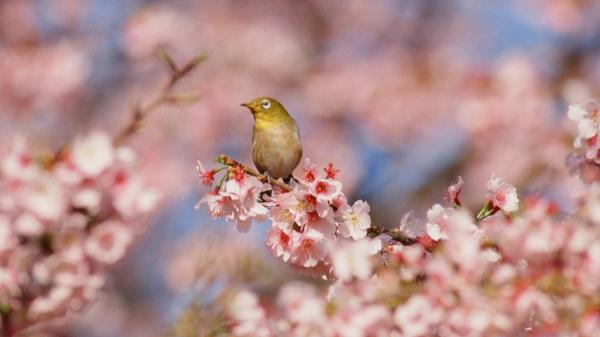
Almost a century after that liberation of 1929, the small mejiro It not only continues in Hawaii: it has become one of the most abundant birds in the archipelago. A solution designed to combat insects ended up adding new pressure on some of the most unique and vulnerable island ecosystems on the planet.
If you want to read more articles similar to In 1929, they took this small bird to Hawaii to combat pests: almost a century later it threatens native species, we recommend that you enter our Ecosystems category.
