The arrival of small mollusks from Eastern Europe triggered one of the most costly biological invasions of North America. In the late 1980s, ballast water discharged by commercial ships introduced zebra mussel larvae into the Great Lakes, a species that found favorable conditions to reproduce and spread rapidly.
Nearly four decades later, the United States continues to seek solutions to control its spread. The problem has worsened with the expansion of other invasive species and has led the federal government to promote a scientific contest with important financial prizes.
Ship ballast water introduced zebra mussels to the Great Lakes
The origin of this environmental crisis is documented by the United States Geological Survey (USGS). Research published in 1991 places the introduction of the zebra mussel (Dreissena polymorpha) probably in 1986, through the dumping of ballast water from an ocean-going ship.
The first specimens were identified in 1988 in Lake St. Clair, connected to the Great Lakes. From there, the species began to colonize other freshwater ecosystems.
Its extraordinary reproductive capacity explains a good part of the problem. A female can produce up to a million eggs a year and her microscopic larvae travel carried by currents.
Additionally, these mollusks adhere to rocks, boats, pipes and other surfaces, forming extremely dense colonies.
The result is an invasion that has transformed numerous aquatic ecosystems and whose complete eradication remains technically infeasible on a large scale.
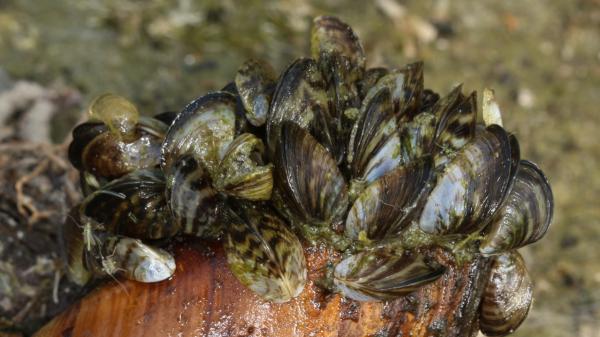
The invasive pest that leaves lakes more transparent, but threatens their biodiversity
One of the most surprising consequences of this invasion is that the affected lakes may have apparently cleaner waters.
Zebra and quagga mussels filter large amounts of water to feed on phytoplankton and other suspended particles. This process increases transparency, but disrupts food chains and reduces resources available to other organisms.
According to the Great Lakes Fisheries Commission, these species have profoundly modified food webs, reduced populations of essential organisms, and contributed to imbalances associated even with outbreaks of avian botulism.
The damage also affects infrastructure. The colonies block water pipes, industrial facilities and cooling systems of hydroelectric plants.
The Bureau of Reclamation estimates that zebra and quagga mussels together cause more than $1 billion annually in the United States in damage and control costs.
Furthermore, the threat continues to grow. In 2024, the golden mussel was detected in California (Limnoperna fortunei), another invasive species that is of particular concern to hydraulic authorities.
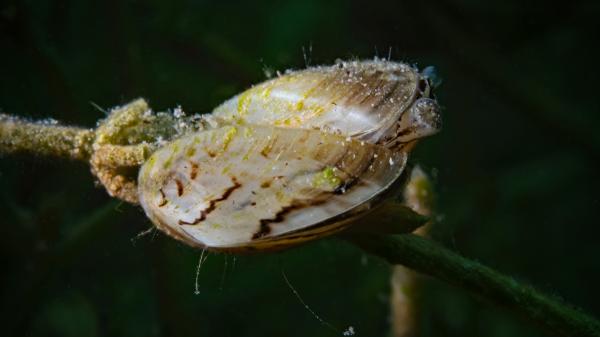
The US offers up to $550,000 to find a solution against invasive mussels
To stop the spread of these species, the US Government launched the scientific competition Halt the Hitchhiker: Invasive Species Challenge in February 2026.
The initiative seeks technologies capable of eliminating, blocking or inactivating invasive organisms present in the ballast compartments of recreational boats.
The project includes three phases and a maximum joint endowment of $550,000, according to official information from the US Government.
In August 2026, the Bureau of Reclamation announced the six winning teams of the first phase, which received $25,000 each.
Among the selected proposals, biological filtration systems, ultraviolet radiation treatments and bioelectric devices stand out.
The following stages will allow us to evaluate its technical feasibility and develop prototypes for laboratory tests.
The challenge is considerable: more than 90,000 ship decontaminations are currently performed annually in the American West. Conventional procedures can take between 30 and 60 minutes, so finding faster and safer methods is essential.
The zebra mussel has also threatened the rivers of Spain for 25 years
The expansion of this species also affects Spain. The zebra mussel was detected in 2001 in the lower reaches of the Ebro and subsequently appeared in other hydrographic basins.
The Ministry for the Ecological Transition has a specific strategy to limit its expansion, control established populations and reduce its environmental consequences.
Preventive measures include cleaning and disinfecting boats, monitoring larvae, and restrictions aimed at preventing their transport between bodies of water.
A CEDEX technical report warns that, once established in the natural environment, its total eradication is not possible with the scientific and technical knowledge available.
The American experience thus demonstrates the importance of acting before an invasive species manages to establish itself. Although it may seem like fiction, an accidental introduction that occurred almost forty years ago continues to generate ecological and economic consequences today that science still makes an enormous effort to control.
If you want to read more articles similar to Almost 40 years ago a ship took these invasive mussels to the US: now they are offering up to $550,000 to stop a plague that costs 1 billion a year, we recommend that you enter our Biodiversity category.