A cascade of fog in Mallorca wins Weather Photographer of the Year 2026. See the winning photos, from lightning over New York to Antarctica.
A fog so thick that it looks like a waterfall descending from the mountains and pouring into the sea. This is the image that won first prize at the Weather Photographer of the Year 2026, the international competition organized by the British Royal Meteorological Society to tell, through photography, the beauty and power of atmospheric phenomena.
The winner was the Spanish photographer Francisco Bailón Rodríguez, author of Mares de Niebla (“Seas of Fog”), a shot taken at dawn on the island of Mallorca.
The competition, now in its eleventh edition, has collected over 5,500 photographs from all over the world. Among the awarded images are spectacular thunderstorms, landscapes shrouded in mist, sun rays breaking through clouds and an Antarctic iceberg that looks like an ice castle. Here, in “no particular order”, are the photographs that struck us most and the scientific phenomena they describe.
The winning photo: a waterfall of fog in Mallorca
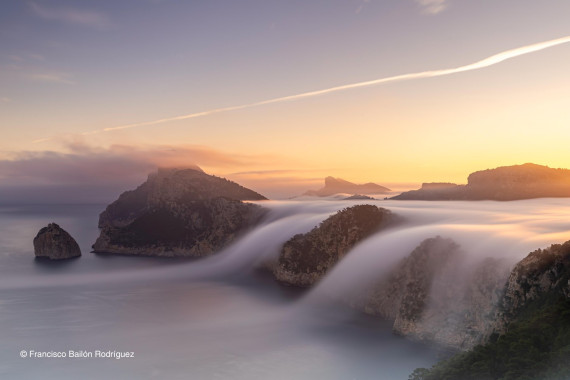
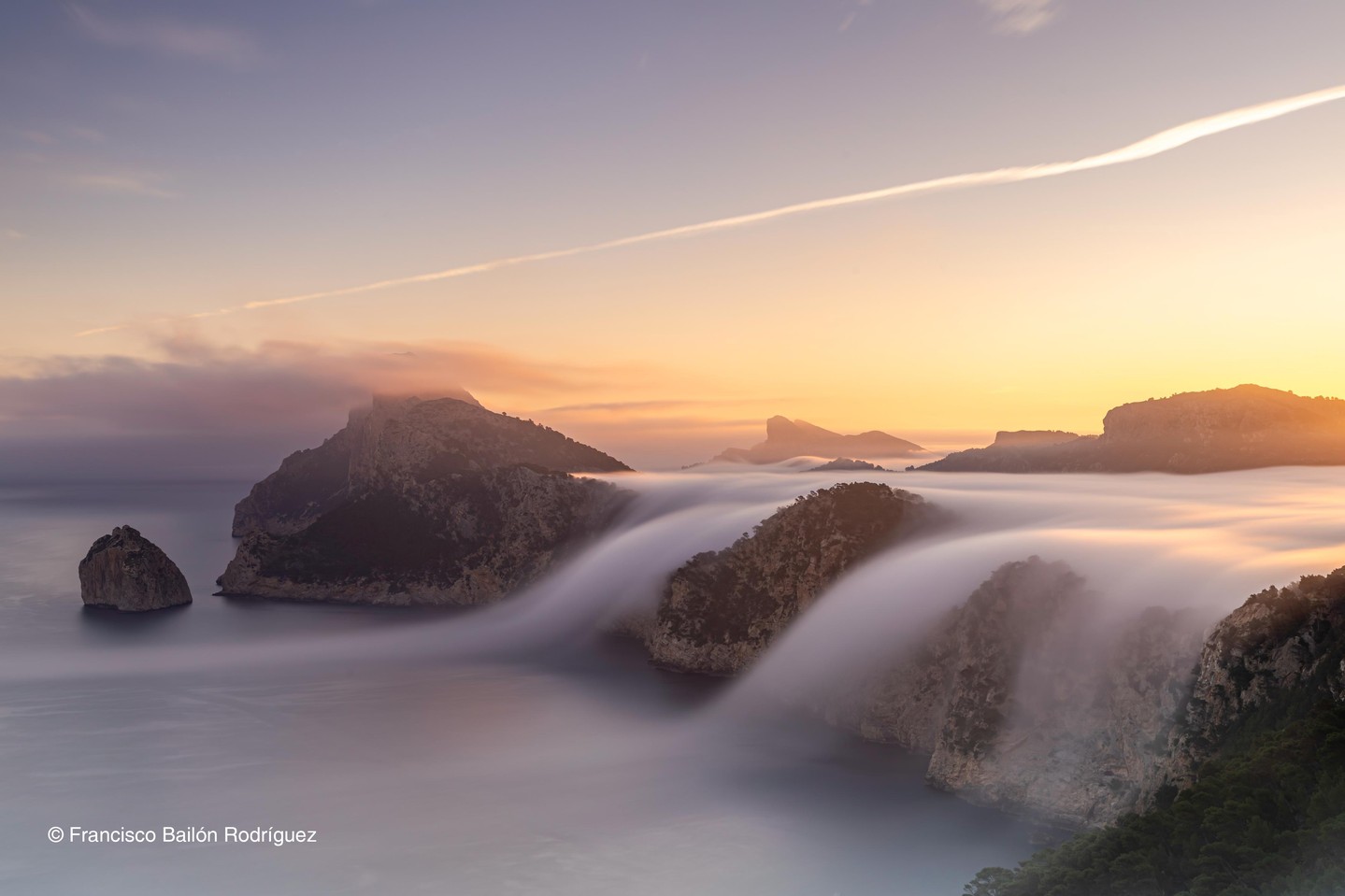
At first glance it looks like a huge white waterfall flowing into the Mediterranean. It is actually a bank of fog that goes over the cliffs of the Formentor peninsula, in Mallorca.
Francisco Bailón Rodríguez immortalized the scene at dawn, from the Albercutz watchtower, after several days of high pressure and particularly humid nights.
But why does the fog seem to flow like a river? Overnight, the ground cools and can bring the air near the ground up to the dew point, the temperature at which water vapor begins to condense into tiny droplets. This is how fog forms.
In this case, a southwesterly wind pushed low clouds toward the cliffs. Once over the ridge, the colder and denser air was able to flow down the slope, producing the effect of a gigantic waterfall.
Three lightning strikes at the same time in the New York sky
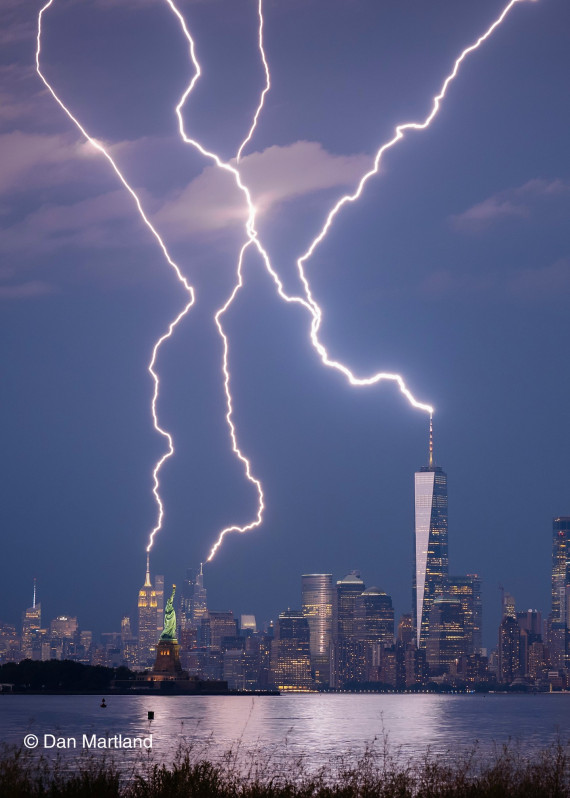

Three bolts of lightning light up the sky above the skyscrapers of New York. The shot, titled Triple Strike in NYCearned American photographer Dan Martland second place in the category decided by public vote.
The photograph was taken from Bayonne, New Jersey during a summer storm. Martland was tracking the evolution of the storm cells through weather radar and thought they would avoid Manhattan. Instead, a sudden electrical event lit up the city and an automatic sensor triggered the camera at just the right moment.
How does lightning form? Inside cumulonimbus clouds, violent ascending and descending currents favor collisions between ice crystals, hail and other particles.
These collisions contribute to the separation of electric charges.
When the electric field becomes sufficiently intense, a discharge develops that can propagate between cloud and ground, lighting up the sky in a fraction of a second.
Photo: Dan Martland – Triple Strike in NYC. Second place, public award.
The storm that lights up from within
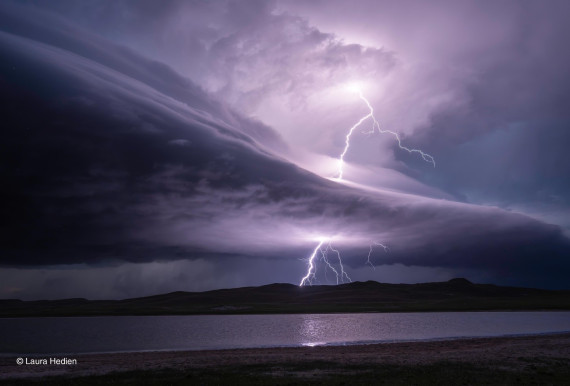

A gigantic storm cloud emerges from the darkness, illuminated by lightning that also reflects in the water below.
It is the shot with which Laura Hedien took third place in the main category. The photographer was chasing a thunderstorm in the Sandhills of Nebraska, USA, when lightning revealed the storm’s structure.
It is a supercell, a storm characterized by a persistent and rotating upward current, capable of producing particularly violent phenomena.
One is also visible in the photograph shelf clouda low, elongated cloud that develops on the advancing edge of the storm. It forms when cold air descending from the storm expands near the ground and forces warmer, more humid air to rise.
These cloud formations can announce the arrival of very intense gusts of wind.
The suspension bridge under a fan of light
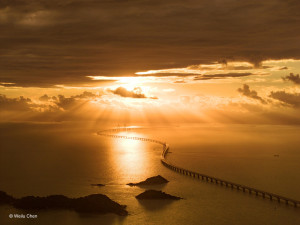

A bridge tens of kilometers long crosses the Pearl River estuary in China, while enormous golden beams appear to fan out across the sky.
Weilu Chen’s photograph, second place in the main category, depicts the Hong Kong-Zhuhai-Macau Bridge at sunrise.
The light beams are called crepuscular rays. They occur when clouds block some sunlight, allowing it to filter through openings. The presence of particles and tiny droplets in the atmosphere makes the illuminated beams more evident, separated by bands of shadow.
And the golden color? When the Sun is low on the horizon, its light must pass through a thicker layer of atmosphere. Shorter wavelengths, such as blue, are scattered more effectively, while light reaching the observer directly is richer in red and orange tones.
The tea hills that look like islands in the fog
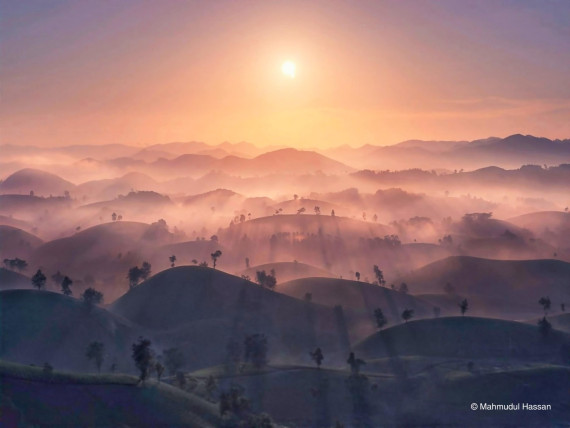
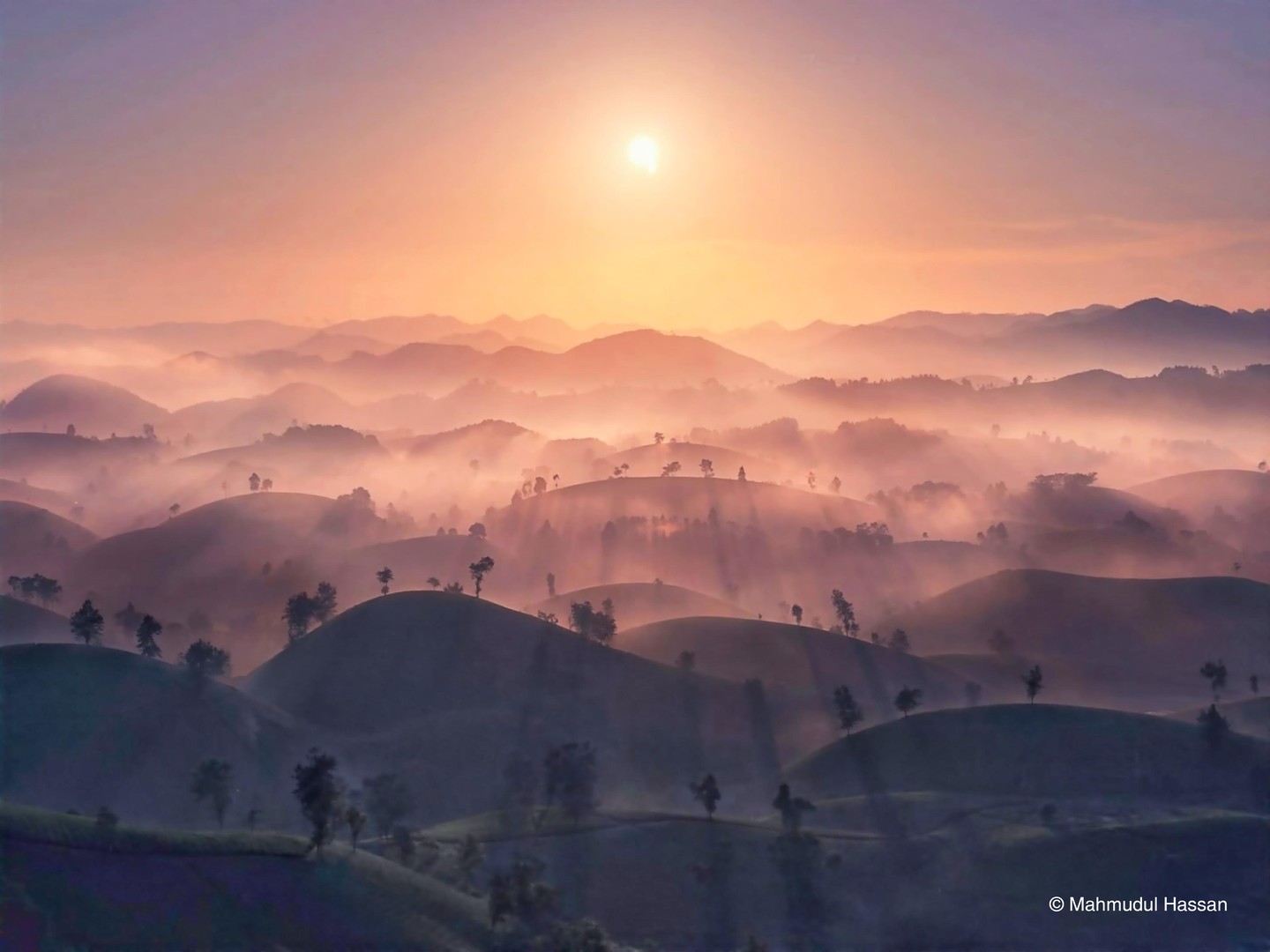
Rounded hills emerge from a sea of mist, forming a landscape that seems to be made up of many small islands.
The image, created by Mahmudul Hasan in the Long Coc region of Vietnam, took first place in the popular vote category.
The photographer, originally from Malaysia, set out at three in the morning to reach the viewpoint before dawn.
The hills, shaped by tea cultivation, emerge from layers of fog that formed during the night. When moist air cools sufficiently, water vapor condenses and haze can accumulate especially in lower areas of the landscape.
With the arrival of the Sun, the grazing light highlights the reliefs and transforms the fog into an almost three-dimensional element.
A pagoda emerges from the fog: the photo taken with a cell phone
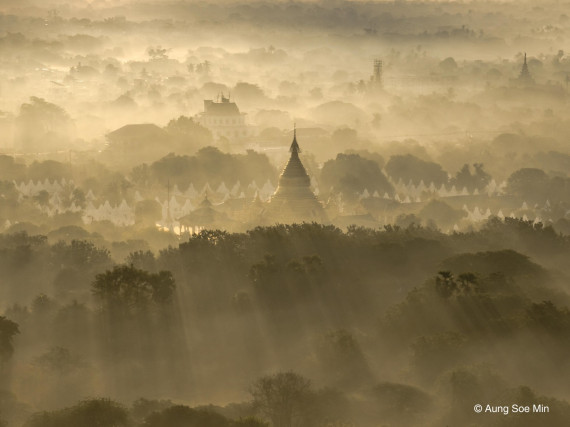

The silhouette of Kuthodaw Pagoda in Myanmar rises above the trees immersed in the morning mist. The warm light of dawn makes the landscape almost monochromatic.
AND A Winter Morningthe photography by Aung Soe Min which won the Mobile category, dedicated to images created with smartphones and tablets.
Also in this case the protagonist is fog, probably favored by the nightly cooling of the air to the dew point.
The layers of mist create a sensation of depth: the further away elements appear progressively less contrasted, while the pagoda remains the reference point of the composition.
Finally, our favorite: Antarctica’s ice castle

Of all the awarded images, this is perhaps the one that struck us the most.
An enormous iceberg stands out against the delicate colors of the sunset, while its jagged surface resembles the towers and walls of a castle. Below, the dark ocean amplifies the contrast.
The shot was taken by Argentine photographer Andres Miraglia in Paradise Harbour, Antarctica, and obtained second place in the Climate Awardthe category dedicated to images that talk about climate change.
The photograph is titled Castles in the Wind and shows an iceberg moving away from the glacier from which it broke off.
The phenomenon is known as calving: blocks of ice separate from the front of a glacier and end up in the sea, where they can be transported by currents and winds.
It is a natural process, which alone does not prove the existence of global warming. But the photograph calls attention to a well-documented change: Antarctica has been losing ice mass overall for decades, although the situation varies greatly from one region to another.
The Antarctic Peninsula has been affected by strong warming in recent decades and some of its areas have recorded temperature increases of around 3°C since the mid-twentieth century.
Antarctic ice, therefore, is not just a natural spectacle: it is also one of the most important indicators for understanding how the Earth’s climate is changing.
The photographs that tell the story of the planet’s climate
The Weather Photographer of the Year is not just a competition for spectacular images. The photographs selected by the Royal Meteorological Society also tell the story of extreme meteorological phenomena and environmental transformations.
Photography also reminds us of this Fireby Erfan Samanfar, winner of the Climate Award 2026: shows an Iranian farmer busy defending his land from the advance of a fire.
From fog flowing over cliffs to intense thunderstorms to Antarctic glaciers, these images show how fascinating weather can be, but also why it’s important to understand its mechanisms.
The full gallery of winners is available on the Royal Meteorological Society website.