
In 1946, Australia planted a shrub native to South Africa to stabilize dunes and slow coastal erosion. Decades later, that solution has become an environmental problem: bitou bush has spread across 46% of the New South Wales coast and threatens the biodiversity of its ecosystems.
Its rapid spread has allowed it to colonize different habitats and displace native plant species. Its ability to produce thousands of seeds and adapt to difficult conditions complicates its control and forces authorities to look for new ways to stop its expansion.
The South African bush that Australia planted to stabilize the dunes
What began as a solution to stop the movement of sand ended up becoming a far-reaching environmental problem. The South African bitou bush (Chrysanthemoides monilifera subsp. rotundata) was introduced to the coast of New South Wales, Australia, to stabilize dunes and recover degraded land. However, its rapid expansion meant that it ended up occupying large areas of the coastline and displacing part of the native vegetation.
According to the New South Wales Department of Environment and Heritage, the plant has spread to 46% of the state’s coast, with populations reaching up to ten kilometers inland in some places. Its presence threatens different natural habitats and makes the survival of plant and animal species typical of the region difficult.
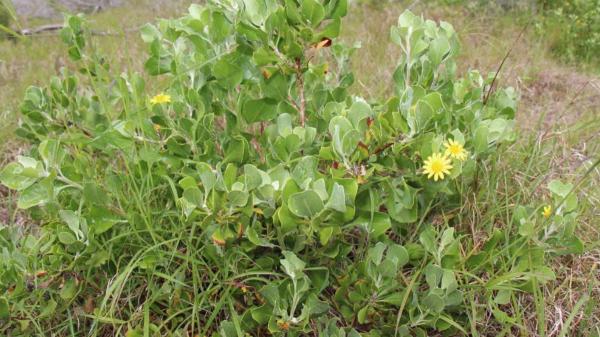
How it has managed to extend across 46% of the New South Wales coast
The expansion of the bitou bush is not explained solely by its planting in the Australian dunes. Its ability to produce large quantities of seeds and adapt to different environmental conditions made it easier for it to colonize new territories. This species is currently present on 46% of the New South Wales coast and has moved up to ten kilometers inland in some areas.
One of the main factors of its propagation is the dispersal of its seeds. Each specimen can produce tens of thousands a year and these can be transported to remote places by birds and other animals that consume their fruits. Water also contributes to its expansion, since seeds can move through ocean currents, streams and other waterways near the coast.
Human activity is added to these natural mechanisms. The movement of earth, the transport of machinery and vehicles can move seeds from one area to another, favoring the appearance of new growth centers. Additionally, fires and soil disturbances can stimulate germination of seeds that remain buried.
The resistance of this plant has also contributed to its expansion. Bitou bush tolerates salinity, strong winds, drought and nutrient-poor soils, common conditions in many coastal environments. This combination of factors makes it difficult to stop its advance once it establishes itself in a new location, especially when there is a seed bank in the soil capable of giving rise to new plants for years.
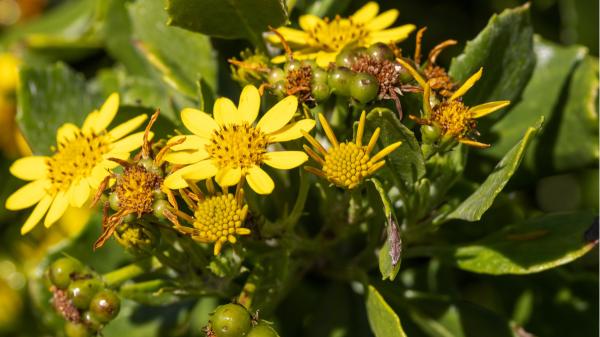
Native species that are at risk from the expansion of the invasive shrub
By growing quickly and forming dense masses of vegetation, this shrub occupies the space that native species need to develop, making the germination of new plants difficult and modifying the composition of ecosystems. Affected environments include dunes, coastal heaths, grasslands, forests and wetlands.
When the bush displaces native plants, it also reduces the availability of food and shelter for the animals that depend on them. The transformation of these spaces can especially harm species that need specific conditions to feed, reproduce or find suitable places to build their nests.
The magnitude of the problem led New South Wales authorities to identify 157 native plant species, 3 plant populations and 24 ecological communities at risk from the bitou bush invasion.
Drones, manual removal and other measures to stop its expansion
Given the extension of the bitou bush and its effects on biodiversity, New South Wales authorities have focused their efforts on limiting its spread and recovering the affected natural areas. One of the priorities is to act in places where the invasion poses a greater risk to threatened species. The control plan for this plant identifies 169 priority areas and establishes containment zones in the north and south of the territory to try to stop its advance and reduce damage to native ecosystems.
Different methods are used to control the bush, including manual removal, selective application of herbicides and monitoring of sprouts that appear after the first interventions. New technologies are also being incorporated, such as drones, which make it possible to locate affected areas and treat invasive vegetation in difficult-to-access terrain, reducing the need to intervene directly in dangerous or especially sensitive places.
However, removing existing plants does not guarantee that the problem will go away. Seeds that remain in the soil can germinate later and give rise to new specimens, so it is necessary to periodically check the treated areas. When the presence of the shrub is reduced, restoration work also includes revegetation with native species to promote the recovery of the vegetation cover and limit the appearance of new invasions.
Although bitou bush control remains a challenge, the combination of containment, monitoring and restoration measures offers a route to protect coastal habitats and improve conditions so that native flora and fauna can recover.
If you want to read more articles similar to In 1946 they planted this South African shrub to protect the dunes of Australia and now it extends along 46% of its coast and threatens its ecosystems, we recommend that you enter our Ecosystems category.
