
Heat waves are becoming more frequent and intense in many parts of the world, especially in large cities. Asphalt, concrete and the scarcity of green areas favor the appearance of what are known as urban heat islands, a phenomenon that causes temperatures significantly higher than in nearby rural areas. Faced with this situation, architects, engineers and designers are looking for solutions capable of reducing heat without increasing energy consumption. In this context, Bloc° has emerged, an innovative system of 3D printed bricks that uses natural principles to refresh the air. Its creators assure that this technology could reduce the perceived temperature by up to 9 degrees, offering a sustainable alternative to improve comfort in urban spaces.
The brick that cools the air without the need for air conditioning
Bloc° is a modular system developed with terracotta, a material used in construction for centuries for its thermal properties and resistance. The main novelty lies in its design, manufactured using 3D printing, which allows the creation of internal structures optimized to promote the passage of air and the circulation of water.
Unlike conventional air conditioning systems, this brick does not need compressors or large electrical installations to generate cold. Its operation is based on natural physical principles that have been used for generations in different warm regions of the planet, although now adapted to the needs of modern cities.
The system can be installed on facades, patios, public spaces or architectural elements intended to improve the thermal comfort of citizens. Thanks to its modular design, several units can be combined to cover larger surfaces and increase its cooling capacity.
In addition to its practical function, brick has a contemporary aesthetic that allows it to be integrated into current architectural projects without altering the urban image. This combination of design, sustainability and efficiency is one of the reasons why it has sparked interest among specialists in urban planning and sustainable construction.
At a time when many cities are seeking to reduce their dependence on energy-intensive cooling systems, such as air conditioning, proposals such as Bloc° offer a new way to address the increase in temperatures associated with climate change.
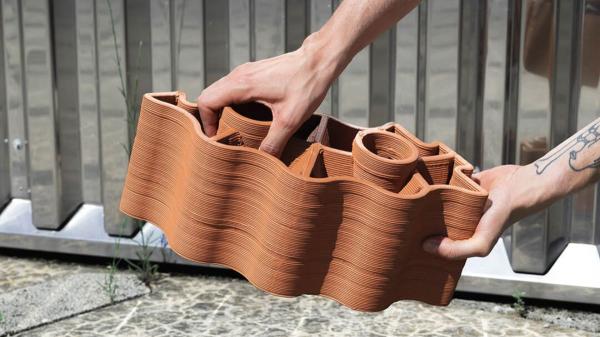
How this technology works, capable of reducing the temperature by up to 9 degrees
The key to the system is evaporative cooling, a natural process that takes advantage of water’s ability to absorb heat as it evaporates. As hot air passes through the brick structure, it comes into contact with moist surfaces and loses some of its thermal energy during water evaporation.
This mechanism allows air to exit cooler than when it entered the system. According to its developers, in certain environmental conditions the perceived temperature can be reduced by up to 9 degrees, a significant difference in urban environments subjected to extreme heat waves.
To optimize its performance, the system incorporates a water circuit and can be supported by small ventilation systems powered by solar energy. In this way, energy consumption remains well below that required by conventional air conditioning equipment.
Another important advantage is that it does not use refrigerant gases nor does it require complex mechanical processes to generate cold. This reduces both environmental impact and long-term maintenance needs.
The internal design of 3D printed parts also plays a key role. Additive manufacturing allows us to create geometries that are difficult to achieve with traditional methods, increasing the contact surface between air and wet areas. As a result, the cooling process becomes more efficient without the need to increase resource consumption.
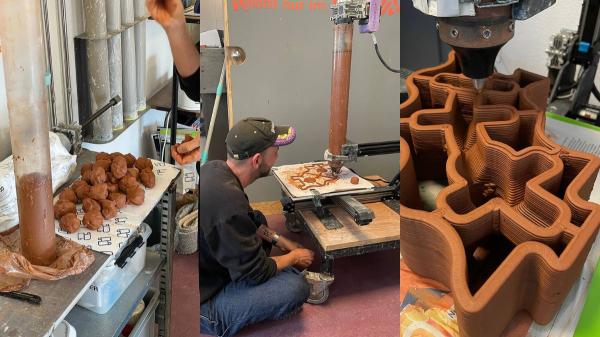
A possible solution to combat urban heat islands
Urban heat islands constitute one of the main climatic challenges of modern cities. This phenomenon occurs when buildings, roads and other infrastructure absorb heat during the day and slowly release it at night, preventing temperatures from dropping significantly.
The consequences affect both the well-being of the population and energy consumption. When temperatures increase, so does the demand for air conditioning, which increases electricity costs and emissions associated with energy production.
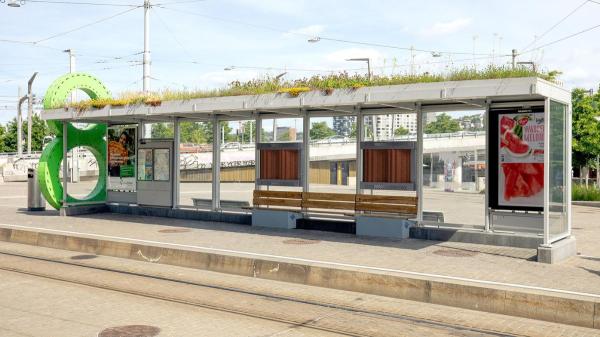
In this scenario, technologies like Bloc° could play a complementary role within climate adaptation strategies. Its installation on facades, squares, pedestrian areas or meeting spaces would allow more pleasant microclimates to be generated for citizens without resorting to conventional cooling systems.
Experts believe that no single solution will solve the problem of urban heat on its own. However, the combination of green infrastructure, more efficient materials, natural shading and passive cooling systems could contribute to significantly reducing the impact of high temperatures.
Added to this is the advantage of using durable and relatively accessible materials, which would facilitate their integration into future sustainable construction projects. Although it will still be necessary to evaluate its behavior on a large scale and in different climatic contexts, the proposal represents an example of how innovation can be inspired by natural processes to respond to some of the most urgent urban challenges.
A simple idea with the potential to transform cities
The fight against extreme heat has become a priority for many cities around the world. In this context, the development of sustainable solutions capable of reducing temperature without increasing energy consumption is especially relevant.
Bloc° is committed to a combination of design, 3D printing and evaporative cooling to offer a different alternative to traditional air conditioning. Although it has yet to demonstrate its full potential in large-scale applications, its approach reflects a growing trend: using architecture and construction materials as active tools to create cooler, more efficient and resilient urban environments in the face of climate change.
Evidence Network invites all its readers to add the header as a preferred source on Google and continue enjoying rigorous, close and up-to-date information. Add Evidence Network as a preferred source on Google here.
If you want to read more articles similar to Neither fans nor air conditioning: the sustainable brick that promises cities up to 9 degrees cooler, we recommend that you enter our Energy Savings category.
