
Air pollution continues to be one of the main environmental and public health challenges in Spain. However, its impact is not the same throughout the territory. Urban pollution levels vary significantly between cities depending on factors such as traffic intensity, industrial activity, population density, urban planning or weather conditions, which can favor or hinder the dispersion of pollutants.
Using data collected by different organizations and specialized reports, it is possible to compare which cities have the worst levels of air quality and which have a more favorable situation. These differences also allow us to analyze how mobility policies, environmental management and the characteristics of each municipality influence the reduction of pollution.
What is meant by a polluted city and what are the factors to consider?
When we talk about polluted cities, we normally refer to those urban areas where the air quality has high levels of substances harmful to health and the environment.
One of the most analyzed aspects is the concentration of suspended particles, especially those known as PM10 and PM2.5. These particles come mainly from traffic, industries, heating or certain construction activities, and can affect the respiratory system when they remain at high levels for long periods.
The presence of nitrogen dioxide (NO₂) is also measured, a pollutant closely related to road traffic and especially high in large cities with a high density of vehicles. Another important indicator is tropospheric ozone, which usually increases during times of high temperatures and can affect both human health and vegetation.
In addition to air quality, some studies include other factors such as noise pollution, the amount of green areas, CO₂ emissions or the level of industrialization of each city. Therefore, a city may stand out negatively in one specific indicator and not necessarily in all the others.
To obtain this data, measuring stations distributed throughout different urban areas are used. Public bodies, both national and European, collect this information to prepare rankings, reports and maps of environmental quality that allow the situation to be compared between different cities in Spain.

These are the 5 most polluted cities in Spain and the reasons that explain it
Air pollution in Spain is especially concentrated in large urban and industrial areas, where traffic, port activity and certain industries raise the levels of nitrogen dioxide (NO₂) and suspended particles. Various reports on air quality, such as those published by IQAir and environmental organizations, allow us to identify the cities that register the worst pollution indicators.
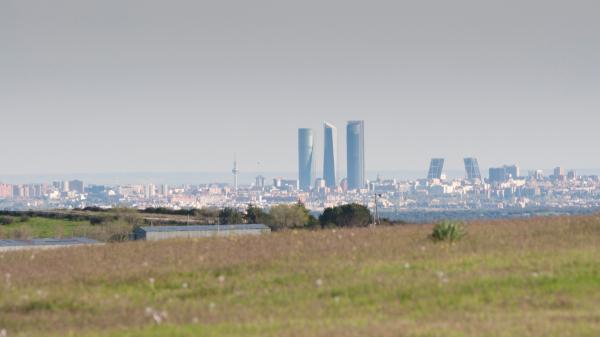
Madrid
The Spanish capital usually appears among the cities with the worst nitrogen dioxide data due to high daily traffic and high population density. The areas with the most vehicle traffic in Madrid concentrate a good part of the exceedances of the limits recommended by the World Health Organization (WHO).
Barcelona
Barcelona presents similar problems to Madrid. The combination of intense traffic, urban concentration and specific meteorological conditions favors the accumulation of atmospheric pollutants during much of the year. NO₂ levels continue to be among the highest in the country.
Valencia
Valencia has appeared in various recent analyzes among the Spanish cities with the worst air quality due to nitrogen dioxide. Some data from 2025 place the city above the future European limits planned for 2030.
Murcia
The city of Murcia has recorded numerous episodes of poor air quality related to PM10, PM2.5 particles and tropospheric ozone. Recent reports from environmental associations and citizen observatories indicate that pollution levels considered harmful to health remained for much of 2025.
Tarragona
Tarragona usually stands out in some pollution rankings due to the industrial and petrochemical activity in its surroundings. In addition to traffic and the port, the presence of industrial complexes influences the air quality indicators recorded in the area.
The cleanest cities in Spain and the reasons why they stand out
The cities considered the cleanest in Spain usually stand out for their low levels of air pollution, good waste management, large green areas and fewer traffic problems.
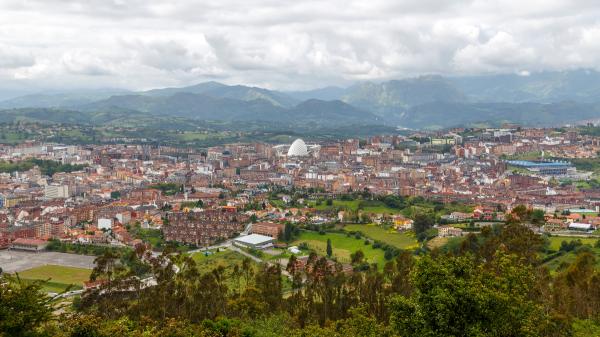
Oviedo
An OCU report ranked it as the cleanest city in Spain thanks to municipal waste management, the maintenance of streets and parks and the civic behavior of the population.
Bilbao
Bilbao has notably improved its environmental indicators over recent decades following the reduction of heavy industrial activity and urban regeneration. The city stands out for its mobility policies, the increase in green spaces and the modernization of urban infrastructure.
Vigo
The Galician city is also among the best rated by the OCU in terms of cleanliness. Vigo combines a lower traffic density compared to other large Spanish cities with a significant presence of natural spaces and proximity to the coastal environment.
Pamplona
The city has large green areas, a manageable urban size and relatively low pollution levels compared to large metropolitan areas.
Alicante
Its coastal location and lower industrial pressure compared to other urban centers favor lower levels of air pollution.
What factors determine whether a city is among the cleanest?
According to Special Report 02/2025 of the European Court of Auditors, a city can be considered “cleaner” when it meets a number of key conditions related to pollution reduction and environmental management.
Firstly, it is essential to have low levels of air pollutants, especially nitrogen dioxide (NO₂) and suspended particles (PM10 and PM2.5). These pollutants are closely linked to urban traffic, so the cleanest cities tend to be those that have reduced dependence on private vehicles or have implemented sustainable mobility measures.
Another important aspect is correct urban and transport planning, which includes low-emission zones, good public transport and active mobility policies (walking or cycling).
Urban noise management is also considered key, since noise pollution is a persistent problem in many European cities and still has deficiencies in its regulation and homogeneous measurement.
Finally, the cleanest cities usually stand out for good environmental monitoring, with well-distributed measurement stations and transparent data.
If you want to read more articles similar to Neither Seville nor Zaragoza: these are the most polluted and cleanest cities in Spain, we recommend that you enter our Pollution category.
- European Court of Auditors. (2025). Urban air pollution in the EU: cleaner cities, but not as a direct result of EU action (Special Report 02/2025). https://www.eca.europa.eu/es/publications/SR-2025-02
- Ecologists in Action. (2025, June 16). Three out of four urban air pollution meters in Spain are poorly located. https://www.ecologistsenaccion.org/364774/tres-de-cada-cuatro-medidores-urbanos-de-la-contaminacion-del-aire-en-espana-estan-mal-ubicados/
- IQAir. (sf). Air quality in Spain. https://www.iqair.com/es/spain
