
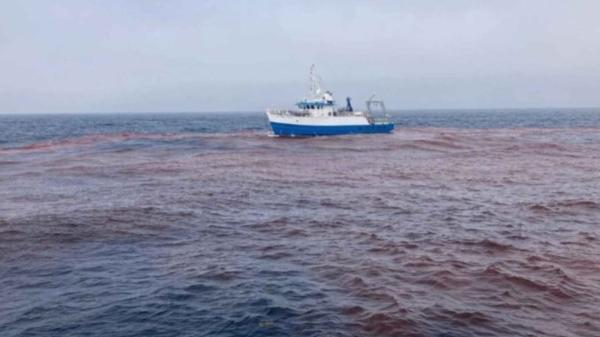
What happens when scientists dump 62,000 liters of caustic soda into the ocean? In the Gulf of Maine, an area of the North Atlantic was temporarily dyed pink during an experiment designed to study a possible way to increase the sea’s ability to absorb CO₂.
The striking color was not caused by caustic soda, but by a dye used as a tracer to follow the path of the treated water. The objective was to verify what happens when the alkalinity of the ocean is artificially raised and to what extent this process can favor the capture of carbon dioxide from the atmosphere.
The first data have allowed us to observe chemical changes in the water and have not detected important biological impacts in the initial measurements. However, researchers have yet to analyze the results to determine how much CO₂ can actually be removed and what consequences would be applied to this technique on a much larger scale.
How they raised the alkalinity of the ocean with 62,000 liters of caustic soda
As explained by the Woods Hole Oceanographic Institution (WHOI), the test was designed to create a patch of water with greater alkalinity and follow its evolution using a tracer.
To increase the alkalinity of the water, the researchers used a 50% sodium hydroxide solution, known as caustic soda, which was released in a controlled manner into the Wilkinson Basin in the Gulf of Maine. The test included up to 16,500 gallons, about 62,000 liters, and finally the operation lasted for about six hours.
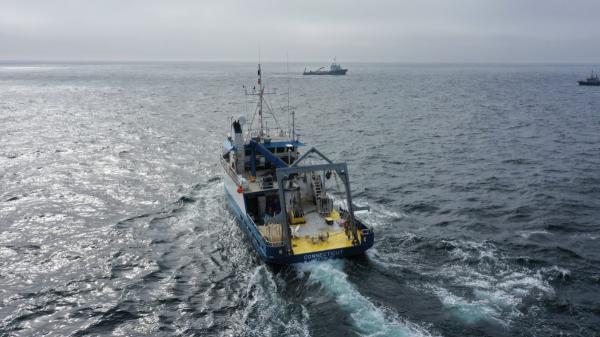
The solution was introduced into surface waters using a system installed on a ship. At the same time, the scientists added rhodamine, a dye used as a tracer, to be able to distinguish the treated area and follow its movement with the currents. The mixture was also made with seawater pumped from the ship itself to favor its dispersion.
The goal was to create a kind of temporary “patch” of higher alkalinity and observe what happened to the carbon present in the water. By increasing alkalinity, water acquires a greater capacity to neutralize acidity and convert part of the dissolved carbon into bicarbonate, a stable and naturally abundant chemical form in the oceans. In this way, the experiment aimed to check if the ocean could incorporate more CO₂ from the atmosphere.
The choice of the area was not coincidental either. The characteristics of the Wilkinson basin mean that surface waters remain relatively concentrated for a time, which allowed the evolution of the patch to be followed before it ended up mixing with the surrounding water.
What happened to CO₂ and marine fauna after the experiment
One of the aspects that generated the most interest in the experiment was knowing what effects the sudden increase in alkalinity could have on marine organisms. To monitor it, the researchers carried out physical, chemical and biological measurements over several days. The scientific vessel remained in the area for four days and then autonomous underwater vehicles continued collecting data for approximately a week.
The first results showed no signs of mass mortality or a major biological impact. No protected species were observed during the operation either. The scientists analyzed, among other parameters, the photosynthetic health of the organisms present in the area and did not detect important alterations in the first observations. Still, these are preliminary results and the team needs to analyze all the data collected to more precisely determine possible ecological effects.
Regarding climate, the experiment made it possible to verify that the treated water increased its alkalinity and created the necessary conditions to favor the uptake of CO₂ by the ocean. This indicates that the necessary chemical conditions were created to favor the incorporation of carbon from the atmosphere. However, it remains to be determined how much CO₂ was actually removed from the atmosphere as a result of the test.
Why the ocean turned pink during the experiment
The pink color that appeared in the Gulf of Maine was not a result of caustic soda. In order to follow the path of the treated area and check how it mixed with the ocean water, the researchers added rhodamine WT, a dye used as a tracer in scientific studies.
The substance made it possible to identify visually and by means of instruments the extension of the modified water and to follow its movement with the currents. In this way, scientists were able to study during the following hours how the alkaline solution dispersed and how parameters such as pH and alkalinity changed.
The striking pink hue was therefore a tool to track the experiment, not the chemical result of pouring the caustic soda into the ocean. Once the treated water began to mix with the rest of the gulf, the dye was progressively diluted.
How far can this technique go to remove CO₂ from the atmosphere
The test carried out in the Gulf of Maine represents a first step to study whether artificially increasing the alkalinity of the ocean can help remove CO₂ from the atmosphere. The idea is based on a chemical process that already occurs naturally in the seas. Higher alkalinity allows water to absorb CO₂ and transform it mainly into more stable forms of dissolved carbon.
However, researchers still need to analyze a large amount of data before knowing to what extent this technique can be effective and what consequences it would have if applied on a much larger scale. A controlled test of 62,000 liters does not allow its results to be directly extrapolated to large areas of the ocean.
Precisely for this reason, the experiment seeks to answer questions that still remain open, such as how much CO₂ can the ocean really remove, how long it remains stored and what effects it can have on marine ecosystems. The data obtained in the Gulf of Maine will be used to continue researching a technology that, for now, remains in an experimental phase.
If you want to read more articles similar to Scientists pour 62,000 liters of caustic soda into the ocean and dye it pink: this is how they want to capture more CO₂, we recommend that you enter our Climate Change category.
