
Only ten giant tortoises have managed to recover in six months ecological processes that had been missing for almost 180 years. This is demonstrated by a study carried out on the island of Aride, in the Seychelles, where the reintroduction of these reptiles has allowed the reactivation of essential functions for the balance of the ecosystem, such as seed dispersal, control of invasive plants and nutrient recycling.
In just half a year, these animals have dispersed thousands of seeds and stopped the expansion of exotic species, demonstrating that the recovery of a single species can trigger the restoration of an entire ecosystem. A discovery that could change the way future conservation projects are approached.
How 10 giant tortoises recovered an ecosystem lost 180 years ago
The reintroduction of ten Aldabra giant tortoises (Aldabrachelys gigantea) on the island of Aride, in the Seychelles archipelago, has shown that a small population can recover ecological functions that have been missing for almost two centuries. The animals, locally extinct about 180 years ago, played a fundamental role in maintaining the balance of the ecosystem, so their absence had altered the natural functioning of the island.
The study, published in the journal Restoration Ecology and developed by researchers from the Doñana Biological Station, the National Museum of Natural Sciences, the Royal Botanical Garden of the CSIC and the University of Exeter, confirms that these turtles act as authentic “ecosystem engineers.” Its activity contributes to controlling the expansion of exotic plants, favors the recycling of nutrients and facilitates the dispersal of seeds of native species.
The results obtained were visible in a very short period. In just two months, the ten specimens consumed 54 species of exotic plants and dispersed more than 11,000 seeds, of which nearly 90% belonged to native species. These actions help reduce the presence of invasive vegetation and favor the regeneration of the island’s own flora, accelerating the recovery of ecological processes that had been interrupted for generations.
In addition to its ecological effectiveness, the researchers highlight that this strategy can be more economical than other traditional restoration methods, such as manual removal of invasive species. The work demonstrates that the reintroduction of key species can become an effective tool to restore degraded ecosystems when planned based on scientific knowledge of the role these animals play in nature.
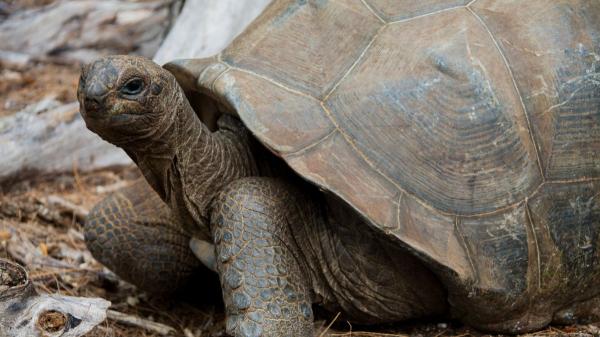
Not all turtles contribute equally to restoring the ecosystem
One of the highlights of the study is that the success of a reintroduction program does not depend solely on the number of animals released. The researchers verified that each turtle plays a different role within the ecosystem and that these individual differences can decisively influence the recovery of ecological processes.
To reach this conclusion, the team combined direct observations in the field with DNA analysis of feces, a methodology that made it possible to precisely identify which plants each specimen consumed and how it contributed to functions such as seed dispersal, the control of exotic species or nutrient recycling. The results showed great variability between individuals, both in diet and behavior.
One of the most striking data was that only three of the ten turtles were responsible for more than 80% of the native seeds dispersed during the first two months of monitoring. Furthermore, some specimens stood out for their effectiveness in several ecological functions at the same time, while others had a much more limited participation. For example, the turtle identified as T08 showed high performance both in the consumption of invasive plants and in seed dispersal and recycling of organic matter.
These results suggest that future conservation programs should take into account not only the genetic diversity of reintroduced populations, but also the behavioral diversity. Having individuals with complementary ecological roles can increase the resilience of ecosystems and improve the effectiveness of restoration projects on islands and other degraded habitats.
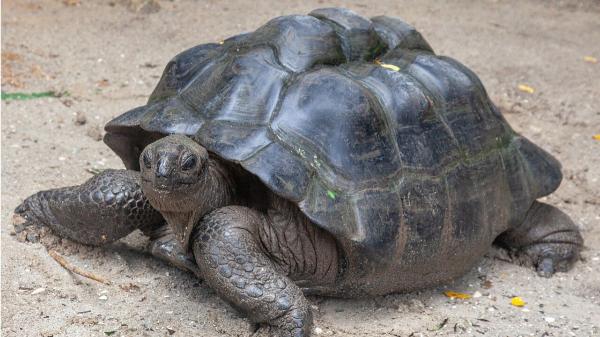
In just two months they had already recovered lost ecological processes
Unlike other studies that focused solely on the number of animals released, this research wanted to find out if each individual played a different role in the recovery of the ecosystem.
To do this, the researchers carried out detailed monitoring of the turtles through direct observations, analysis of their excrement and DNA metabarcoding techniques, which allow the precise identification of the plant species consumed. Thanks to this combination of methods, they were able to reconstruct the interactions of each specimen with the environment and evaluate its contribution to three fundamental ecological processes such as seed dispersal, vegetation control through browsing, and nutrient recycling through the consumption of organic matter.
The results confirmed that ecological restoration began much earlier than expected. In just two months, the turtles had dispersed more than 11,000 seeds, most belonging to native plants, and consumed dozens of exotic plant species. This shows that the reintroduction not only recovered a species disappeared from the island, but also the natural processes that depended on it to maintain the balance of the ecosystem.
If you want to read more articles similar to The reintroduction of 10 giant tortoises in the Seychelles recovers ecological processes lost 180 years ago in 6 months, we recommend that you enter our Biodiversity category.
