
For decades, planting trees seemed like the best solution to combat desertification in the Sahara and Sahel, but many projects did not achieve the expected results. However, an experiment involving 500 giant African tortoises showed that restoring an ecosystem does not always involve reforestation. Just five years after the start of the project, green areas began to appear where there was only sand before.
The researchers verified that these animals played a key role in the natural recovery of the land, improving the soil and promoting the return of vegetation and numerous species.
Why many reforestation projects failed in the Sahara and Sahel
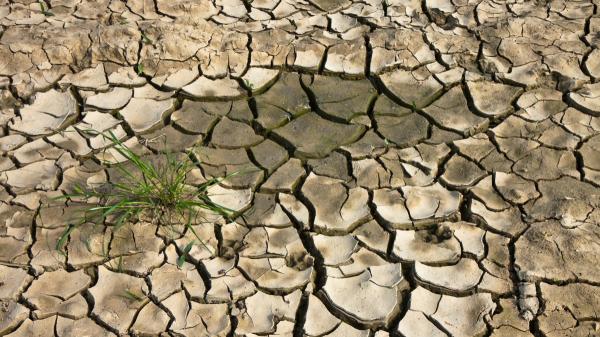
For decades, different programs have opted for the massive planting of trees to stop the advance of desertification in the Sahel, the transition strip located between the Sahara desert and the African savannahs. However, many of these attempts did not achieve the expected results because the ground conditions made the survival of young trees extremely difficult.
One of the main problems was the state of the soil. In many areas, the surface had hardened so much that rainwater could barely infiltrate. Instead of being absorbed by the soil, the water quickly drained or evaporated due to high temperatures, leaving seeds and newly planted trees without the moisture they needed to thrive.
Added to this were other factors, such as low rainfall, intense heat and the high maintenance costs of reforestation programs. Without constant irrigation and favorable conditions during the first years, many of the trees ended up dying before becoming established, considerably reducing the effectiveness of these initiatives.
500 giant tortoises managed to regenerate arid land in just five years
The key to this experiment was not in the turtles planting vegetation, but in the role they play within the ecosystem. As they moved across the terrain, they slightly disturbed the surface and dispersed seeds through their excrement. This process allowed different plant species to colonize areas where plants barely grew before.
Furthermore, the organic matter provided by their excrement progressively improved the fertility of the soil. As time went by, the land retained moisture better and offered much more favorable conditions for seeds already present in the environment or transported by the turtles themselves to germinate.
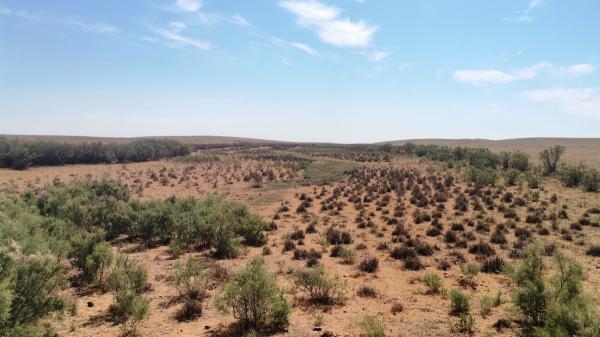
Five years after the start of the project, the researchers observed the appearance of green areas in places where previously a landscape practically covered with sand predominated. Although the experiment did not turn the Sahara into a forest, it did demonstrate that recovering certain ecological functions can accelerate the natural regeneration of the land and complement other environmental restoration strategies.
How turtle burrows improve soil and promote the recovery of biodiversity
One of the most striking characteristics of the African spurred tortoise (Centrochelys sulcata) is its ability to dig burrows between 10 and 15 meters deep. These shelters allow you to escape the extreme temperatures of the Sahel, where the heat during the day can be suffocating and the nights see a sharp drop in temperature.
However, these excavations have an effect that goes far beyond the survival of the animal. By breaking up the hardened crust that covers the soil, burrows allow rainwater to infiltrate deeply instead of running off the surface. As a consequence, the soil retains moisture for longer and small areas are created with much more favorable conditions for the growth of vegetation.
This change also generates a microhabitat where insects, microorganisms and other life forms that could barely establish themselves in completely dry soil begin to proliferate. As biological activity increases, seeds find a more suitable environment to germinate and new plants appear that, over time, attract birds and small vertebrates. The result is a progressive recovery of biodiversity in areas that until then barely supported life.
The key role of animals in the recovery of ecosystems
The results obtained with the turtles reinforce an idea that is increasingly gaining weight among environmental restoration experts: recovering an ecosystem does not always consist of planting more trees. In many cases, restoring the natural processes that maintain the balance of the land can be a more effective, economical and sustainable strategy in the long term.
Experience shows that certain animal species play a fundamental role in landscape regeneration. By dispersing seeds, providing organic matter and modifying the soil naturally, they help create the conditions necessary for vegetation to reestablish itself without constant human intervention.
This type of initiative also highlights the importance of adapting solutions to the characteristics of each environment. In extremely arid regions, where temperatures are very high and rainfall is scarce, traditional reforestations can have a very low success rate if they are not accompanied by measures that favor the recovery of the soil and ecological processes.
If you want to read more articles similar to Planting trees in the Sahara failed, but 500 turtles achieved what seemed impossible five years later, we recommend that you enter our Biodiversity category.
