
In a context marked by increasingly hot summers and the increase in electricity consumption intended to cool homes, bioclimatic architecture turns its gaze towards solutions that operate without compressors, refrigerants or continuous energy expenditure. One of them is the solar chimney, a seemingly simple system that uses the sun’s own heat to improve ventilation and expel hot air accumulated inside a building.
Although its name may lead to confusion, a solar chimney is not used to evacuate smoke nor does it require combustion. It is a vertical duct designed to be heated by solar radiation. As the temperature of the air contained inside increases, it becomes less dense, rises and exits at the top. This movement generates a slight depression that favors the entry of cooler outside air through other openings in the home.
The technology is not new, but its interest has resurfaced as the need to reduce the energy demand of buildings grows. The European Commission considers that passive cooling strategies, including natural ventilation, shading, insulation and thermal inertia, can limit dependence on conventional air conditioning systems.
How a solar fireplace works and why it can cool a house without wasting electricity
The operation is based on the so-called chimney effect or thermal draft. When an air mass warms, its density decreases and tends to rise. In a solar chimney, that heating is intensified by a dark surface capable of absorbing radiation and, in many designs, a glass cover that helps retain heat.
The duct is usually installed on a façade with high solar exposure or protrudes above the roof. During the hours of greatest radiation, the air inside the chimney heats up and rises. When it leaves, it draws some of the hot air from the rooms and allows new air to enter from cooler areas, shaded patios, properly oriented windows or underground ducts.
This system can operate without fans and without direct electrical consumption. Its effectiveness, however, depends on factors such as the orientation, height and width of the duct, the color and materials used, the temperature difference between the interior and exterior and the arrangement of the air inlets.
A scientific review published by Blas Zamora, a researcher at the Polytechnic University of Cartagena, points out that the performance of solar chimneys is closely linked to their design and environmental conditions. Solar radiation, the geometry of the channel and the effect of wind can significantly modify the ventilation flow achieved.
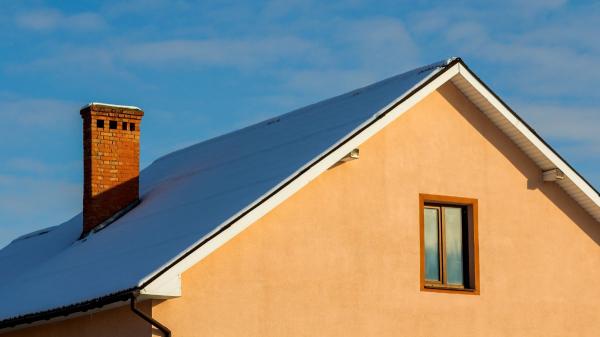
How cool can a solar chimney be and when is it really effective?
Solar fireplaces can reduce heat buildup and improve air renewal, although they should not be presented as a universal replacement for air conditioning. Its ability to lower the indoor temperature is limited when the outside air is also very hot, as is the case during some heat waves.
Its main function is to move and extract air, not to produce cold air. For this reason, they offer better results when combined with other passive architecture measures: exterior solar protection, awnings, blinds, vegetation, thermal insulation, night ventilation and thermal inertia in walls and floors.
The Institute for Energy Diversification and Saving precisely recommends ventilating homes at night or first thing in the morning in summer, when the outside temperature is lower. A solar chimney can reinforce this air movement and promote the evacuation of heat stored in the building materials.
It can also be complemented with wind towers, interior patios, evaporative cooling systems or air inlets located in shaded areas. Passive cooling does not usually depend on a single technology, but on the combination of design, ventilation, insulation and solar control.
The environmental advantage is obvious: the shorter the operating time of the air conditioning equipment, the lower the associated electricity consumption. In addition, solar chimneys do not use refrigerant gases or generate noise during operation.
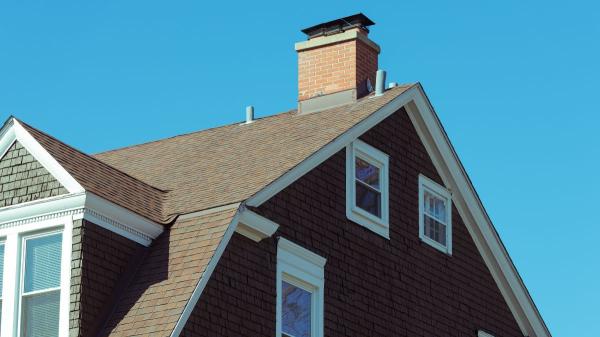
Spanish homes that already use solar chimneys to combat the heat
Spain has several experimental projects and scientific studies related to this technology. One of the most cited cases is a social housing built and analyzed in Madrid within a passive cooling project for dry climates.
The building incorporated a solar chimney and an air pre-cooling system that took advantage of a sanitary area located under the construction. The research, published in the scientific journal Energy and Buildingsstudied the behavior of this combination and its ability to limit the cooling demand in Madrid’s climatic conditions.
Another relevant example is found in Murcia. The so-called House of the Earth is an experimental bioclimatic home equipped with a central wind tower, four solar chimneys and construction elements with high thermal inertia.
Various scientific teams have used this building to study natural ventilation, heat transfer and the joint behavior of its different passive systems. Other research published in Journal of Building Engineering developed a thermal and ventilation model of the home and compared it with experimental data obtained in the building itself.
The Polytechnic University of Cartagena has also developed an extensive line of research on solar chimneys, convective flows and natural ventilation. The works directed or published by Blas Zamora have analyzed both the thermal behavior of the ducts and the influence of wind and the geometric proportions of the system.
The advantages and limits of solar chimneys: they are not suitable for all homes
Solar chimneys have several advantages: they have few moving parts, they hardly require maintenance, they can be integrated into the architecture of the building and they take advantage of a free, renewable source. In addition, they help renew indoor air and can reduce overheating at certain times of the day.
However, its installation is not always easy. In already built buildings it may be necessary to intervene on the façade or roof, create adequate air routes and study how the system will affect the rest of the home’s ventilation.
It is also not enough to place a black tube in the sun. The design must prevent rain ingress, thermal losses in winter, acoustic problems or unwanted air currents. A poorly sized chimney can generate insufficient flow or even work in the opposite direction under certain wind conditions.
Therefore, its incorporation must be considered within a complete architectural and energy project. In new homes, the orientation and layout can be planned from the beginning. In renovations, a technician must assess the envelope, the gaps, the existing ventilation and the requirements of the Technical Building Code.
Solar chimneys are not a miracle solution, but they can be considered a promising tool within bioclimatic architecture. In Spanish regions with abundant solar radiation, they can help ventilate buildings and reduce part of the cooling demand, especially when they work together with other passive measures.
Instead of cooling a home by consuming more energy, its proposal is to prevent heat from accumulating and making it easier for it to escape. An idea that recovers traditional ventilation principles and adapts them to buildings designed to face an increasingly demanding climate.
If you want to read more articles similar to Neither air conditioning nor fans: the solar fireplace that expels hot air without electricity and helps cool the house in summer, we recommend that you enter our Energy Savings category.
- European Commission, PASCOOL project on passive cooling / https://cordis.europa.eu/project/id/JOU20013
- International Scientific Review on Solar Chimney Systems / https://www.sciencedirect.com/science/article/abs/pii/S1364032116305718
