
Some of the main types of flies are tsetse flies, dung flies, attic flies, horseflies, botflies, meat flies, house flies, drain flies, fruit flies and stable flies. Flies are flying insects belonging to the order Diptera, and they are distributed throughout all the continents of our planet. Many of the flies bite, others are large, there are also various types of small flies, and many are common flies that we find in our homes or on farms. If you want to know more about the types of flies, we invite you to continue reading this BIOencyclopedia article where you will find information about 10 types of flies.
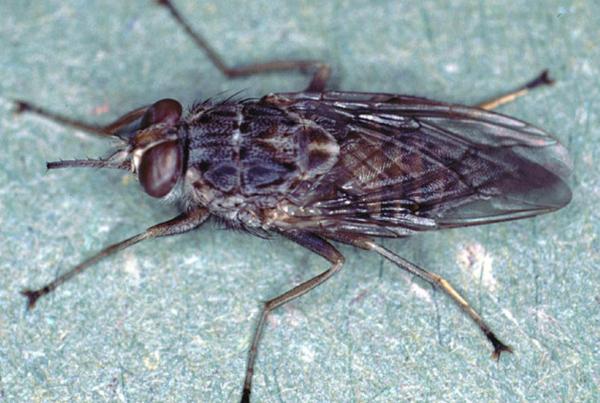
Tsetse fly (Glossina morsitans morsitans)
Its habitat is found in very dry areas of the African savanna, specifically in the sub-Saharan region of Africa. It is approximately 1.5 cm long, and both males and females are exclusive hematophages, which means they feed on blood. Their life cycle can be 5 to 6 months in the case of females, while males live around 3 to 4 months. These flies are vectors of the parasite Trypanosoma bruceiwhich causes African trypanosomiasis, popularly known as sleeping sickness.
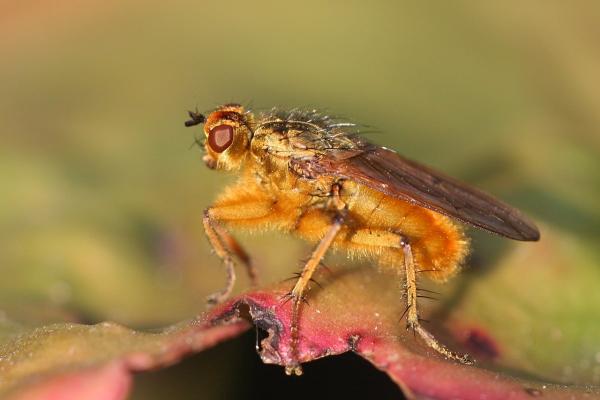
Dung fly (Scathophaga stercoraria)
It is commonly known as the yellow dung fly. Its distribution area covers regions of the northern hemisphere, mainly in North America and Europe. It is a small fly, approximately 1 cm long. Their name is due to their reproductive behavior, since they deposit their eggs in the feces of large mammals such as horses, cows, wild boars and deer, among others. Its function in nature is of great importance, since it contributes to the natural decomposition of animal waste.
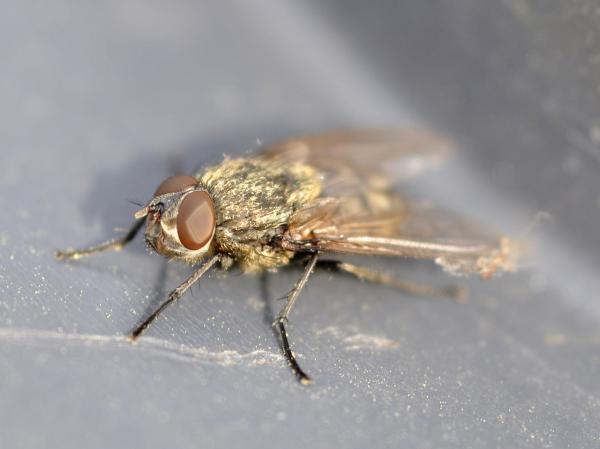
Attic fly (Pollenia rudis)
Pollenia rudis It belongs to the Polleniidae family and is distributed in North America and Europe. It is close to 1 cm long and its name is due to its habit of hibernating in places such as attics or attics during the coldest months. It is common for it to gather near windows or in warm areas, as it is very sensitive to changes in pressure and temperature. When it is a larva it eats earthworms, while in its adult form it consumes everything from flowers and fruits to sap.
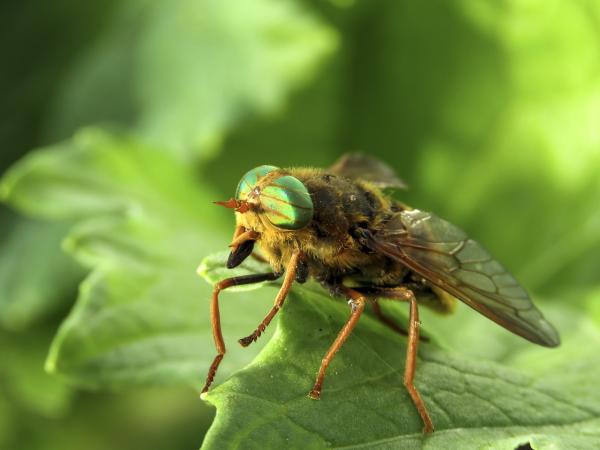
Horseflies (family Tabanidae)
Horseflies are like large black, brown or yellow-orange flies, which can reach a length of 2 cm. They are part of a group that includes more than 1,000 species belonging to the genus Tabanus, within the family Tabanidae. These species are active during the day and bite both humans and livestock. Females are hematophagous, while males feed on nectar and pollen.
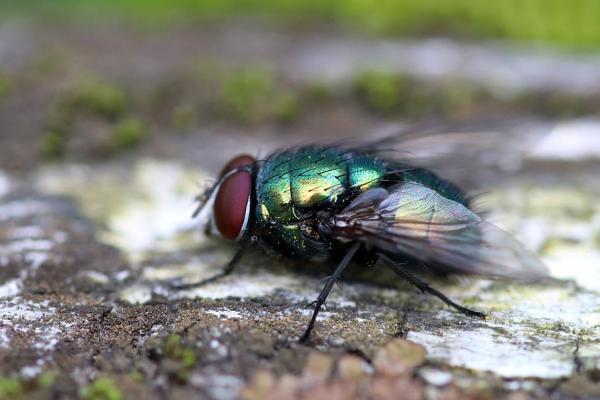
Blowflies or blowflies (family Calliphoridae)
Botflies form a group made up of more than 1,000 species of flies and have a distribution in almost all parts of the world, especially in tropical and temperate zones. They have an approximate length of 12 or 13 mm and are recognized by the bright colors they display, which vary between blue and green metallic tones. Furthermore, due to their eating habits, they are considered necrophages, that is, they feed on decomposing tissues and are scavengers.
Here you can learn about more scavenger animals: what they are, characteristics and examples.
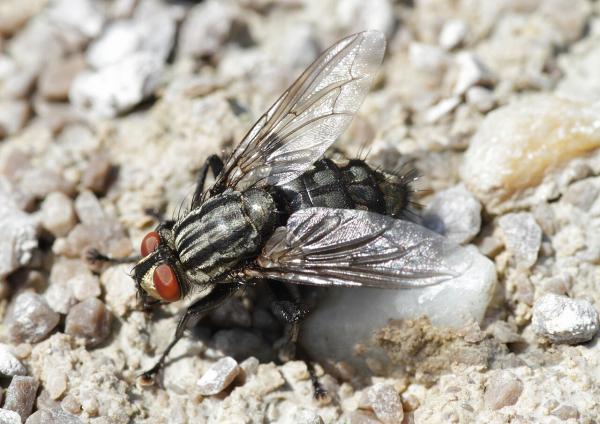
Flesh fly (Sarcophaga carnaria)
This species belongs to the Sarcophagidae family and has a distribution in central and northern Europe, although it can also be found in other areas. They reach a length of up to 1.5 cm, and stand out for the metallic gray color of their body. Its name is due to its feeding habit, as it perches on decomposing meat, where it reproduces and the larvae develop, especially during the summer months. They are common in places such as slaughterhouses, landfills and any area where decomposing organic matter accumulates.
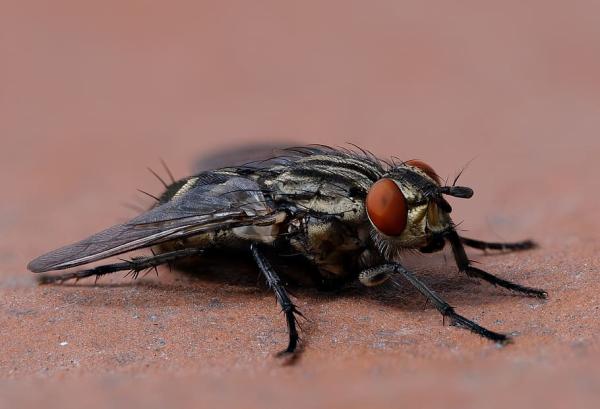
House fly (Musca domestica)
Undoubtedly, among the different types of flies that exist, the most recognized species is this one. It belongs to the Muscidae family and is one of the most common flies found in homes around the world. It has a length that ranges between 5 and 8 mm, and it is common to see it on food during the day. This species can transmit diseases to humans, since when it lands on food it can leave its infected excrement on it.
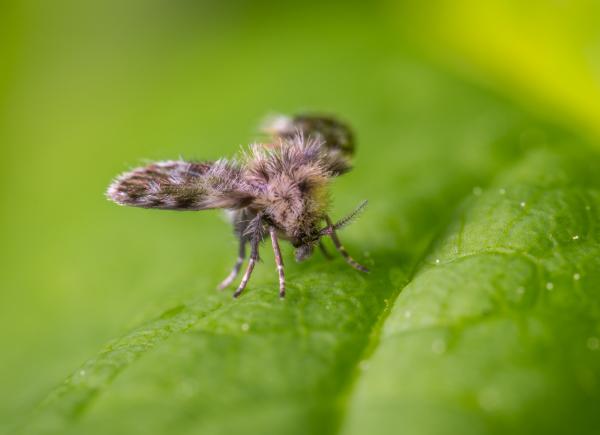
Drain flies (family Psychodidae)
Drain, or damp, flies have a wide distribution throughout the world, except in extremely cold regions. These flies are small in size, measuring less than 1 cm. Its body is flattened and covered in villi, hence its nickname “moth.” These small midges do not pose a risk to humans, although other members of the Psychodidae family serve as disease vectors.
Fruit fly (Drosophila melanogaster)
The fruit fly, belonging to the Drosophilidae family, is a species widely recognized throughout the world. This species is small in size, not exceeding 3 mm in length, and is characterized by its distinctive red eyes and a yellowish body with a darker part of the abdomen. Due to its short life cycle and genetic characteristics, the fruit fly has been used for many years in scientific research, especially in the fields of genetics and developmental biology.
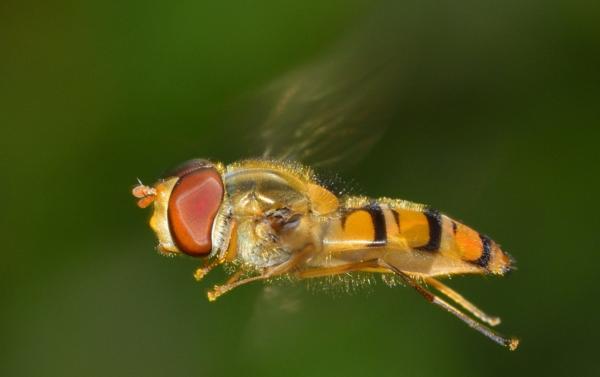
Stable fly (Stomoxys calcitrans)
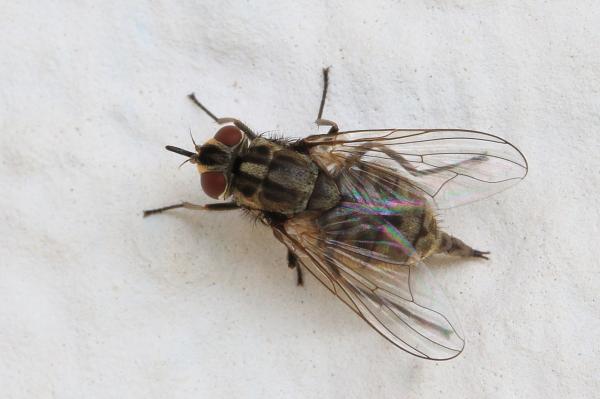
Also known as biting flies, this species originated in Asia and Europe. The specimens of Stomoxys calcitrans They are small flies, since they have an approximate size of 8 mm. This species has health relevance, since both males and females feed on the blood of humans and animals, and can act as vectors of various parasites and bacteria. Among them are trypanosomes and the bacteria responsible for anthrax (Bacillus anthracis), as well as other diseases such as brucellosis, horse sickness, anemia, among others.
Now that you have met 10 types of flies, we encourage you to discover the different types of bees.
If you want to read more articles similar to Types of Flies, we recommend that you enter our Biology category.
- Mourier, H., Winding, O., & Sunesen, O. (1979). Guide to Parasitic Animals in our homes. 224 pp. Ed. Omega.
- Povolny, D. (1997). The flesh-flies of Central Europe (Insecta, Diptera, Sarcophagidae). Spixiana Supplement, 24, 1-260.
