The electricity bill increased by 3% again last June, according to the latest data from the Organization of Consumers and Users (OCU). Faced with this increase, more and more homes are looking for ways to reduce electricity consumption without giving up comfort. In this sense, the refrigerator deserves special attention, since it is one of the few appliances that remains on 24 hours a day and represents an important part of a home’s energy expenditure.
The consumption of this device depends on various factors, such as its energy efficiency, the temperature at which it is regulated, the state of its components or the way in which it is used. However, there is one aspect that often goes unnoticed: the amount of food inside. Does a full refrigerator or an empty one consume more? Although it may seem like an unimportant detail, it influences the operation of the appliance and, therefore, electricity consumption.
Why a full refrigerator can help you save on your electricity bill
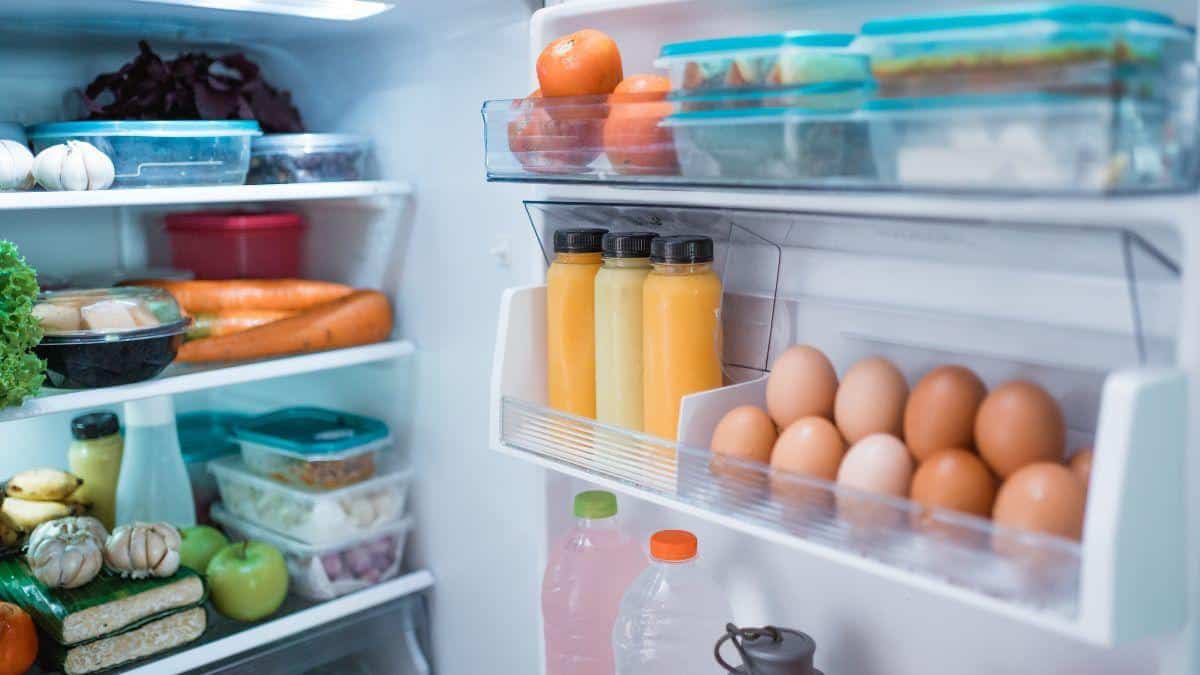
A full refrigerator usually consumes less electricity than an empty one, as long as it is not so loaded that it prevents the proper circulation of cold air. This is because stored food acts as a thermal reserve that helps keep the interior temperature stable. When the door is opened, the products retain part of the cold and reduce the effort that the compressor must make to recover the appropriate temperature.
This phenomenon is known as thermal inertia. The more cold foods there are inside, the less impact there will be from temperature variations caused by opening the door. In addition, since there is less space occupied by air, less hot air from outside enters each time the refrigerator is opened.

How much does an empty refrigerator consume?
An empty refrigerator usually consumes more electricity than a full or half-full one. Although the appliance maintains the same set temperature, the absence of food causes the cold air inside to heat up more quickly each time the door is opened. As a consequence, the compressor must work harder to recover the proper temperature.
The problem is that the air quickly loses cold and is replaced by warm air from the outside every time the door is opened. This causes more engine operating cycles and greater energy expenditure.
For this reason, an almost empty refrigerator is usually less efficient. In fact, some experts recommend placing water bottles, filled containers or ice packs in the free spaces to increase thermal inertia and help stabilize the interior temperature. In this way, the compressor needs to exert less effort to maintain the cold.
However, this does not mean that you have to fill the refrigerator completely. The greatest efficiency is achieved when it is reasonably full, but leaving enough space so that cold air can circulate properly between the food.
Differences between the energy consumption of refrigerators according to their label
Although actual consumption depends on the size of the refrigerator, the ambient temperature and usage habits, guideline values can be established for a medium-capacity combi refrigerator:
- Label A: they usually consume between 90 and 120 kWh per year. Taking as a reference an electricity price of €0.20/kWh, its annual cost would be between 18 and 24 euros.
- Label B: they are usually between 120 and 150 kWh per year, which is approximately equivalent to 24-30 euros per year.
- Label C: consumption is usually between 150 and 180 kWh per year, with an approximate cost of 30 to 36 euros per year.
- Label D: they usually consume between 180 and 220 kWh per year, so their electrical cost can be between 36 and 44 euros per year.
- Label E: usually requires between 220 and 270 kWh per year, which represents an expense close to 44-54 euros per year.
- Label F: they can reach consumption of 270 to 330 kWh per year, with an approximate cost of 54-66 euros per year.
- Finally, refrigerators with the G label, the least efficient, can exceed 330 kWh annually and even approach 400 kWh in some cases. This translates into an expense that can be between 66 and 80 euros per year.
Although the annual economic difference between two adjacent categories may seem small, it must be taken into account that a refrigerator operates 24 hours a day throughout the year. Throughout the useful life of the appliance, which usually exceeds ten years, opting for a more efficient model can mean a cumulative saving of several hundred euros on the electricity bill.

The most effective tricks to save energy with your refrigerator
With some simple usage habits and proper maintenance, it is possible to improve the efficiency of our refrigerator and use less energy. Below, we give you some tips to achieve this:
- Maintain an adequate temperature: it is not necessary to set the refrigerator to excessively low temperatures. Experts recommend keeping the refrigerator between 3 and 5°C and the freezer at around -18°C.
- Avoid opening the door more than necessary: every time the door is opened, hot air enters from outside and the compressor must work to recover the interior temperature.
- Do not introduce hot food: storing freshly cooked food forces the refrigerator to eliminate excess heat, increasing electricity consumption.
- Fill the refrigerator evenly.
- Check the door rubber: deteriorated seals can cause cold air leaks and force the engine to run for longer.
- Keep the rear grilles clean: dust accumulated on the condenser makes heat dissipation difficult and reduces the efficiency of the device.
- Place the refrigerator in a suitable place: it is advisable to place it away from heat sources such as ovens, radiators or areas where it receives direct sunlight. The higher the ambient temperature around it, the more energy it will need to cool its interior.
- Defrost the freezer if frost accumulates: in models that do not have No Frost technology, a thick layer of ice reduces energy efficiency and increases consumption.
If you want to read more articles similar to Full or empty refrigerator: experts clarify what consumes the most electricity today, we recommend that you enter our Energy Savings category.
