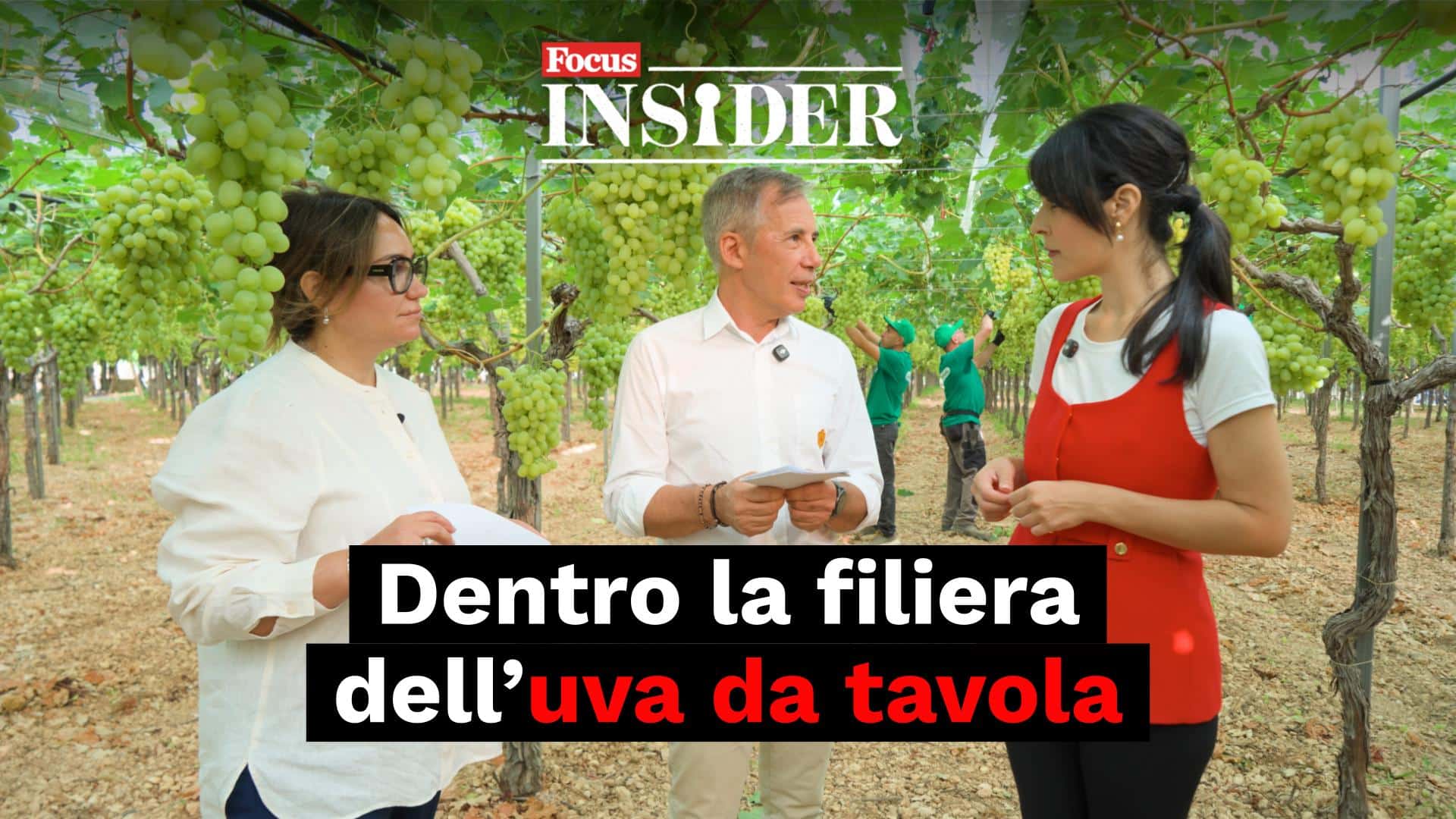
In the fruit and vegetable section of the supermarket, a bunch of Conad Percorso Qualità grapes shows that they belong to a controlled supply chain. But how is it concretely guaranteed? What selection criteria accompany the product?
And how far back do we need to go to truly rebuild the quality guarantee?
After following the journey of a Sicilian lemon, Evidence Network Insider returns to a controlled supply chain to explain the mechanisms and does so by following the Conad Quality Path. Giada Giorgi, Evidence Network journalist, starts from Puglia and table grapes, one of the most delicate fruit and vegetables products.
Before the bunch
The journey begins in Trani, on the OP Secondulfo farm, a supplier chosen by the large distributor according to even more stringent guidelines than those imposed by the market.
The first step in the supply chain occurs even before entering the rows. Among the first responsibilities of the large distributor is the choice of supplier. The selection takes place on the basis of precise requirements, verifying structures, working methods and ability to comply with the required standards.
From here begins a journey of shared responsibilities: each actor in the supply chain will have to respond to a different phase of the journey thanks to a traceability that will remain imprinted on the final label and which, as Pietro Di Girolamo, Conad Ortofrutta Quality Manager explains, «will have the task of guaranteeing the monitoring of every possible error along the entire path, from the field to the point of sale».
It’s easy to say grapes
You only need to look at a few rows to understand how much table grapes can change from one variety to another. The shape and size of the grapes, color, consistency, flavor and ripening times can be very different.
«To put a new variety of grape on the market can take over 15 years of research», explains Antonio Mastropirrro, agronomist technician of OP Secondulfo, the agricultural company chosen by the large distributor.
«A varietal research born in the 1980s in the United States and which required very scrupulous work on adaptability to Italian soil», continues Maurizio Cristoni, Conad National Fruit and Vegetable Buyer. Up to 15 different varieties of table grapes coexist in the over 200 hectares of land, which allow us to accompany the grape season throughout the year.
