
The high summer temperatures make air conditioning become an essential ally in many homes. However, using this equipment incorrectly can result in a considerable increase in electrical consumption. To avoid this, Alejandro Hellín, a professional specialized in air conditioning, offers several recommendations to get the most out of the equipment without increasing the bill.
During his speech on the podcast Trades Sectorthe expert has reviewed some of the most frequent errors when using air conditioning and has explained what type of installation he considers most efficient for a home.
Setting the air conditioning to 16ºC does not cool the house faster and can increase consumption
One of the most common habits when you get home after several hours exposed to the heat is to turn on the air conditioning and select a very low temperature. However, this strategy does not make the home cool down sooner.
Hellín sums it up clearly: “You can’t leave the machine off and come home and set it to 16ºC because it’s too hot.” The problem is that setting an extreme temperature does not mean that the device will reach that level more quickly. The team will continue working to progressively reduce the temperature of the room.
Furthermore, maintaining an excessively low setpoint can increase energy consumption. For this reason, it is more advisable to set a moderate temperature and allow the system to work stably.
The recommendations of the Organization of Consumers and Users (OCU) place between 24 ºC and 26 ºC an adequate temperature to combine comfort and efficiency during the hot months.

Why you should not constantly turn the air off and on
Another common mistake is turning off the air conditioning every time you leave a room for a short period and turning it on again when you return. Although it may seem like an obvious way to save, continuous changes in operation are not always the most efficient option.
The goal should be to prevent the equipment from constantly having to face large temperature differences. In certain circumstances, maintaining a stable temperature can be more efficient than trying to suddenly recover thermal comfort after having allowed the home to heat up excessively.
Programming can therefore become a particularly useful tool. Adjusting the operating hours allows you to adapt the use of the device to the real needs of each home and prevent it from remaining on when it is not necessary.
Hellín explains that in his own home he uses the system for a good part of the afternoon and evening. His experience reflects precisely the importance of finding a balance between comfort, schedules and consumption.
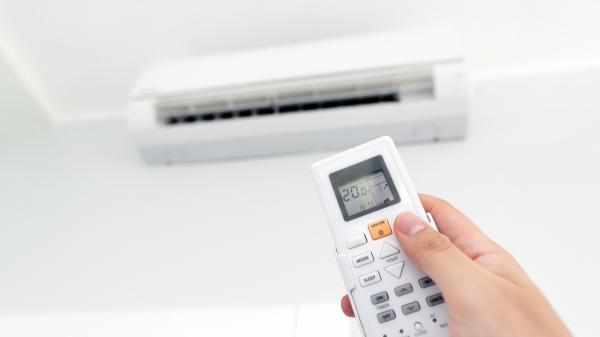
Air through ducts or several splits? The system that this expert recommends to air condition the house
The choice of equipment also influences consumption and temperature distribution. According to the specialist, there are different alternatives and it is not always necessary to use a single duct machine to air condition a home.
Hellín highlights that several independent units can have an installation cost similar to that of a duct machine, depending on the characteristics of the property. The decision must assess aspects such as the distribution of the rooms, insulation, the size of the home and the needs of each user.
The main advantage of ducted systems is the possibility of distributing air homogeneously throughout different rooms. Precisely for this reason, it is the solution that the expert himself has chosen for his home.
However, before installing any equipment it is advisable to seek the advice of a professional. Incorrect sizing can cause both comfort problems and higher consumption than necessary.
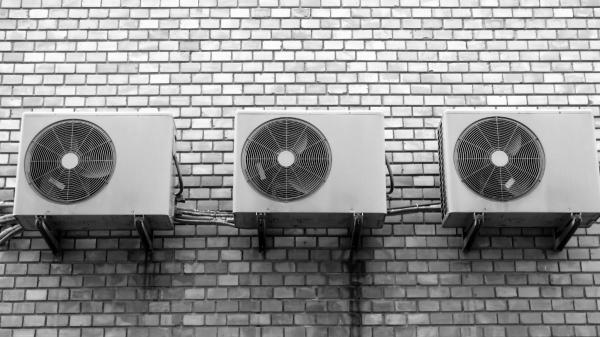
Ventilation is also important to combat the heat at home: it is not enough to just put the air in.
Using air conditioning correctly does not mean keeping the windows closed all day. Ventilation continues to be necessary to renew indoor air, although it is advisable to choose the right time.
During the middle of the day, when outside temperatures are higher, opening the windows can cause hot air to enter and increase the thermal load on the home. On the contrary, the early morning and evening hours usually offer more favorable conditions for ventilation.
Hellín himself explains that he takes advantage of certain hours to turn off the equipment and ventilate the house before putting it back into operation.
Other simple guidelines can be added to these measures: lower blinds or awnings during the hours of greatest solar radiation, keep the device’s filters clean and avoid excessively low interior temperatures.
In short, saving with air conditioning is not simply about using it less, but about using it better. Choosing a suitable system, setting a reasonable temperature, programming schedules and ventilating when outdoor conditions are favorable can make a significant difference in consumption.
If you want to read more articles similar to Alejandro Hellín, air conditioning expert: “It makes no sense to turn off the air conditioning for hours and then come home and set it to 16ºC because it is very hot”, we recommend that you enter our Energy Savings category.
