
Buying land to build a home or launch a real estate project is common. But Jim Stevenson and Tara Tanaka, an American couple, made a very different decision: they bought an 18-hectare swamp in Florida to prevent it from becoming a developed area.
The couple had been living next to this cypress wetland for years, near the city of Tallahassee, and knew firsthand the number of animals that depended on it. In 2007 they had the opportunity to acquire the 45 acres of land, equivalent to about 18 hectares, and decided to preserve it as a private refuge for wildlife.
Over the years, the space became a small natural sanctuary. In 2022, the United States Fish and Wildlife Service (USFWS) counted 275 wood storks nesting in the wetland, in addition to numerous herons, ducks and other species.
From threatened land to natural refuge: this is how they managed to protect this Florida wetland
The story of this Florida swamp begins with a very specific concern: to prevent a natural space from ending up disappearing under real estate development.
Stevenson, a retired biologist who had worked in state parks, and Tanaka, a nature photographer and videographer, were well aware of the ecological value of the land. Even before purchasing it, Stevenson would canoe around the wetland and remove Chinese tallow trees, an invasive species that could alter the vegetation there.
When they finally acquired the property in 2007, they began working to maintain its natural conditions. It was not simply a matter of leaving the land intact, but rather managing the ecosystem so that it remained suitable for the species that already lived there.
The result was especially visible in birds. The wetland offers areas of water, trees and nesting spaces that allow different species to find food and protection.
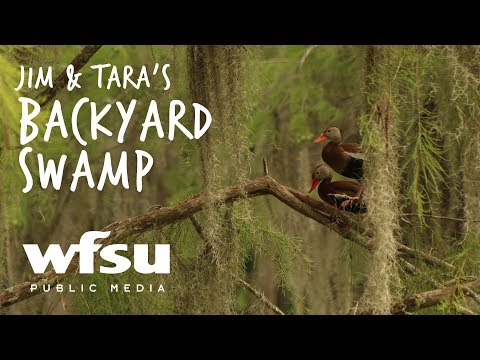
Great blue herons, egrets, anhingas, Carolina ducks and rockfish can be seen here. There are also mammals such as bobcats, raccoons, foxes, otters, beavers, coyotes and swamp rabbits.
The wetland was filled with life after years of conservation: 275 storks and dozens of species
One of the greatest conservation successes of this land was the arrival and reproduction of hundreds of wood storks, a species closely linked to the wetlands of the southeastern United States.
In 2022, the USFWS counted 275 individuals nesting on the property. For a couple who had bought the land precisely to protect it, the figure was an example of the extent to which the ecosystem had changed.
Storks usually build their nests in trees located over or surrounded by water. This location provides some protection from terrestrial predators that could get to the eggs or hatchlings.
And here appears another of the protagonists of the wetland: the American alligator. Although it may seem strange that a reptile of this size would benefit birds, its presence can have a positive effect. Alligators occupy aquatic areas and can make it difficult for some terrestrial predators to reach nests.
Stevenson even created a small island for these reptiles to rest on. Meanwhile, Tanaka was in charge of documenting much of the life that took place around his house through photographs and videos.
How the couple legally protected the land so that no one can change its future
Preserving a natural space for years is one thing. Guaranteeing that it will continue to be protected when its owners are no longer around is quite another.
Stevenson and Tanaka understood that the future of the wetland could not depend solely on their continued ownership. In 2016, they established a permanent conservation easement, a legal tool that allows property to be kept private while limiting certain uses and developments that could harm its environmental value.
In this way, the protection of the swamp became legally linked to the land and not only to the will of its owners.
The couple also maintains strict rules within the estate. Hunting or fishing is not allowed and the actions carried out on the ground seek to maintain the conditions that the fauna needs.
The initiative is based on an increasingly important idea for conservation: private lands can also play a fundamental role in protecting ecosystems.
Tanaka herself has defended that, if private landowners do not contribute to conserving their land, it may become increasingly difficult to find suitable habitats for fauna, especially in the case of wetlands.
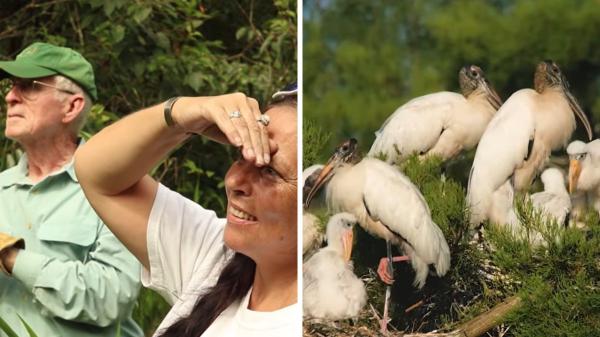
The wood stork was on the brink of extinction and now it is once again conquering the wetlands of the United States
The presence of 275 storks in this small wetland is even more significant due to the history of the species.
The wood stork suffered a sharp decline during much of the 20th century. In the 1930s there were an estimated 20,000 breeding pairs in the Everglades, but by the 1970s the number had fallen below 5,000. In 1984 it was included on the US list of endangered species.
The loss and degradation of wetlands played an important role in this decline, since these ecosystems provide storks with much of the food and spaces they need to reproduce.
The recovery of wetlands and conservation programs made it possible to progressively reverse the situation. In 2022, there were already more than 10,000 breeding pairs in the United States and nesting colonies had multiplied.
In February 2026 came another important step: the US Government removed the wood stork from the federal list of threatened and endangered species.
The small swamp protected by Stevenson and Tanaka is just one piece of that recovery, but its story serves to show what can happen when a wetland maintains its natural conditions for decades.
If you want to read more articles similar to They bought an 18-hectare swamp to avoid real estate development and 19 years later it is a wildlife refuge with 275 storks and other species, we recommend that you enter our Ecosystems category.
