
Biologist Felipe Morales sends a forceful message in one of his videos on social networks: “it is not a problem of lack of solutions, it is a problem of lack of will.” Every year thousands of birds die silently when they collide or are electrocuted by power lines that cross fields and natural spaces. In Spain, as he explains, it is estimated that around 30,000 birds disappear annually for this reason.
Although it is a threat that is not very visible to the majority of the population, scientific research has been warning for years about its impact on protected species such as eagles, vultures and kites. Many of these deaths could be avoided with technical measures already available, but experts and conservation organizations insist that there is still a lack of will to apply them widely.
Why thousands of birds die every year on power lines without being barely seen
Morales emphasizes that the number of birds affected by power lines “is probably many more because not all of them are found,” this is because many corpses disappear and deaths go unnoticed. Scientific literature confirms their alarm: a 2026 study by the World Bank and the International Finance Corporation (IFC) estimates that collisions and electrocutions cause the death of millions of birds per year globally.
The problem mainly affects open areas lacking trees, since birds look for poles as perches, and can trigger fires or power outages. To illustrate the magnitude of the problem, an article about Doñana (Spain) documented more than 2,000 dead birds per year in just 100 km of power lines.
Certainly, the invisibility of the problem is due to both the lack of data and poor social perception; perhaps because we don’t see the corpses, we minimize the impact. That is why becoming aware of this invisible threat is the first step to addressing effective solutions.
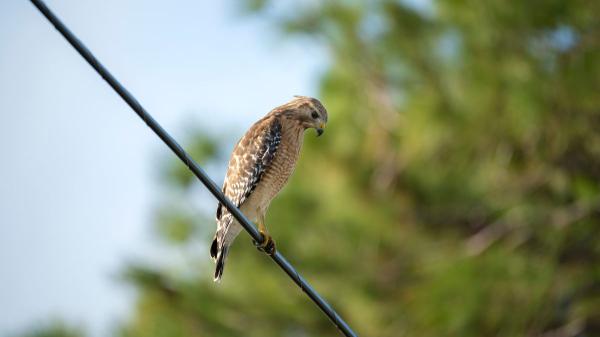
How power lines cause the death of thousands of birds every year
Felipe Morales distinguishes between two types of accidents: electrocution, when a bird closes a circuit by touching two energized parts or an energized part and the pole; and collision, when it hits the cables in flight.
Studies in Nepal, for example, recorded a total of 43 bodies on 30.6 km of line (26 from electrocution and 17 from collision) and calculated a rate of 0.55 collisions per kilometer and 2.22 electrocutions per ten poles. The same research highlights that mortality is associated with the proximity of agricultural areas and human settlements.
Morales denounces that “the problem is that many lines remain old or are not corrected,” insisting that the consequences are avoidable. The review by Loss et al. concludes that in the US, collisions cause between 8 and 57 million deaths annually and electrocutions between 0.9 and 11.6 million; Furthermore, 91.7% of electrocution records belong to raptors.
Given these figures, it can be interpreted that collision is usually undervalued compared to electrocution, perhaps because large dead birds on poles are more evident. However, both phenomena are equally tragic and require specific responses: risks increase in different contexts and for different species.
Eagles, vultures and other birds of prey are the main victims of power lines.
Morales emphasizes that “those most affected are birds of prey such as eagles, vultures or kites.” Scientific literature supports their claim: the analysis noted above by Loss et al. showed that raptors make up more than 90% of electrocution records. The Raptor Research Foundation study points out that most electrocutions occur in low-voltage distribution systems and that large birds, such as eagles, vultures and falcons, are the most vulnerable.
Morales warns that “many of the birds of prey such as the Iberian imperial eagle or the black vulture are already threatened” and, in addition, the problem threatens already fragile populations. In Europe, electrocution is the main cause of death of the Iberian imperial eagle; It represents between 48 and 60% of registered deaths.
Although it is true that the loss of raptors has particularly serious ecological consequences because they are key predators and usually have low reproductive rates; The focus on raptors should not overshadow other species, such as waterfowl, storks, cranes or chickens that also suffer collisions, and in some regions corvids or pigeons, which are electrocuted more frequently.
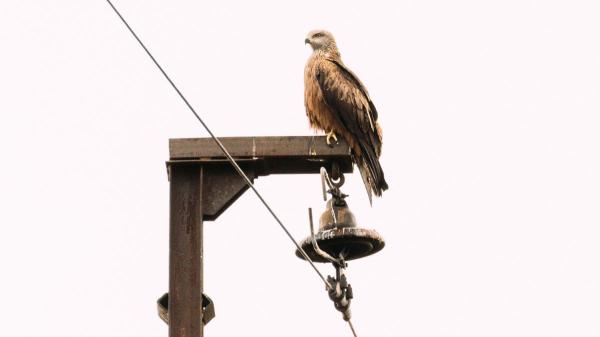
Solutions to prevent these deaths exist, but they are still not applied enough
Morales leaves us a strong message: “it is not a problem of lack of solutions, it is a problem of lack of will.” To reduce collisions, the European BirdLife and APLIC guides propose marking cables with beacons, spirals or luminous spheres to improve visibility and remove ground cables in critical sections. These measures can reduce mortality by up to 70%.
Morales maintains that “adapting cables, isolating cables or marking lines” would be measures that work, and highlights that there are regulations such as Royal Decree 1432/2008 in Spain that require correcting dangerous supports.
In my opinion, technology and regulations already offer a clear path. The real challenge is the political will and involvement of the electricity companies. Planning new lines should consider ecological sensitivity maps, avoiding migratory corridors and critical habitats.
Likewise, it is necessary to register in an orderly manner the birds killed by electrocution or collision, indicating the area, the species and the probable cause, to identify the most dangerous points and first correct the power lines that generate the greatest mortality.
If you want to read more articles similar to Felipe Morales, biologist: “In Spain it is estimated that about 30,000 birds disappear a year due to electrocution or collision with power lines”, we recommend that you enter our Biodiversity category.
