
Electronic waste hides an environmental paradox. Discarded cell phones, computers, circuit boards and other devices contain gold, copper, silver and numerous valuable metals, but recovering them can require energy- and chemical-intensive processes.
Now, researchers at the University of Illinois Urbana-Champaign, in the United States, have developed a molecule that allows electricity to be used to control the capture and release of certain metals. The advance, published in July 2026 in the scientific journal ACS Energy Letterscould reduce the consumption of certain reagents used during the separation of metals by between 10 and 100 times.
The system has already managed to selectively recover around 89% of the gold present in solutions obtained from electronic waste.
A molecule acts like a small clamp capable of capturing and releasing metals using electricity
The problem is not just finding gold inside an electronic device. Once the waste is processed and its components dissolved, a mixture is obtained in which numerous metals can coexist. Specifically separating the one that interests you constitutes one of the most complex stages.
The team led by Xiao Su, professor in the Department of Chemical and Biomolecular Engineering at the University of Illinois Urbana-Champaign, has been working for years on electrochemical systems to solve this problem.
The new research refines a technique called electrochemically mediated liquid-liquid extraction (e-LLE). Its principle consists of using an extractant molecule that recognizes certain metal ions and allows them to be selectively transferred from one liquid phase to another.
The innovation is in its design. The molecule combines a ferrocene redox center with a permanently charged ammonium group. This last characteristic provides ionic conductivity in the organic medium, while electricity allows modifying the chemical state of ferrocene and controlling the capture and subsequent release of the metal.
In this way, an electrical signal can act as the switch of a small molecular clamp: it captures the desired ion, allows it to be separated from the mixture and then releases it to begin the cycle again.
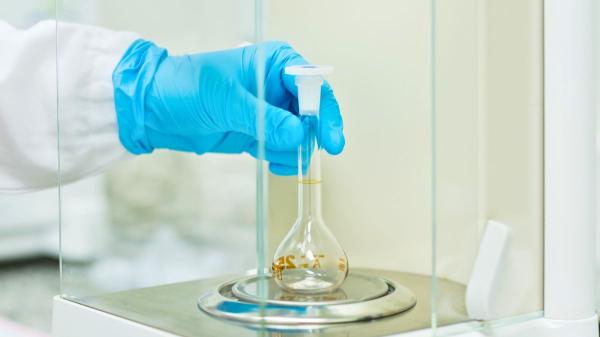
The system reduces the use of chemicals by up to 100 times and recovers 89% of the gold from electronic waste
This technology is especially interesting from an environmental point of view because conventional metal recovery processes can depend on considerable amounts of acids, bases, oxidants, reducers and other reagents.
Electrification makes it possible to replace part of these chemical transformations with electrical signals. According to the work developed in Illinois, the new design could reduce between one and two orders of magnitude, approximately between 10 and 100 times, the consumption of certain chemicals related to this separation phase.
This does not mean that it is possible to recover gold from a computer using electricity alone. The metals must first be freed from waste and brought into solution through pretreatments. The developed technology acts fundamentally on its selective separation and subsequent recovery.
In tests carried out with e-waste leachate, the system achieved a selective gold recovery of 89%, with a separation factor of 35. In addition, the study raises potential advantages in both operating and capital costs compared to the previous electrochemical design of the equipment itself.
The goal is not limited to gold either. By modifying the molecular structure, the technology could be adapted to other elements, including platinum group metals present in used catalysts and materials from industrial or mining waste.
A 62 million ton global problem
The possibility of recovering more materials using fewer reagents becomes important given the accelerated growth of electronic waste. The Global E-waste Monitor, produced by the International Telecommunication Union (ITU) and UNITAR, estimated that the world produced 62 million tons of electronic waste in 2022. Only 22.3% was documented as correctly collected and recycled.
If current trends continue, this mountain could reach 82 million tons annually by 2030. In addition to potentially hazardous materials, this waste contains enormous amounts of usable resources: approximately 31 million tons of metals were present in the devices discarded in 2022.
Hence the interest in so-called urban mining: recovering materials already extracted from nature and present in phones, computers, appliances, vehicles and other products before resorting to new mineral resources.
Illinois’ technology is still in the research phase. To transfer it to an industrial scale, issues such as the stability of the molecules during numerous cycles, their cost, electrical consumption and their performance against waste streams that are much more variable than those used in the laboratory will have to be verified.
The demonstrated principle, however, opens a relevant path for the circular economy: using electricity to replace part of the chemical reagents necessary to recover valuable raw materials from our own waste.
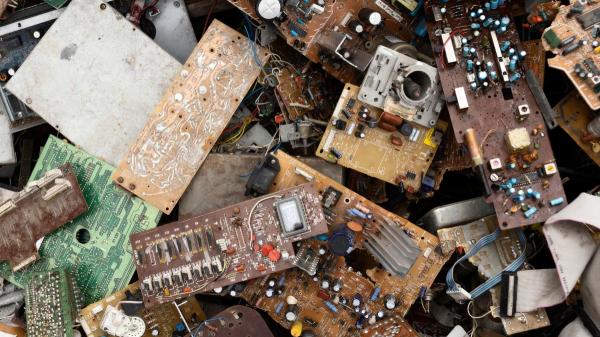
If you want to read more articles similar to Illinois researchers develop a molecule to recover gold and other metals from electronic waste using up to 100 times fewer chemicals, we recommend that you enter our Pollution category.
- Selective Gold Recovery from Waste Electronics: A Speciation-Based Recycling Approach / Available at: https://www.mdpi.com/1996-1944/19/3/538
