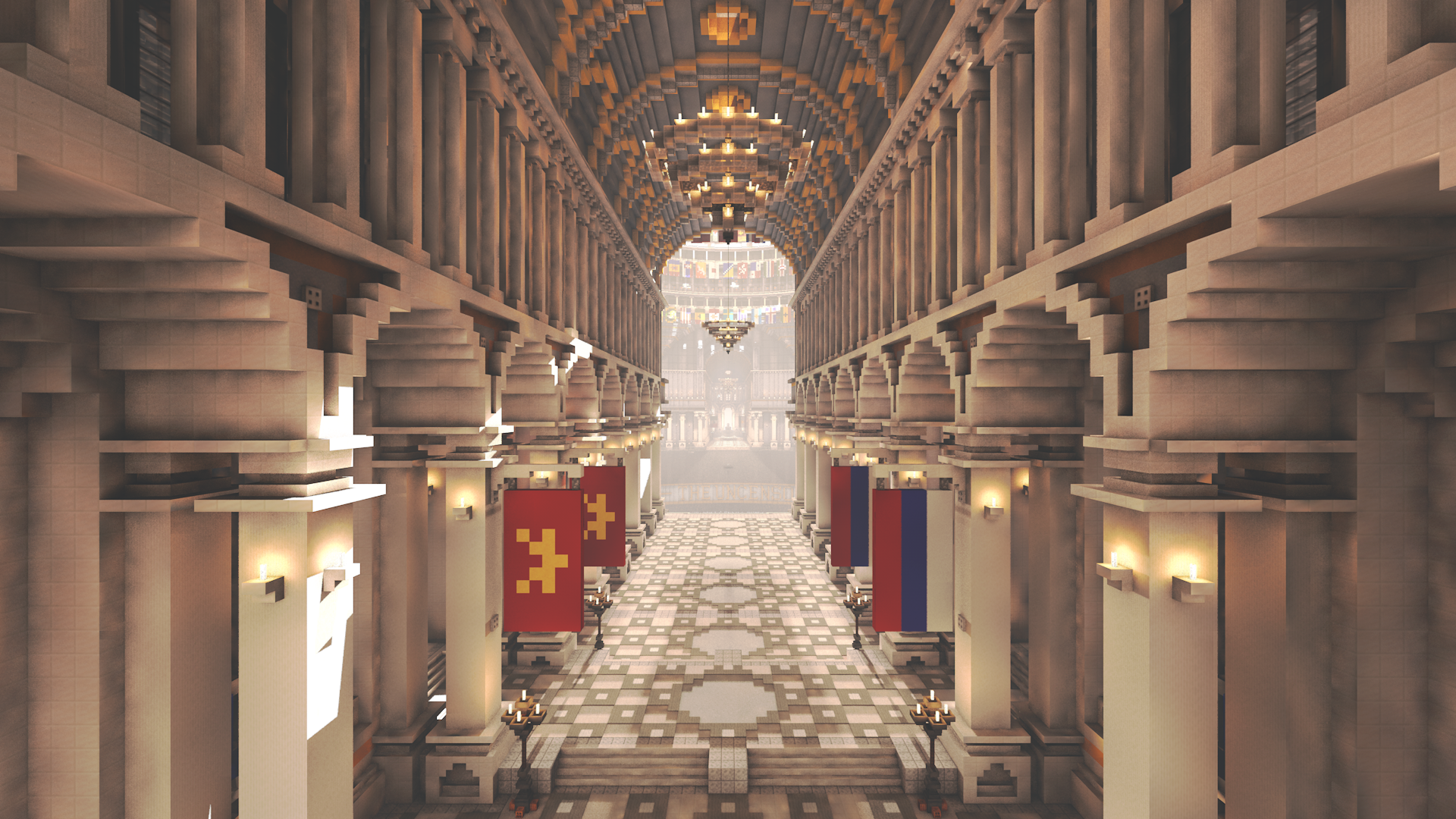
The Uncensored Library was created by Reporters without borders (RSF) taking advantage of a fact: even where newspapers and websites are blocked, Minecraft continues to work.
At first glance, Minecraft seems like the least suitable place for investigative journalism, being a video game made of blocks, pickaxes and pixelated constructions. Yet, since 2020 it has hosted The Uncensored Library, a giant virtual library created by Reporters Without Borders (RSF) together with the BlockWorks collective to make articles censored in their countries of origin accessible again.
The idea exploits a very simple feature: even where newspapers, websites and social networks are blocked, Minecraft often continues to function, and so texts prohibited on the web can reappear within the game in the form of virtual books. Today the library includes around 300 volumes and is continuously updated with new contents.
A block library
To enter it you need to use Minecraft and connect to the project server, or download the entire map and open it on your computer. Once inside, you find yourself in front of a huge neoclassical building, created by 24 BlockWorks specialists over the course of three months: corridors, domes and monumental rooms are built with millions of digital cubes, but there are no simple decorations on the shelves.
The censored texts are in fact transcribed into real Minecraft “books”, objects which in the game can contain up to 100 pages and which visitors open and read continuously.
Articles are generally available in both the original language and English and cannot be edited by users on the server. In the large entrance hall you can also consult information on press freedom in 180 countries.
Since 2020, the library has been visited more than a million times and its books have been read about 10 times as much overall.
Censorship bypassed
The trick works, because blocking an online newspaper is relatively simple, all it takes is an authority ordering providers to prevent access to its address or to filter certain domains.
An article transformed into an object within a video game, however, follows a different path and can escape systems designed mainly to control sites and information platforms.
Of course it is not an infallible protection, given that a government could block Minecraft itself, the server address or the ability to download the map, but the presence of a downloadable copy makes the project more difficult to permanently delete, because the virtual world can be preserved and shared even independently of the original server.
The sections host, among others, articles from Russia, Iran, Saudi Arabia, Vietnam, Egypt and Belarus, including works by journalists imprisoned, forced into exile and even killed for their activities.
New room
In March 2026 RSF also added a section dedicated to the United States, a different choice compared to those concerning countries where there is systematic censorship. In fact, the organization specifies that in the USA the same type of state control of information present in authoritarian regimes does not occur, but it is still appropriate to document more indirect forms of pressure on the press, such as restrictions on access to public information or removal of government pages and data.
The room includes, among various testimonies, even a cartoon by the Pulitzer Prize winner Ann Telnaes who the Washington Post he decided not to publish. It is also due to this variety of content that The Uncensored Library continues to expand its audience, six years after opening.
