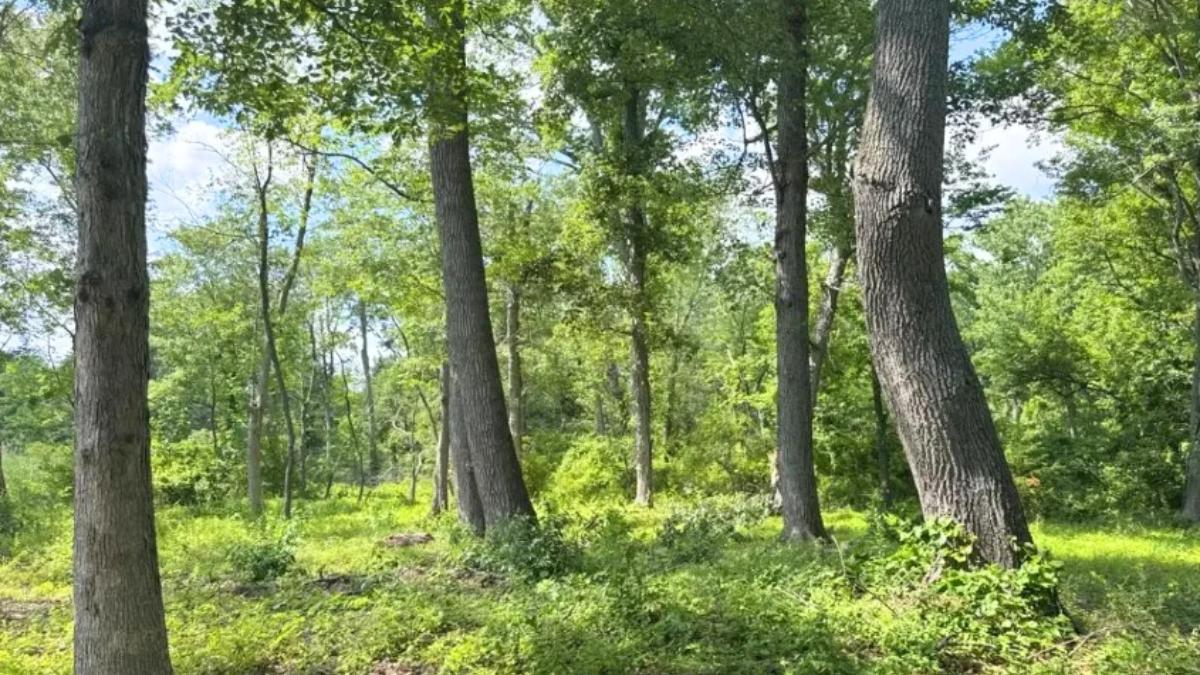
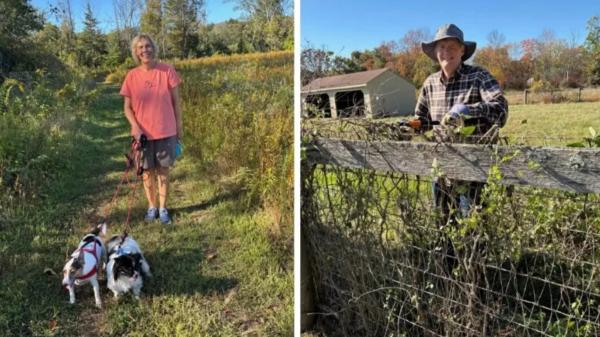
A relatively small farm can acquire enormous ecological value when it stops being an isolated place and becomes part of a much larger protected territory. That is precisely what has happened in Buckingham Township, in Bucks County, Pennsylvania (United States), where Leah and Doug Beck have decided to guarantee the permanent conservation of a property of about 12 hectares, equivalent to just over 12 hectares.
The family has established a conservation easement with the Heritage Conservancy. This mechanism permanently limits certain uses and developments of the property even if it changes ownership. The farm is located next to the Russell-Mandel reserve and is thus integrated into approximately 526 hectares of agricultural land and connected protected natural spaces.
4 hectares of oaks that have become a refuge for hundreds of species
Approximately 4 hectares of the property are covered with forest, with an abundance of oaks (Quercus) and American walnut trees or hickory (Karya) mature. Another 7 hectares correspond mainly to pastures and agricultural land, so the farm combines open and forest environments.
The value of oaks goes far beyond their size. Research published in Nature Communications analyzed the relationships between plants and lepidopterans in 83 counties in the United States and found that a small proportion of plant genera supports many of the butterfly and moth species. Quercus is among those fundamental genera.
This explains the Heritage Conservancy’s reference to the hundreds of caterpillar species that can benefit from these trees. Caterpillars also provide food for numerous birds, so conserving native trees can have effects at different levels of the food chain.
Another study published in Biological Conservation found precisely that native plants maintained a higher biomass of caterpillars than introduced plant species and that insectivorous birds, such as the Carolina chickadee, preferred to feed on them.
Mature trees also provide shelter and roosting places for bats. The Heritage Conservancy also mentions wild turkeys and different species of birds among the fauna favored by forest conservation.
The 12 hectares expand a much larger natural landscape
The location makes these 12 hectares something especially interesting. The property is located next to the Russell-Mandel Preserve, a reserve of about 22 hectares, and expands a group of protected spaces that reaches more than 530 hectares.
Conservation science has spent decades studying why maintaining connections between habitats can be important. A meta-analysis published in Conservation Biology that examined 78 experiments concluded that corridors increased the movement of organisms between connected versus unconnected fragments by approximately 50%.
This does not mean that any corridor benefits all species in the same way. The answer depends on the organism, the landscape and the quality of the habitat. There is abundant evidence of the problems associated with the loss of natural surface and isolation.
A large study published in Science Advances found that 70% of the planet’s remaining forest was located less than a kilometer from an edge and documented significant alterations in biodiversity and ecosystem functions related to fragmentation.
This continuity may become even more important as the climate changes. Many species need to move to find adequate temperatures, food and conditions, but roads, urbanizations and intensely transformed terrain make these movements difficult.
Maintaining connected natural plots expands possible dispersal routes and allows animals and plants to better respond to environmental changes that may occur over the coming decades.
A forest that also protects water
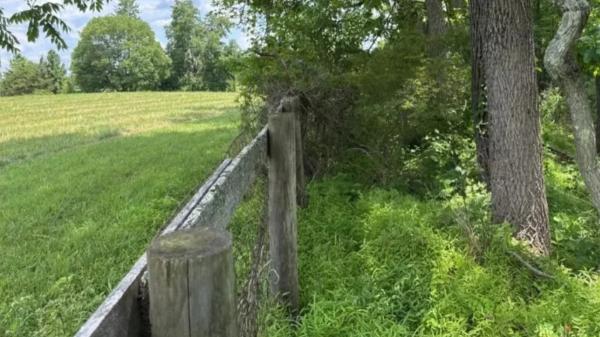
There is another relevant characteristic of the Beck estate. Part of its trees surround a tributary that flows into Pidcock Creek. Maintaining vegetation on its banks provides habitat for birds, reptiles and amphibians and helps retain sediment before it reaches the water, according to the Heritage Conservancy.
Conservation does not imply abandoning agricultural activity either. Pennsylvania has an extensive policy of protecting farmland through easements: the state program currently exceeds 6,600 farms and more than 267,000 hectares permanently preserved.
The Becks’ case thus shows an increasingly important idea in conservation: not all decisive actions need to encompass enormous nature reserves. Protecting a strategically located plot can prevent further habitat loss, preserve mature trees and, above all, prevent a break from appearing within a much larger natural landscape.
If you want to read more articles similar to A family protects its 12-hectare farm forever: its oak trees have become a refuge for bats, turkeys and hundreds of species of caterpillars, we recommend that you enter our Ecosystems category.
