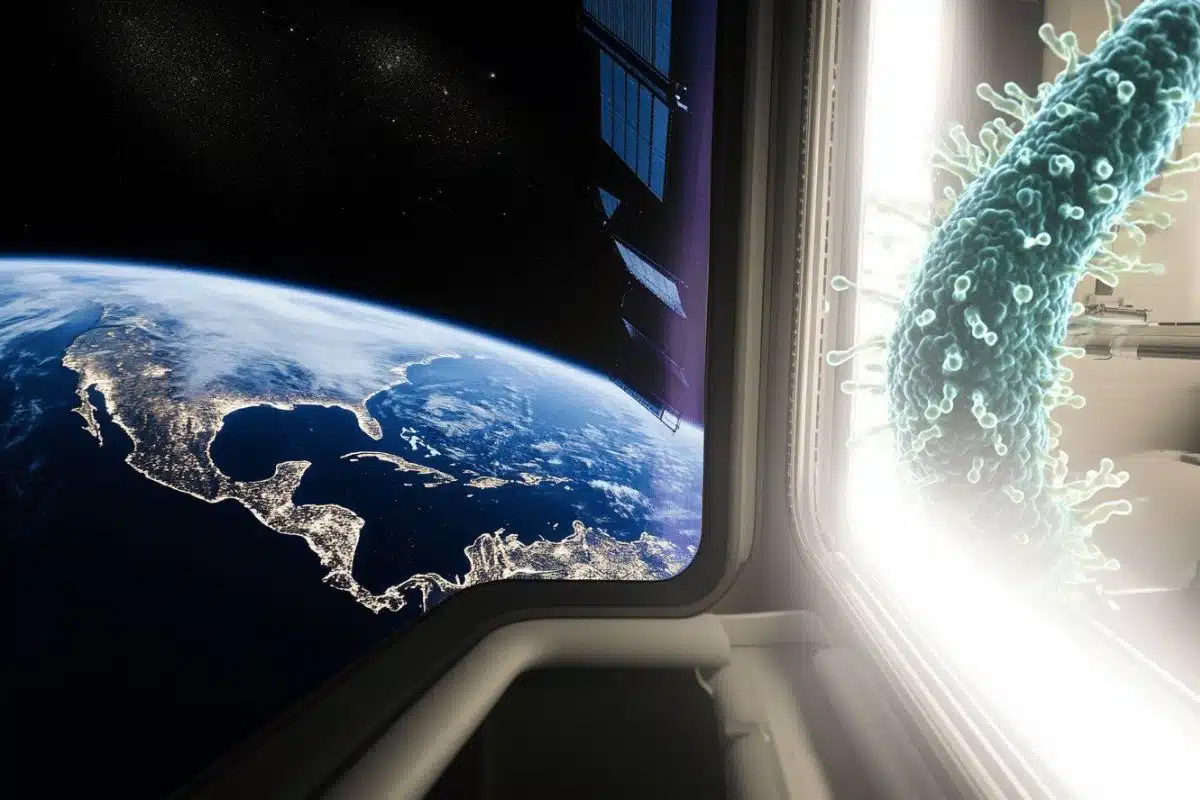
In a scenario reminiscent of science fiction storylines, Chinese astronauts aboard the Tiangong space station have encountered an unprecedented discovery that has sent ripples through the scientific community. A previously unknown bacterial species has developed in the confines of this orbiting laboratory, challenging our understanding of microbial adaptation and raising questions about the implications for future space missions.
Mysterious space microbe discovered in Tiangong’s habitation module
During a standard sampling procedure in May 2023, the Shenzhou-15 crew made a remarkable finding within the habitation module of China’s orbiting laboratory. Scientists identified a completely novel bacterial species never before documented on Earth. This microorganism, subsequently named Niallia tiangongensis after its birthplace, represents a significant breakthrough in space microbiology.
Analysis conducted through the China Space Station Habitation Area Microbiome Program (CHAMP) revealed that this bacterium shares genetic similarities with Niallia circulans, a resilient soil bacterium previously classified within the Bacillus genus. However, the space-born variant exhibits unique adaptations that differentiate it from terrestrial counterparts.
What makes Niallia tiangongensis particularly fascinating is its specialized metabolism. The bacterium has developed an enhanced ability to break down gelatin for extracting essential nitrogen and carbon compounds, while apparently losing capabilities to process other energy sources. This metabolic shift demonstrates remarkable evolutionary plasticity in response to the harsh space environment.
The discovery joins other instances of microbial adaptability in space environments. Research has shown that living microbes sealed inside a 2 billion year old rock demonstrate similar resilience mechanisms, suggesting that bacterial adaptation strategies may have ancient evolutionary origins.
Space station conditions driving rapid microbial evolution
The unique environmental factors aboard orbital habitats create powerful selective pressures for microbial evolution. These conditions include:
- Persistent microgravity affecting cellular processes
- Elevated radiation levels damaging genetic material
- Confined circulation systems with limited diversity
- Strict antimicrobial cleaning protocols
- Isolation from Earth’s microbial reservoir
These factors have apparently accelerated evolutionary processes in the Tiangong microbiome, which differs markedly from that documented aboard the International Space Station. Scientists noted a predominance of human-associated microorganisms but with significantly altered functional characteristics compared to their Earth counterparts.
Similar to equipment like the highly precise ACES space watch on the ISS, these microbes demonstrate how space conditions can drive adaptation toward specialized functions.
Niallia tiangongensis appears particularly adept at forming protective biofilms, a critical survival mechanism in hostile environments. This adaptation enables it to withstand the rigorous cleaning cycles implemented on the station while creating microhabitats that could potentially harbor other microorganisms.
| Adaptation | Terrestrial Niallia | Space-adapted Niallia tiangongensis |
|---|---|---|
| Spore formation | Present | Enhanced resistance |
| Gelatin degradation | Limited capacity | Highly efficient |
| Biofilm production | Moderate | Extensive |
| Metabolic versatility | Wide substrate range | Specialized/narrowed |
Health and operational implications for space missions
While researchers have not yet confirmed whether Niallia tiangongensis poses direct health risks to astronauts, its genetic relationship to potentially pathogenic bacteria raises legitimate concerns. The compromised immune systems commonly experienced by astronauts during extended missions could potentially increase vulnerability to opportunistic infections.
Beyond health implications, uncontrolled microbial growth presents operational risks for space missions. Sensitive equipment can suffer degradation from biofilm formation, potentially compromising critical systems. This concern becomes increasingly relevant as missions venture further from Earth, such as when Japanese mission ISPACE attempted lunar landing with equipment potentially vulnerable to microbial interference.
The Tiangong discovery follows previous findings of novel bacteria in supposedly sterile environments. NASA’s preparation facilities for the Phoenix Mars mission revealed dozens of previously unknown bacterial species with extraordinary resilience mechanisms, including specialized genes for DNA repair and toxin resistance.
As missions like Soyuz MS-27 to the International Space Station continue regular crew rotations, understanding microbial dynamics becomes increasingly critical for ensuring mission safety and success.
Future challenges for space exploration
The emergence of Niallia tiangongensis represents a watershed moment in space microbiology, highlighting how extraterrestrial environments serve as natural laboratories for microbial evolution. As humanity extends its reach beyond Earth orbit with ambitious projects like SpaceX’s Starship launch program, managing the microbiological dimension of space travel becomes increasingly crucial.
Scientists now face the challenge of developing more sophisticated monitoring systems and containment protocols. The traditional approach of trying to maintain sterile environments may need reconsideration in favor of managing microbial ecosystems in ways that minimize risks while potentially leveraging beneficial properties.
This discovery parallels other unexpected natural phenomena, such as the enigmatic black icebergs spotted off Labrador, reminding us that nature continually presents phenomena that challenge established scientific understanding.
As we contemplate long-duration missions to Mars and beyond, the Tiangong bacterial discovery serves as both warning and opportunity. It demonstrates that despite our technological achievements, microscopic life forms can adapt to environments we create, potentially becoming either allies or adversaries in our quest to explore the cosmos.
Understanding and managing the space microbiome may ultimately prove as important to mission success as any rocket technology or life support system, ensuring that humanity’s journey to the stars doesn’t unwittingly create microbial challenges that could compromise our greatest adventures.
