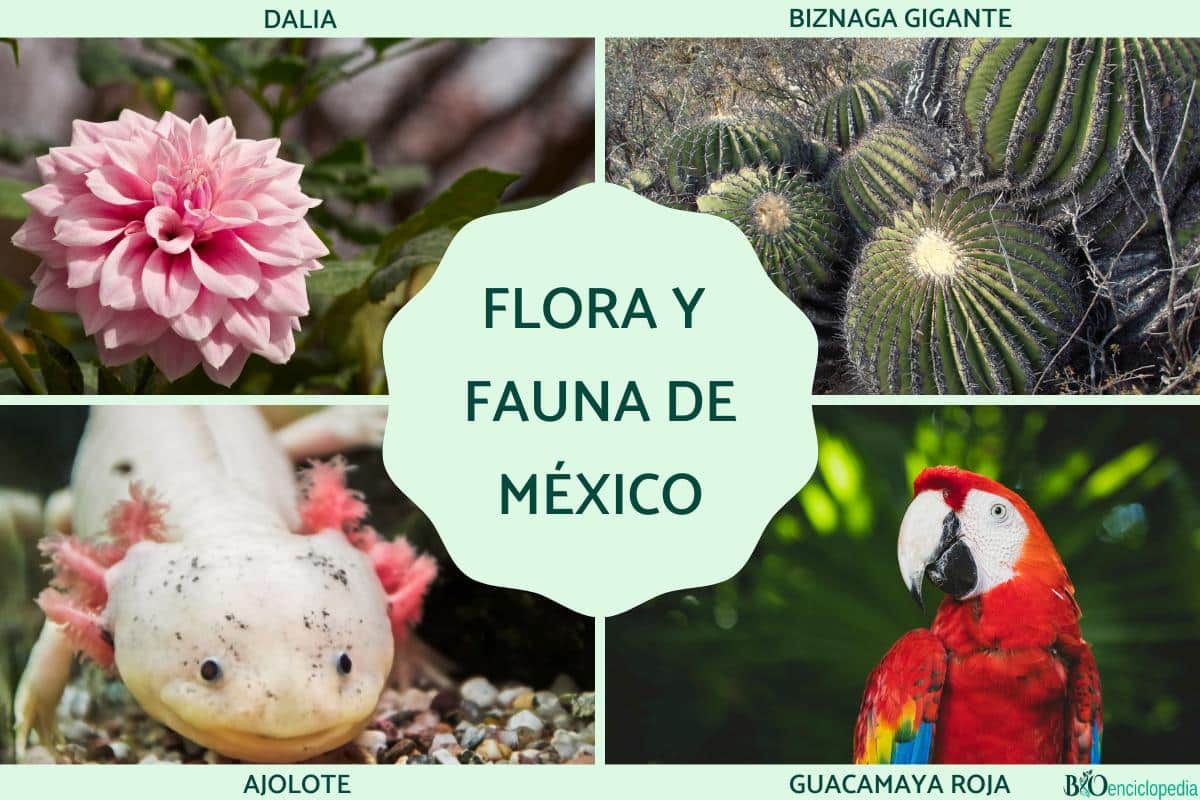
Mexico is a country that has an extraordinary diversity of flora and fauna. Among the flora species, giant biznaga stands out (Echinocactus platyacanthus), guava (Psidium guajava) and Jalisco pine (Pinus jaliscana); while in fauna we find the Mexican golden eagle (Aquila chrysaetos), the axolotl (Ambystoma mexicanum) and the green sea turtle (Chelonia mydas). If you want to know more about these species of flora and fauna of Mexico, you can continue reading this BIOencyclopedia article.
What are the characteristics of the flora and fauna of Mexico?
Mexico’s biodiversity is extraordinary. The country is home to a variety of ecosystems, deserts, tropical jungles, mountain forests, mangroves, which allows both its flora and fauna to present very diverse adaptations. Mexico’s species richness represents approximately 10% to 12% of global biodiversity.
- In plants, a combination of species tolerant to heat and drought (such as cacti) and others typical of humid or mountainous environments is observed.
- In animals, both terrestrial and aquatic forms stand out, many of them endemic (exclusive to the region).
What species make up the flora of Mexico?
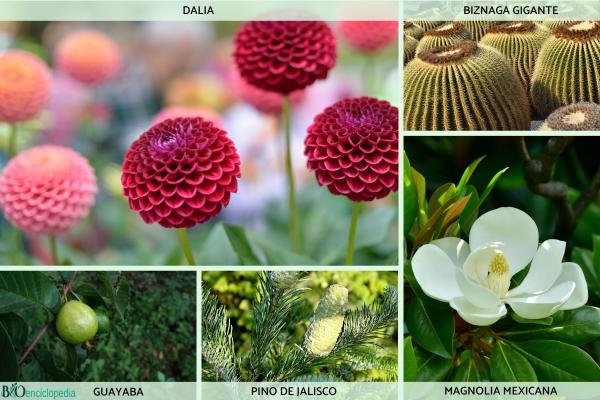
Mexico’s flora is made up of tens of thousands of plant species ranging from desert cacti to humid forest trees. The country is among the top four in the world in plant diversity, with around 26,000 registered plant species. Five emblematic species are described below:
Dahlia (Dahlia)
The dahlia is the national flower of Mexico. Its name comes from the Nahuatl “acocoxóchitl” (hollow stem with water) and it was cultivated already in pre-Hispanic times. This plant with showy flowers represents both botanical richness and Mexican cultural tradition.
Giant Biznaga (Echinocactus platyacanthus)
This large barrel-shaped cactus is typical of arid areas of north-central Mexico. It is slow growing, can reach more than 2 m in height and is threatened by overexploitation. Its presence reflects the adaptation of Mexican flora to extreme environments.
Mexican Magnolia (Mexican M.)
The Mexican magnolia is a tropical tree of great ornamental and ecological value. Its Nahuatl name “yoloxóchitl” alludes to its cultural importance. It grows in humid montane forests, contributing to the biodiversity of the tree layer.
Guava (Psidium guajava)
Guava is a tropical fruit tree native to America; In Mexico it is produced as a crop and is also found in the wild. Its fruits are a source of vitamin C and are part of the traditional diet, in addition to playing an ecological role by attracting pollinating fauna. Discover Pollination: what it is, process, types, pollinators and importance.
Jalisco Pine (Pinus jaliscana)
This pine is an example of the Mexican forest flora in mountain areas. Its presence in pine-oak forests shows the diversity of environments in Mexico and the importance of trees for ecological services such as carbon capture and soil protection.
What species make up the fauna of Mexico?
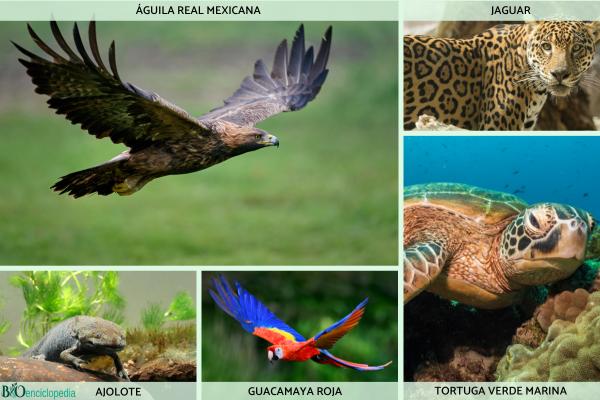
The Mexican fauna is as wide as its flora. The country is home to hundreds of species of mammals, birds, reptiles, amphibians and invertebrates, many of them endemic. Below, five emblematic species:
Mexican golden eagle (Aquila chrysaetos)
The golden eagle is the national bird of Mexico and is depicted on the national coat of arms, devouring a snake on a cactus. This bird of prey occupies mountainous habitats and its presence is a symbol of identity and the country’s high altitude ecosystems.
Jaguar (Panthera onca)
The jaguar is the largest feline in America and lives in Mexican rainforests and wetlands, especially in the Yucatan Peninsula and Chiapas. Its role is key as a top predator that helps maintain ecological balance.
Axolotl (Ambystoma mexicanum)
The axolotl is an aquatic salamander endemic to Mexico, famous for its ability to regenerate and for inhabiting only certain bodies of water in the Mexico City basin. It is a symbol of Mexican fauna and freshwater ecosystems.
scarlet macaw (Ara macao)
The scarlet macaw is a spectacular tropical bird with bright plumage that lives in the jungles of southeastern Mexico. Its presence makes visible the richness of Mexican tropical birds and the need to conserve their environments.
Green sea turtle (Chelonia mydas)
The green turtle is one of the marine species that visit the Mexican coasts to nest. Mexico is home to several species of sea turtles that breed on its beaches. Their life cycle connects terrestrial and marine ecosystems, and their conservation is a key indicator of ecological health.
What animals are in danger of extinction in Mexico?
In the Mexican fauna there are numerous endangered species due to habitat loss, exploitation, pollution and other factors. For example, Mexican legislation recognizes hundreds of threatened, endangered or already extinct species. Among the animals most at risk is the vaquita porpoise (Phocoena sinus), the Mexican gray wolf, felines such as the ocelot and the jaguar, birds and marine reptiles. Its disappearance represents a great ecological and cultural loss, which is why urgent protection actions are required.
How to protect the flora and fauna of Mexico?
The protection of Mexican flora and fauna involves conserving their natural habitats, controlling illegal exploitation, promoting public policies and promoting citizen participation. It is essential to preserve natural areas, restore degraded ecosystems, and educate the population about their value. Furthermore, scientific research, sustainable resource management and collaboration between local communities, the private sector and government are essential. Only in this way will it be guaranteed that the biological wealth of Mexico lasts for future generations.
If you want to read more articles similar to Flora and fauna of Mexico, we recommend that you enter our Biodiversity category.
- Medina, C. (sf). Animals of Mexico That You Must See in the Wild. https://www.wildlifenomads.com/blog/animals-of-mexico/
- Peralta, E. (2025). The endangered cactus behind Mexico’s sweet secret. https://news.azpm.org/p/news-npr/2025/10/3/226705-the-endangered-cactus-behind-mexicos-sweet-secret/
- Muller, K. (2025). Mexico Flora and Fauna. https://evidencenetwork.ca/mexico-flora-and-fauna/
