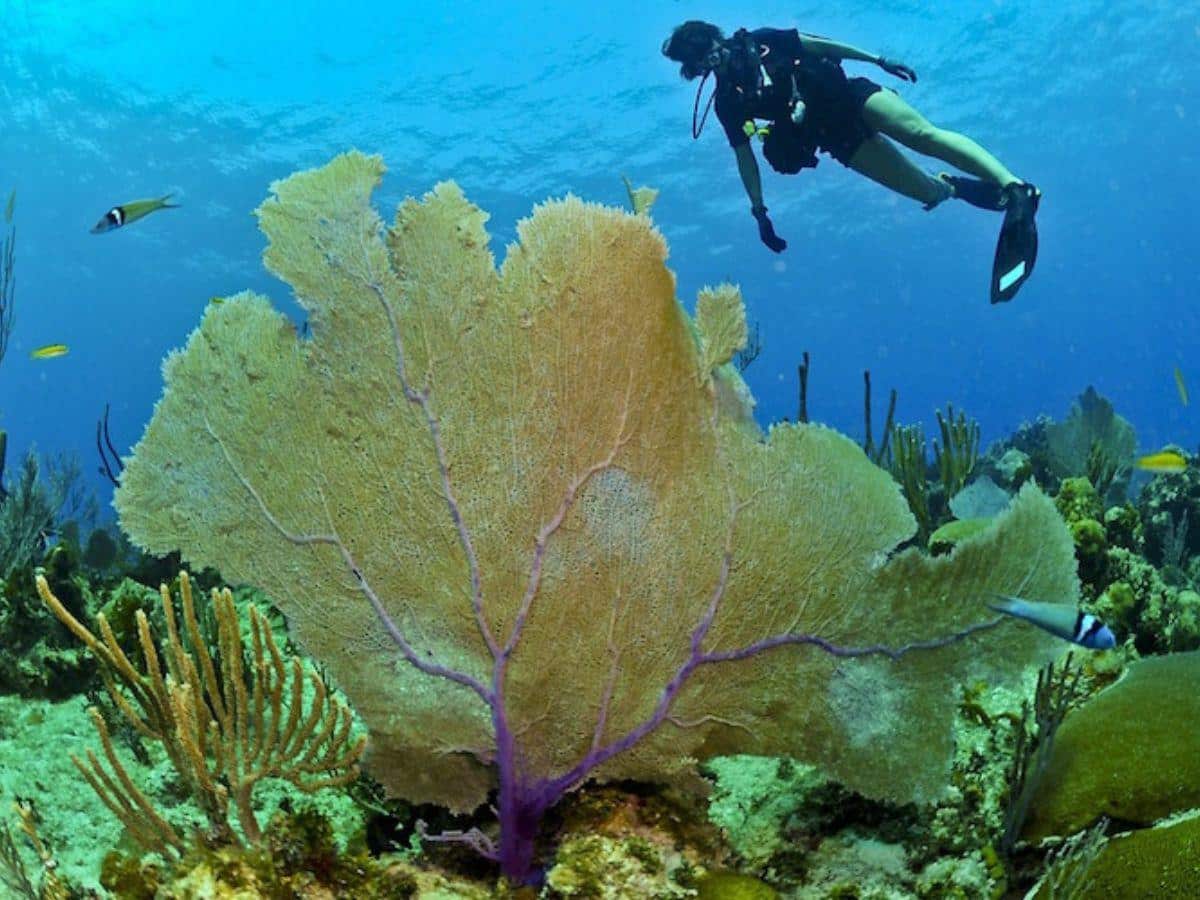
Sometimes confused with aquatic plants, corals are fantastic animals. Many of them are recognized by the striking shapes and colors they adopt, while others, at first glance, look more like rocks sitting on the seabed. But most corals live in colonies and form reefs, important habitats for thousands of marine species. There are around 2,500 species of corals, organized into the subclasses Hexacorallia and Octocorallia. The so-called “fire corals” (family Milleporidae) are not true corals, although they are often confused with them.
In BIOencyclopedia we provide you with more information about corals.
Description
Don’t miss all the essential characteristics of corals:
- They are relatively simple animals, without a spine, eyes, ears, nose or legs.
- Like other cnidarians, they are radially symmetrical, with an anatomical structure around a central axis.
- Its body is usually made up of a polyp, that is, the living animal made up of a kind of cylindrical sac with a mouth at one end and retractable tentacles with stinging cells used to capture food and defend itself and, sometimes by the corallite, which is the exoskeleton or calcium carbonate shell that protects the soft polyp.
- The base, the end opposite the mouth, is attached to the substrate. They are considered sessile, since they cannot move from one place to another like other animals.
- Other corals are soft and not a hard base of calcium carbonate, but slightly hardened, horny and flexible tissues. They can branch.
- In both types of coral, stony and soft, the mouth leads to a pharynx and a gastrovascular cavity divided by several walls or folds of the body wall.
- Their digestive system is one of the simplest among animals. The tentacles are arranged around the mouth.
- Size and color vary greatly between species; some of the smallest measure between 1 and 3 millimeters in diameter, while others reach more than 10 centimeters. Certain species of the genus Fungia grow up to 25 centimeters in diameter.
Distribution and habitat
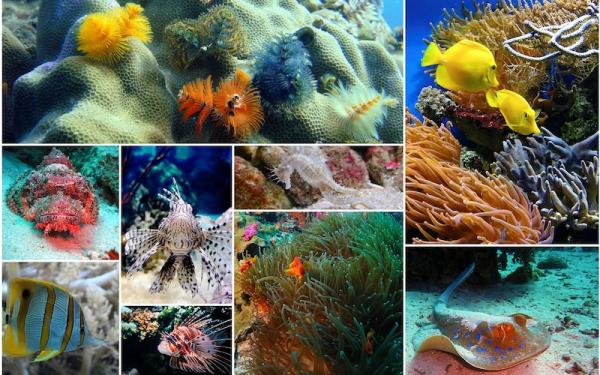
Corals are distributed in tropical and subtropical waters around the world, however, there are some species capable of surviving in waters of the polar regions.
Coral reefs are present in the tropical and subtropical areas of the Indo-Pacific and the western Atlantic Ocean. Corals that contain zooxanthellae in their tissues need to live in places where the sun’s rays reach these photosynthetic organisms. They are found in shallow, clear water regions, usually less than 46-60 meters deep. Other corals have no problem surviving at depths of 3,000-6,000 meters. On reefs, polyps are found only on the surface. In fact, places generally hit by strong waves are the favorites of many corals, since the waves transport nutrients and oxygen that they take advantage of.
Feeding
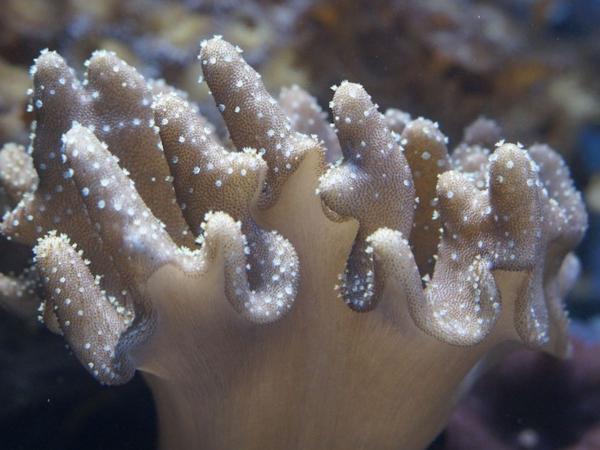
What do corals eat? It might be surprising to know that they are carnivorous organisms and many consume zooplankton and very small fish, while reef-building corals prefer to obtain nutrients from zooxanthellae, which they reach through filaments in the stomach cavity. Coral polyps actively capture their food thanks to their tentacles, which they extend through the water. When the tentacles touch an animal, the nematocysts immobilize or kill it due to the venom they release, and then the tentacles carry it to the mouth and then into the stomach. The remains are also excreted through the mouth. Corals that do not capture zooplankton or fish have filaments with a layer of mucus with which they capture tiny organic particles dissolved in the water, and feed on them.
Behavior
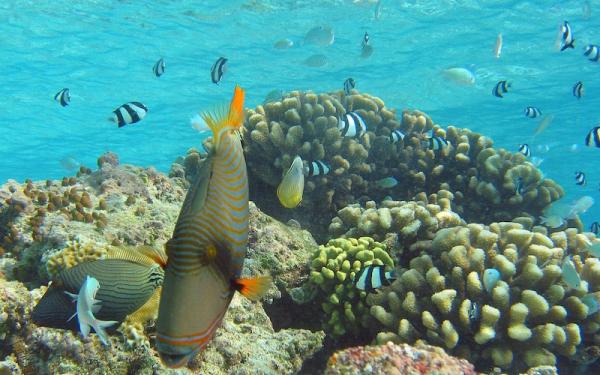
Since corals are sessile, they cannot migrate or go to other places during the night or day. The most striking thing about their behavior is perhaps their habit of forming large colonies that make up the structure of the reefs and that act as if they were a single living being. Other species are solitary throughout their lives. Now, the fact that certain corals house zooxanthellae on their bodies does not mean that there is parasitism. Between both organisms there is a type of relationship known as symbiosis, in which they mutually benefit.
Zooxanthellae find shelter and nutrients inside the polyps and synthesize their food through photosynthesis. In exchange, the polyps obtain some of the nutrients and their color. It is estimated that these small organisms provide coral polyps with up to 95 percent of their nutritional needs.
Reproduction
Corals can reproduce sexually or asexually. Gametes or sex cells are produced in the mesenteries or membranes of the stomach cavity. In sexual reproduction, if the coral reproduces by internal fertilization, the eggs develop inside the polyp for a few days or weeks and then the larvae are expelled.
If fertilization is external, the coral releases the gametes into the water, which eventually join together and some time later give rise to small larvae. The larvae spend some time in the water and then settle in the substrate, from where they do not come off anymore as they begin to develop as polyps. Unlike other cnidarians, corals lack the medusa stage. Most corals release gametes at the same time, increasing the chance of fertilization. Other polyps reproduce asexually by budding or division.
Threats and conservation
The most important threat to corals is global warming, which is making them more vulnerable to disease and death. Warming water mainly affects those that depend on zooxanthellae, because when corals are subjected to the stress caused by the change in temperature and chemical properties of the water, they expel them from their tissues.
Other threats are water pollution, coral extraction, overfishing and fishing with explosives. Often, residues from fertilizers, pesticides and other chemicals that reach the sea through runoff carry too many nutrients to the coral zone, resulting in excessive algae growth, which is another source of stress. In addition, other areas with coral reefs are a tourist attraction and are threatened by the large number of people who visit them and all the effects that this entails, including the waste that they can leave there.
The protection of corals is today a very important element in the environmental field. Some are subject to legal protection, such as the Great Barrier Reef Marine Park, where many of Australia’s Great Barrier Reef organisms are found. Unfortunately, if protection does not reach other coral reefs, 30 percent of those that currently exist could disappear in the next 30 years.
If you want to read more articles similar to Coral, we recommend that you enter our Ecosystems category.
