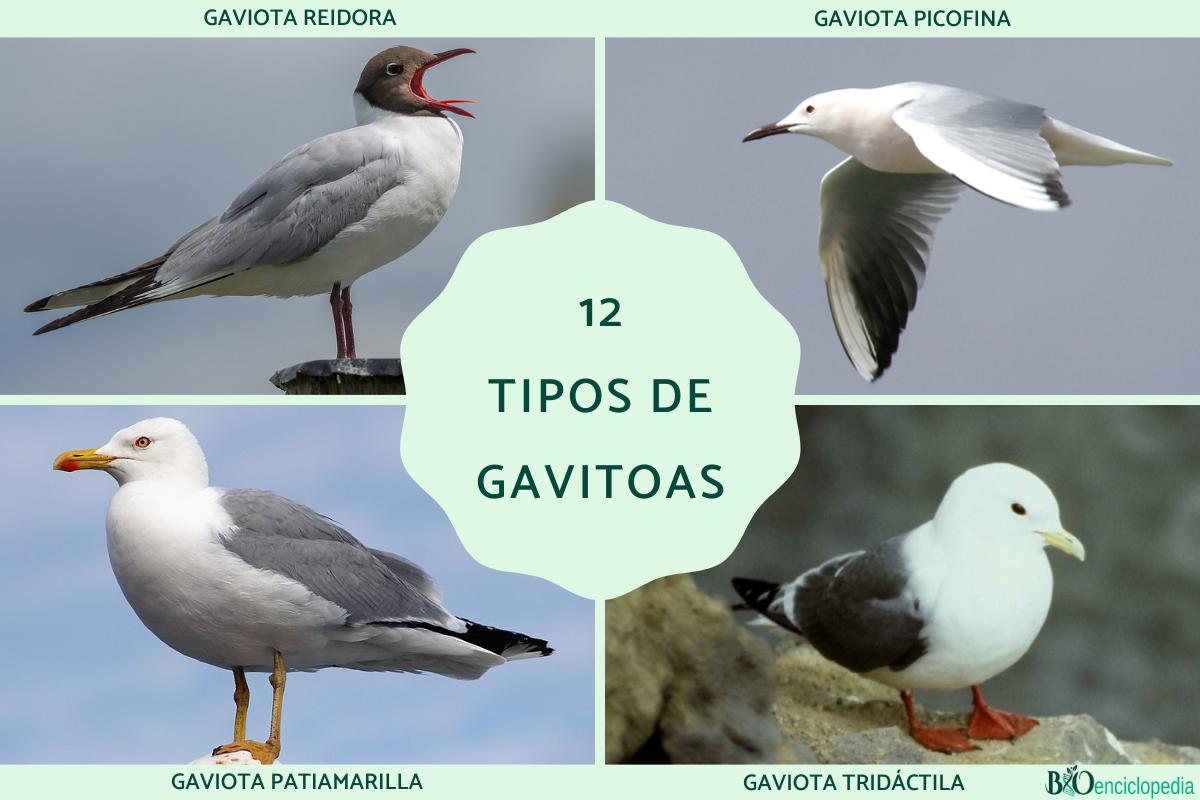
There are many types of gulls: black-headed gull, slender-billed gull, black-headed gull, gray gull, yellow-legged gull, Audouin’s gull, black-backed gull, pygmy gull, kittiwake, Sabine’s gull, roseate gull and European herring gull. Seagulls are seabirds found in almost all of the world’s oceans. There are more than 50 species of seagulls, which differ in size, color, beak shape and eating habits.
In this BIOencyclopedia article, we are going to learn about some of the types of seagulls in Spain and other areas of the world, their main characteristics and some curiosities.
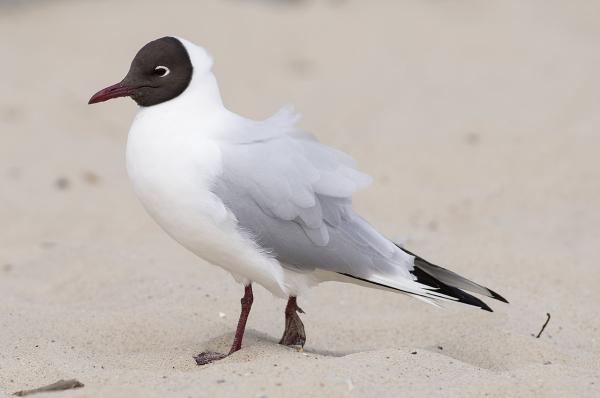
Black-headed Gull (Chroicocephalus ridibundus)
It is a small species, between 33 and 39 centimeters in length and around 90 centimeters in wingspan. Noisy like no other, despite being a bird linked to the sea, it is frequently seen in lagoons and marshy areas, which constitute a refuge for numerous populations of black-headed gulls throughout the year, thus avoiding migration. Most of the populations of this species spend the winter in southern Europe and northern Africa, in the Mediterranean area, while during the breeding season they migrate to the north of the European continent in search of cooler environments.
It is said that black-headed gull populations, like most small gulls, have two age groups, or in other words, they are made up of individuals with first-year juvenile plumage and individuals with adult plumage, both groups being well differentiated. In the case of young individuals, on their white back they have brown feathers forming a characteristic pattern, while when they reach one year of age this pattern disappears completely and gives rise to grayish, almost white feathers.
In winter, both young and adults have a very characteristic black spot in the ear area, which turns into a black hood that covers the entire head in summer.
Slender-billed Gull (Chroicocephalus genei)
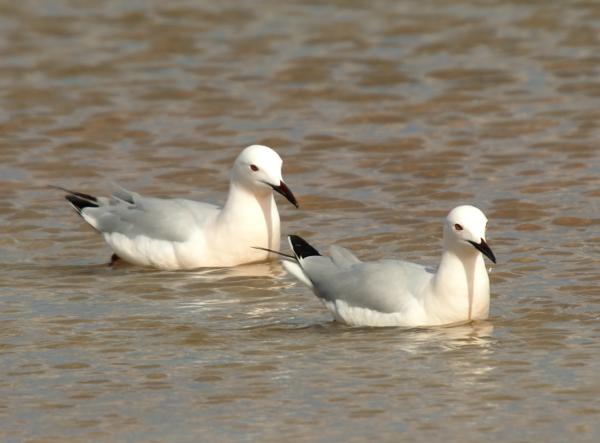
Although at 37-42 centimeters in length it is considered a small seagull, its wingspan of up to 102 centimeters makes it one of the largest in that group. It looks very similar to the black-headed gull, looking like a version with attenuated colors of said species, both in summer and winter, but its main difference is that it does not have a black head at any time of the year.
It lives throughout the Mediterranean, frequently alongside flocks of black-headed gulls, but its populations are much smaller and, therefore, it is considered a fairly rare species.
Its common name is given by the characteristics of its beak, which, being quite elongated in proportion to its body, also appears to be thin, although it really is not.
Black-headed Gull (Larus melanocephalus)
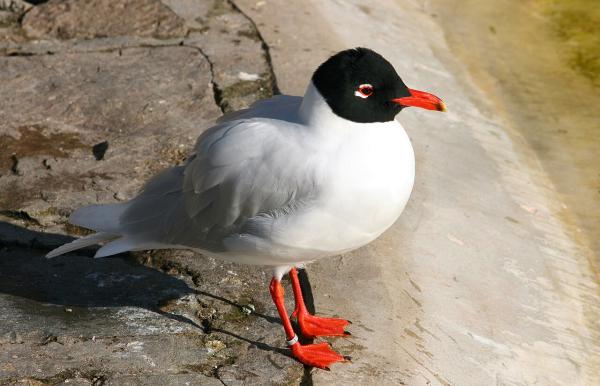
One of the smallest gulls in Europe, with a length of between 37 and 40 centimeters, although a considerable wingspan that can reach 102 centimeters.
It is a very coastal species that lives on the European continent, alternating between the Mediterranean area and northern Europe at each time of the year. In Spain, it only breeds in the Ebro delta.
Its identification can be complicated when you have little experience, because in summer its head is covered in black, in a similar way to the laugher, but on this occasion the black hood extends a little towards the neck. Something distinctive about this species, in addition to the black head during the summer, is that almost its entire body is very white or a bright gray tone that can be confused with white, in addition to the totally white primary remige feathers. But all this applies to adult individuals of at least three years old; in the case of juveniles, identification is difficult, as they present brown tones and patterns that can cause confusion with other species.
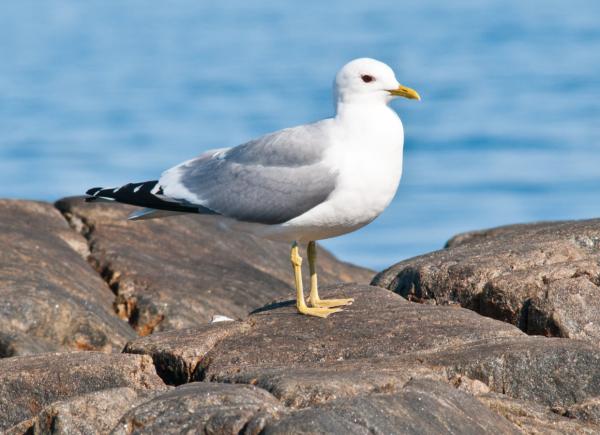
Gray Gull (Larus canus)
Considered a medium-sized gull, adult individuals of this species present what can be considered the typical appearance of a slender gull, with yellow beak and legs, white belly, gray wings and black wingtips with white specks. It is the only species with this “typical seagull appearance” that is not large in size. In the first year, juveniles are brown in color with bars and spots all over their body, which progressively disappear until the third year of age.
It is distributed throughout Europe, breeding in the north of the continent and wintering on the southern coasts. Unlike many other species, the gray-backed gull can breed colonially or alone, taking advantage of a wide variety of habitats linked to water to locate its nest.
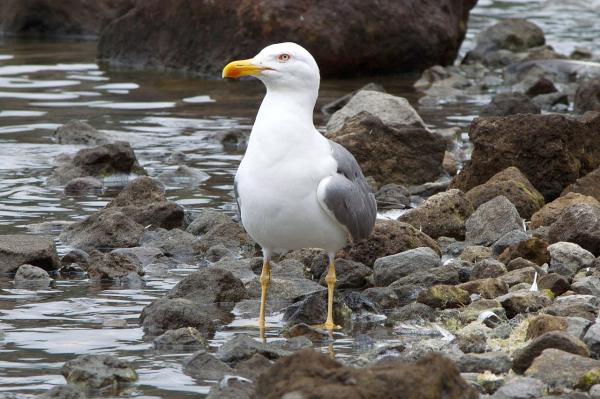
Yellow-legged Gull (Larus michahellis)
One of the representatives of the large seagulls par excellence. It reaches 58 centimeters in length and its wingspan is between 120 and 140 centimeters.
It widely inhabits the southern Palearctic region, behaving as a resident species along the entire Mediterranean coast, as well as in important continental water masses. Some populations migrate to northern Europe during the summer.
It has 4 age groups, which means that in the same population of this species we can find 4 types of plumage depending on the age of the individuals, but the adult is unmistakable. White belly, breast and head, conspicuously yellow bill and legs, a deep red spot on the lower half of the bill, gray wings and black primary remiges with white circular specks.
In addition, it is a very vocally active gull, which usually lives in colonies and responds to screeches or calls from its peers.
Here you can learn more information about this species of gull, the Yellow-legged Gull.
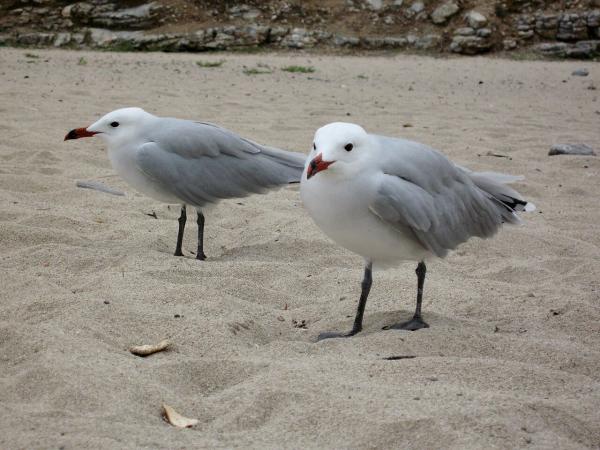
Audouin’s Gull (Larus audouinii)
It is distributed mainly in the Mediterranean, although it is also found in some areas of the Atlantic. It is characterized by its medium size, its red beak with a black and yellow tip, its silver-gray plumage and its wings with black and white primaries. It is a threatened species that feeds mainly on fish and crustaceans. Its habitat is rocky and sandy coasts, where it forms colonies to reproduce. In Spain, the largest colony is located in the Ebro Delta, followed by Torrevieja and Isla Grosa.
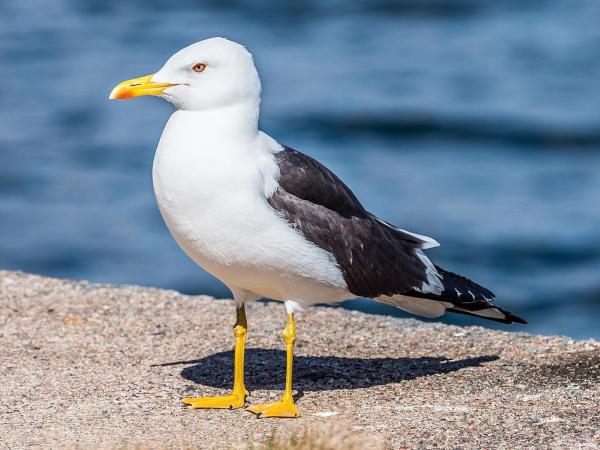
Lesser Gull (Larus fuscus)
The black-backed gull is distributed along the Atlantic and Mediterranean coasts of Europe, Asia and Africa. It is a migratory bird that moves south in winter, reaching northern Africa and the east coast of North America. It looks very similar to the yellow-legged gull, but is characterized by its dark gray plumage on the back and wings. It feeds mainly on fish, crustaceans, mollusks and insects, which it captures in the sea or in coastal wetlands. It nests in colonies on cliffs, islands or rooftops, where it lays between two and four eggs.
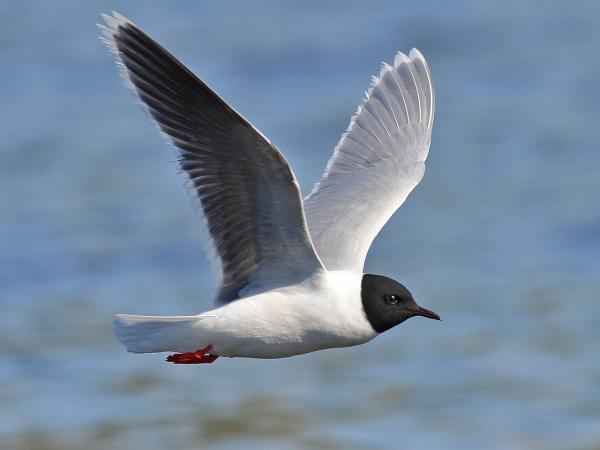
Lesser Gull (Hydrocoloeus minutus)
The dwarf gull is the smallest gull species in the world, with an average length of 25-27 cm and a wingspan of 75-80 cm. It breeds in northern Eurasia and northern Canada, migrating to the coasts of western Europe, the Mediterranean, and the northeastern US in winter. It has a black head in reproductive plumage and white with dark spots in non-breeding plumage. Its back is pale gray and its wings have white tips and a dark underside.
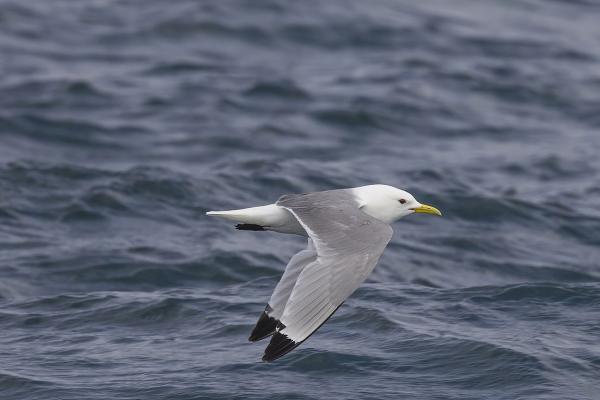
Kittiwake (Rissa tridactyla)
This gull belongs to the genus Rissa, which only has two species. It is so called because the subspecies that lives in the Atlantic Ocean has a very reduced or absent rear toe, and only three toes on each foot. It is a medium-sized seagull, with a white body, gray back and wings with black tips. It has a yellow beak and dark gray or pinkish legs. It lives in the open sea most of the year and only comes close to the coast to nest in numerous and noisy colonies on cliffs and caves. It feeds mainly on small crustaceans and fish.
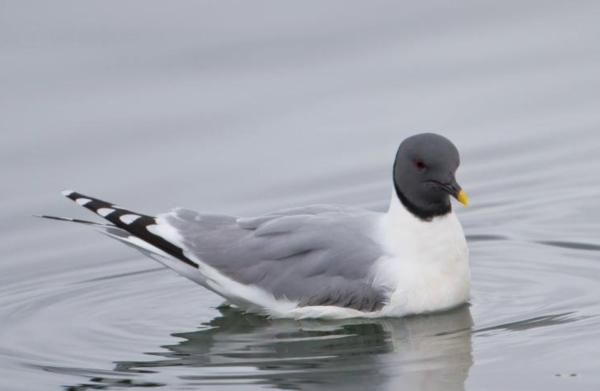
Sabine’s Gull (Xema sabini)
The Sabine’s gull is characterized by its forked tail and tricolor wing pattern. It breeds in the Arctic and migrates south in autumn, reaching the coasts of South America and Africa. It feeds on small animals, eggs and carrion. It is a small gull, with a black and yellow beak and a dark gray head in summer.
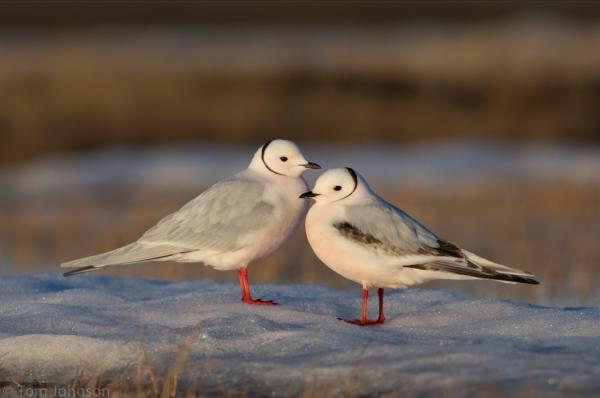
Roseate Gull (Rhodostethia rosea)
The pink gull is a small seabird that belongs to the Laridae family. It breeds in the Arctic, from North America to Siberia, and spends the winter near the polar ice pack. It is characterized by having a pointed tail, a black collar on the neck and a pinkish tone on the chest and belly. Their diet consists of insects, invertebrates and fish. It is a rare species and difficult to observe.
European herring gull (Larus argentatus)
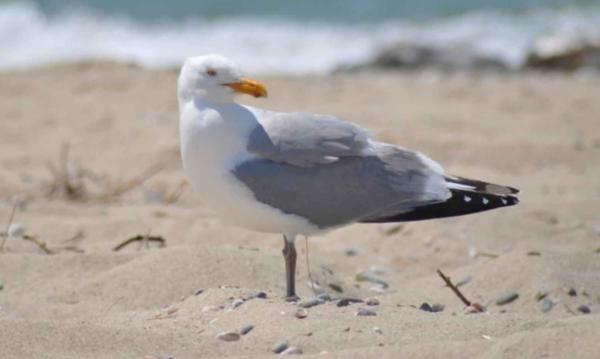
The European herring gull or herring gull is a species characterized by its white plumage and gray back. It measures up to 66 centimeters long and is one of the most widespread and adaptable gulls in the northern hemisphere, feeding on crop remains, garbage and fish. It breeds in colonies, usually on the ground or on roofs, and defends its nest with high-pitched screeches.
You have discovered 12 species or types of seagulls and now we encourage you to meet another species of seabird, the Atlantic Gannet or Morus bassanus.
If you want to read more articles similar to Types of seagulls, we recommend that you enter our Biology category.
