
The High Seas Treaty is one of the most relevant international agreements in recent years regarding marine protection. Its objective is to establish common rules to conserve biodiversity and manage ocean resources in a more sustainable way in those areas that are outside the jurisdiction of countries. It has great importance worldwide because it is the first time that it has been decided to protect the oceans. This is how the High Seas Treaty protects the world’s marine resources.
What is the High Seas Treaty and why is it considered historic?
The High Seas Treaty, which entered into force on January 17, 2026, is an international agreement promoted within the framework of the UN to protect marine biodiversity in areas of the ocean that do not belong to any country. In other words, it focuses on those international waters that are outside national jurisdiction and that, for decades, have had much more limited protection than coastal waters.
Its technical name is BBNJ (Biodiversity Beyond National Jurisdiction) Agreement. From the beginning, its objective is that the open oceans cannot continue to function as a space where each country, company or sector acts on its own. The treaty seeks to establish common rules to conserve and sustainably use marine resources, especially in a context of overexploitation, pollution, ocean warming and loss of species.
Why this treaty is key to the future of the oceans
The High Seas Treaty is important because, for the first time, it establishes a global framework to protect marine biodiversity in international waters. Until now, much of that space was regulated in a dispersed way, with separate rules for fishing, navigation or seabed, but without a truly solid tool to conserve ecosystems.
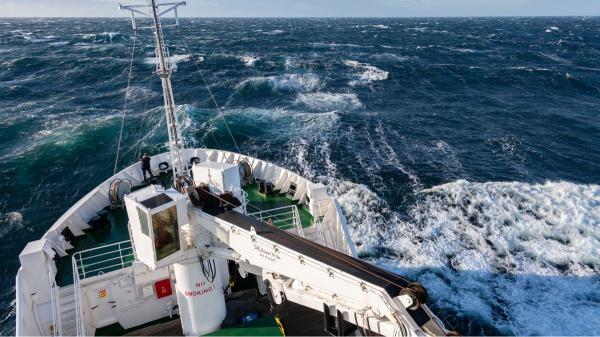
Its relevance also has to do with the enormous ecological dimension of the high seas. These areas cover more than two-thirds of the ocean and concentrate a fundamental part of the life on the planet.
Furthermore, the treaty comes at a particularly delicate time. The oceans are under increasing pressure from overexploitation of resources, pollution, warming water and loss of biodiversity. In this context, the agreement seeks to prevent the high seas from continuing to be a space where action is taken without sufficient coordination or without a clear evaluation of the environmental consequences.
Another of its key points is that it does not limit itself to “declaring good intentions”, but rather creates a basis for making concrete decisions, such as establishing marine protected areas, requiring environmental impact assessments or better regulating access to marine genetic resources. That makes it a much more useful and practical tool than many previous international commitments.
How the High Seas Treaty will work in practice
The High Seas Treaty functions as an international governance framework to organize how marine biodiversity is protected and used in waters that are outside countries’ jurisdiction.
One of its keys is that it establishes its own institutional architecture. The treaty will have a Conference of the Parties (COP), which will be the space where the signatory countries will meet to debate, agree on measures and approve decisions. Along with it there will also be a Scientific and Technical Body, an Implementation and Compliance Committee and other specialized committees. This allows ocean protection to depend not only on political statements, but also on scientific criteria and monitoring mechanisms.
In practice, the treaty is designed to coordinate sectors that until now have operated in a rather fragmented manner. For example, activities such as fishing, maritime transport or the possible exploitation of resources on the seabed will not disappear, but they will have to fit into a clearer conservation logic. The idea is that these activities are better evaluated and managed to reduce their impact on marine ecosystems that, in many cases, remain little known.
Another important aspect is that the agreement finally creates a legal path to establish Marine Protected Areas on the high seas. This means that everything will no longer depend on scattered agreements or partial initiatives, but that there will be an international legal basis to identify ecologically valuable areas and give them a more solid level of protection. This part is especially relevant because the high seas represent more than 60% of the ocean and until now hardly had effective conservation tools.
Which countries have signed the High Seas Treaty and why does it matter?
In total, the agreement was formally ratified by 83 States and the European Union.
The agreement exceeded the threshold of 60 ratifications, an essential requirement for it to begin to be formally applied. One of the most relevant data is that Morocco and Sierra Leone were the countries that allowed this threshold to be reached, by becoming parties number 60 and 61 of the pact. This means that there was not only broad support for the treaty, but also an acceleration of international commitment to protect marine biodiversity in international waters.
In addition, the UN itself highlighted that Chile played an important role in the process, since it was the second country to ratify the agreement, in January 2024. This type of early support was key to giving political momentum to the treaty and bringing it closer to its entry into force.
Beyond the specific names, what is truly important is that the accession of dozens of countries demonstrates that there is a growing global concern for the conservation of the high seas. As it is a space that does not belong to any particular State, its protection can only work if there is real international cooperation. Therefore, each new ratification is not a simple diplomatic procedure, but a sign of commitment to the sustainable management of the ocean.
If you want to read more articles similar to The High Seas Treaty: the agreement that can change the protection of the oceans, we recommend that you enter our Other environment category.
