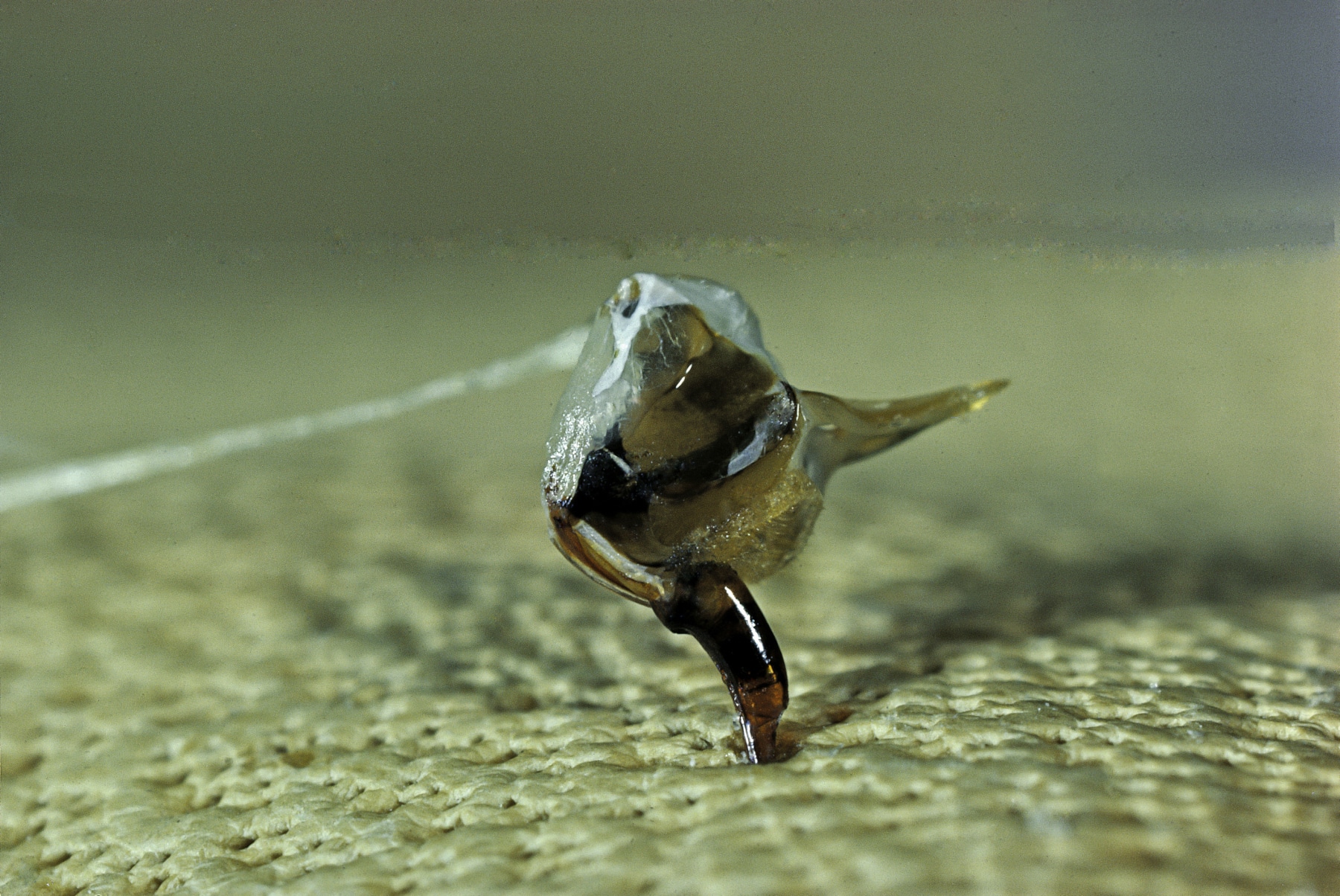
We have known how the bee sting works since we were little: unlike wasps, the Apis mellifera it separates from the body after the sting, killing the bee but also continuing to pump venom into the wound on its own.
What we still didn’t know was the secret of this mechanism: how does an organ separated from the rest of the body continue to “work”? A study published in PNAS reveals how bee stings really work. A technical preview: it works like a deformable double piston pump.
Not a simple needle
As mentioned, the fact that the bee stinger detaches from the rest of the body after a sting and remains stuck in the surface that was stung has probably been known for thousands of years, since we domesticated this insect for the first time.
However, we are talking about a structure that is at most a couple of millimeters long: not very convenient to study in detail without the right tools.
Tools that now exist: The team at Macquarie University in Sydney that conducted the study used a combination of ultra-high-speed video framerateCT scan and computer modeling to analyze in detail the biomechanics of bee stings.
What they discovered is that the stinger isn’t just a needle: It contains two tiny serrated blades, called lancets, that can slide back and forth independently. When the bee stings, the hands move alternately and, thanks to the teeth, make the sting penetrate deeper and deeper into the skin.
An engineering miracle
The real discovery of the study, however, is linked to the structure of the hands: each is connected to a kind of tiny flexible umbrella, which is located inside a chamber full of poison. When a lancet descends, its umbrella opens, adheres to the walls of the chamber and pushes the venom downwards, into the wound, like the piston of a syringe. When the needle rises, the umbrella closes, so it can return to its starting position without dragging the poison with it. Meanwhile, the other hand makes the opposite movement: when one goes up, the other goes down and continues to push the poison.
This ingenious structure continues to work on its own even after detachment from the bee because the sting also contains muscles, nerves and a reserve of venom: enough to continue to work for up to a minute after the sting. We called it “ingenious” and not by chance: according to the authors, we humans could also try to copy it to build micropumps that could, for example, have medical applications.
