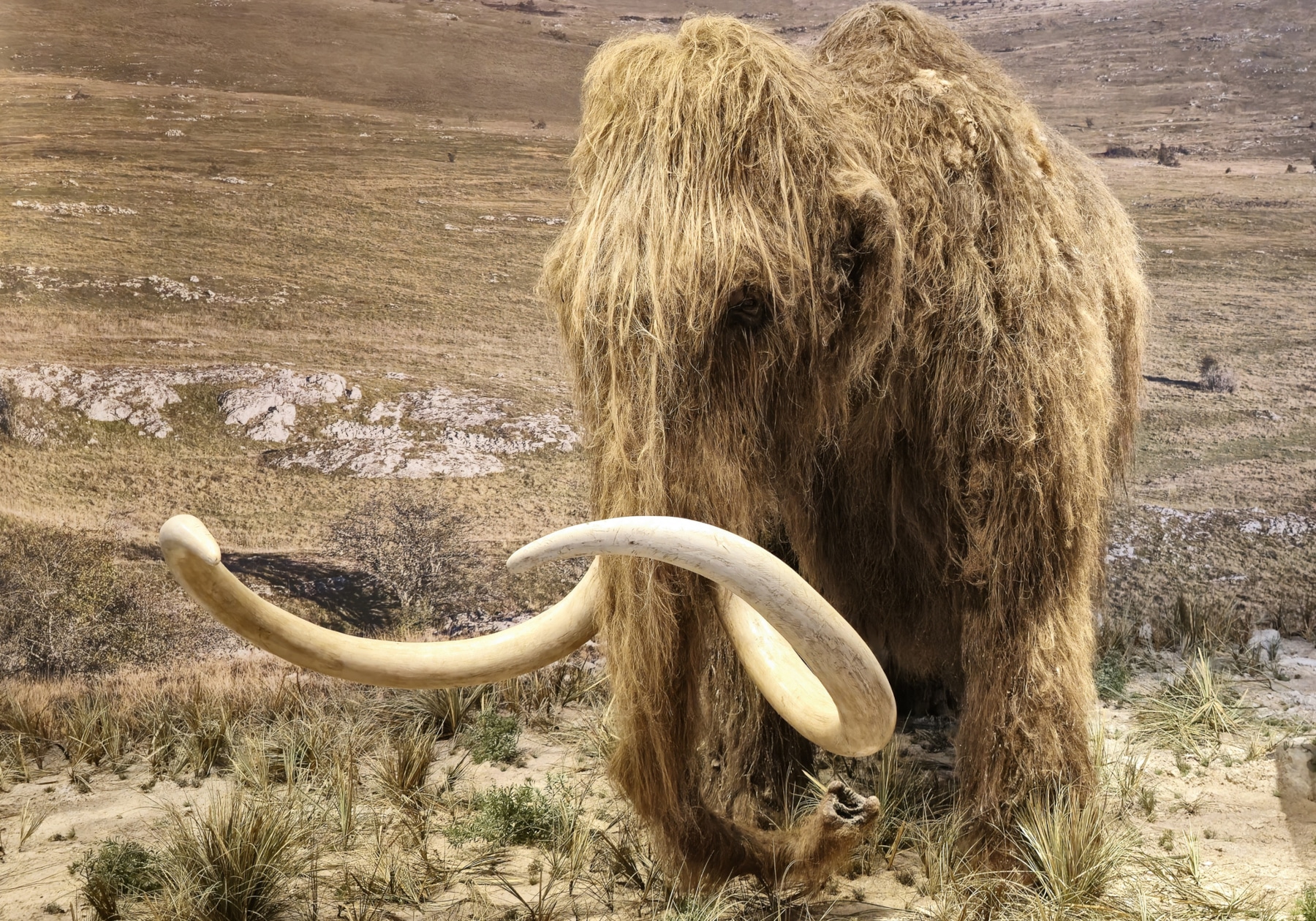
The city of Ústí nad Labem, in the Czech Republic, is famous for several reasons: its porcelain, the fact that it is located at the confluence of the Elbe and Bílina rivers, a spectacular castle. Recently, however, his name has become famous especially among paleontologists: as reported in a study published in Journal of Archaeological Sciencewhat began as excavations on a construction site for the construction of a palace turned out to actually be a deposit of mammoth bones – and the remains found on site show that they were not wild animals but hunting victims.
An animal necropolis
The discovery took place in 2024, with the opening of the construction site for the new Palace of Justice in the city. The excavations did not last long: as soon as the earth was “broken”, the workers found themselves faced with a veritable cemetery of woolly mammoth bones. The experts from the Czech Academy of Sciences who were contacted could not believe their eyes: in total, in an area of around 1,000 square meters, more than 3,500 different fossils were found, dominated by the remains of woolly mammoths – at least 20 different specimens, according to the study. Remains of woolly rhinos, horses, reindeer and hares were also found in the excavation.
However, there were not only animal remains: further analysis of the area revealed shaped stone tools, traces of fire and also numerous patches of red ocher, a pigment often used by our ancestors whose purpose, however, at least on this site, is unclear.
All remains of human activity have been traced back to the so-called Gravettian culture, widespread across Europe between 33,000 and 24,000 years ago: the Czech site has been dated to 27,000 years ago, when this Paleolithic industry was at its peak.
Prehistoric butcher’s shop
Putting all the pieces of the puzzle together, a very clear picture emerges: the Czech site was not simply a place where our ancestors accumulated mammoth carcasses, but a real “company” where the meat of the prey brought home by the hunters was processed.
The study explains that it is not possible to reconstruct the organization of these prehistoric hunting parties, but the size of the animals hunted suggests that it was a group effort.
Then there is the fact that both the stone tools and the mammoth bones bear signs of some form of processing: it is possible that the “workers” at the site butchered the meat and separated the skin from the bones, to use it as fur.
The definitive proof that the mammoths found in Ústí nad Labem were victims of hunting comes from their age: they were all young males, who rarely died of natural causes and who, being often solitary individuals, were easier prey for human hunters.
