
In 1825, a tree from Brazil arrived in Hawaii with a purpose that seemed beneficial at the time: to provide new fruits for the population. Two centuries later, that species has spread throughout the forests of the archipelago to become one of the invasive plants that most worries researchers.
This is the strawberry guava (Psidium cattleianum), a tree that produces edible fruits and was also introduced for ornamental reasons. In its new environment it found favorable conditions to expand and ended up occupying large areas of forest. Now, scientists are seeking to stop its spread through an unusual combination: an insect from its area of origin and drones capable of transporting it to the most difficult-to-reach areas.
The tree that came to Hawaii from Brazil 200 years ago
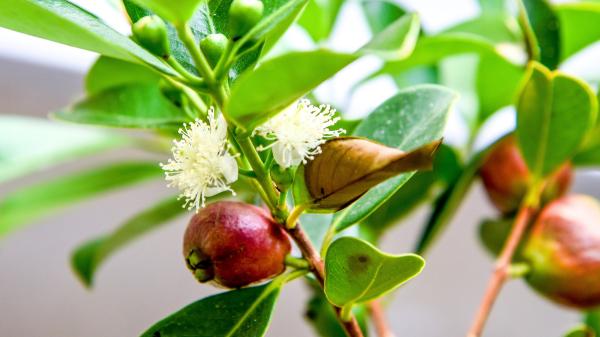
Strawberry guava is native to Brazil and other areas of South America. Its arrival in Hawaii occurred in 1825, when it was introduced for its fruits and as an ornamental plant.
The tree can reach several meters in height and produces small red fruits that are reminiscent of guavas. Its characteristics made it attractive for cultivation, but its behavior in the Hawaiian ecosystem ended up being very different than expected.
Outside its natural area, the strawberry guava found especially favorable conditions to develop. Its fruits can be consumed by different animals, which help disperse its seeds, while the plant can also reproduce through new shoots.
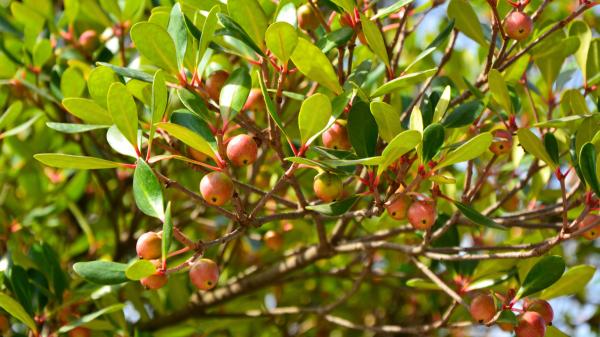
Over time, it began to spread through the forests and form very dense masses of vegetation. This is an especially big problem in native Hawaiian ecosystems, where it can compete with native plants for space and resources.
An invasive species that has spread through the forests
The main problem with strawberry guava is its ability to quickly colonize new spaces and form areas dominated by the species. Where it establishes, it can hinder the regeneration of other plants and modify the structure of forests.
The magnitude of its expansion is considerable. The estimates collected in the research place its presence at around 475,000 hectares of Hawaii, an area that makes it especially difficult to resort solely to conventional methods to eliminate the specimens.
Furthermore, many of the affected areas are located in forest lands that are difficult to access. Removing trees manually requires a lot of time and traveling through areas where the vegetation and relief make the work difficult.
Therefore, the researchers’ goal is not necessarily to eliminate each tree individually, but rather to reduce the species’ ability to expand through a biological control method that can be applied on a large scale.
The Brazilian insect that can weaken strawberry guava
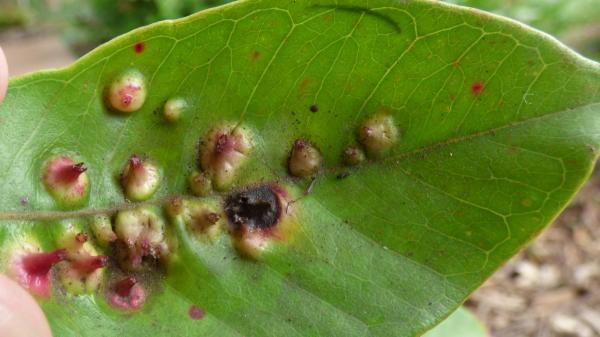
One of the tools used to achieve this is Tectococcus ovatusa small insect native to Brazil that is specialized in feeding on strawberry guava.
The insect develops on the young leaves of the plant and causes the appearance of small structures known as galls. These alterations affect the growth of new shoots and can reduce the vigor of the tree.
The use of this insect is part of a biological control strategy, that is, taking advantage of an organism that interacts naturally with the invasive species to try to limit its expansion.
In Hawaii, the agent was approved for this purpose in 2012 after studies needed to evaluate its behavior. The idea is that, once introduced into strawberry guava populations, it can establish and spread among the trees themselves.
The results obtained so far show that the insect can spread through the treated areas. However, the great challenge is to get it to enough specimens of a species that occupies hundreds of thousands of hectares.
Drones take insects to the most inaccessible areas
This is where technology comes into play. According to a study published in the scientific journal Journal of Economic Entomologya team of American researchers went one step further and used drones to improve the biological control system with this insect. This is an alternative designed to facilitate the treatment of trees located in areas that are difficult to access.
In one of the trials, the researchers compared drone application with the manual procedure. Although the ground method managed to place the units in a slightly higher percentage of the trees, the drone was much faster.
Treating each tree took approximately 2.8 minutes using the drone, compared to about 12 minutes with the manual method. This represents a time reduction of around 77%.
Speed is especially important when you intend to act on surfaces as extensive as those occupied by strawberry guava. A system capable of covering more trees in less time can facilitate the insect’s distribution in areas where access on foot is difficult.
Furthermore, tests showed that insects could establish themselves on treated trees from the air. After 12 months, 63% of the specimens treated using the drone system showed colonization of the insect, compared to 38% of the trees treated manually.
A strategy to try to control hundreds of thousands of hectares
Researchers have also studied how to expand the system so that drones can carry a greater number of units on each flight. Devices capable of transporting arrays of 16 and 54 units were used in the tests.
The aerial system was also compared to launching from helicopters. In this case, the drones offered an advantage related to precision: the distance from the intended point was much closer than with the helicopter.
This is relevant because the objective is to ensure that the biological control insect reaches the appropriate trees and can establish itself in new areas.
Even so, researchers do not propose drones and insects as an immediate solution to end the problem. The purpose is to have a tool that can reduce the expansion of strawberry guava and limit its impact on Hawaii’s native forests.
The history of this species thus reflects how a plant introduced 200 years ago to provide food can end up becoming a large-scale ecological problem. Now, the combination of biological control and aerial technology seeks to restore balance to forests in which that tree found conditions that were too favorable to thrive.
If you want to read more articles similar to In 1825 they took this tree to Hawaii to feed the population: 200 years later it is an invasive species that they are trying to control with drones and insects, we recommend that you enter our Ecosystems category.
