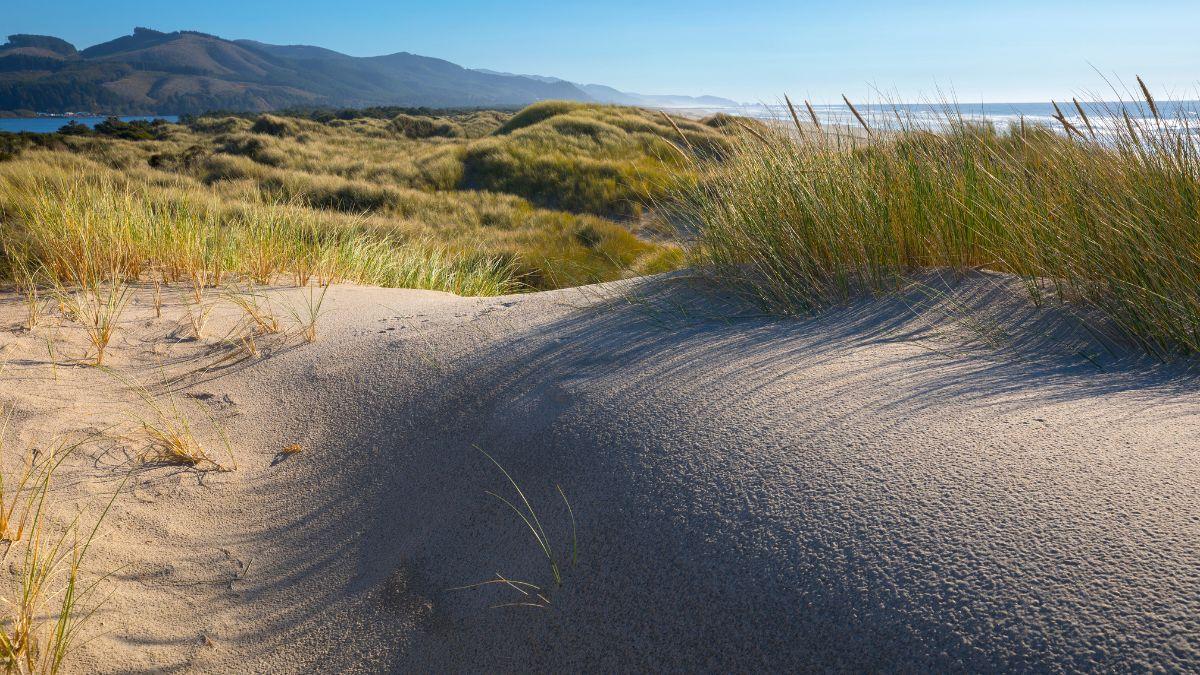
In 1910, Oregon introduced a European plant with a seemingly beneficial goal: to stabilize its coastal dunes and prevent sand from shifting. What no one expected was that that decision would transform the landscape for the following decades.
European dune grass spread along the coast, altering the natural dynamics of the dunes and reducing habitat for native species that relied on open sand. What started as a solution ended up becoming a large-scale ecological problem.
The introduction of European grass that changed the Oregon dunes
In 1910, near Coos Bay, Ammophila arenaria, known as European dune grass, was introduced from Europe with the goal of stabilizing the sand and preventing the dunes from shifting. The plant effectively fulfilled its function. Its stems and roots trapped the sand carried by the wind and helped fix it in place.
The problem was that the species did not remain limited to the areas where it had been planted. European grass began to spread along the coast and ended up dominating large areas of the dune system. Its underground rhizomes allow it to reproduce and, in addition, fragments of these structures can be transported by winter storms, facilitating its expansion.
As the decades passed, that intervention aimed at controlling the movement of sand ended up transforming the very landscape it intended to protect. The open sand areas were reduced and the dunes began to acquire a more stable structure covered with vegetation. Aerial photographs show how in 1939 the vegetation covered approximately 20% of the dunes in a studied area, while about five decades later it exceeded 80%.
Native species lost their open sand habitat
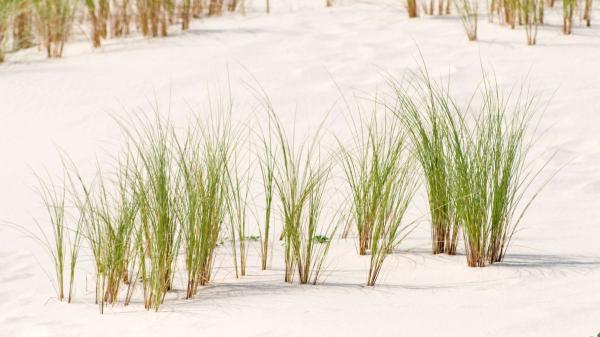
The transformation of the dunes not only altered the appearance of the Oregon coast. It also reduced the space available for several species that had evolved to live in areas of open, constantly moving sand. Plants such as pink sand verbena, Wolf’s evening primrose and silver phallia depended on these dynamic conditions, as did the western snowy plover, a threatened species that uses open dunes as habitat.
The spread of European dune grass changed precisely the conditions on which these species depended. By trapping sand and stabilizing it through its roots and rhizomes, the plant reduced the natural movement of sediments and made it difficult for sand to reach the interior areas of the dune system. In this way, open spaces were progressively replaced by surfaces covered with vegetation.
A natural process that invasive species accelerated
Dune stabilization is not, in fact, a phenomenon completely unrelated to the natural dynamics of the Oregon coast. For thousands of years, these ecosystems have experienced cycles in which vegetation colonizes the dunes and helps anchor them, until major disturbances put the sand in motion again. Earthquakes associated with the subduction zone, tsunamis or changes in sea level can destroy the frontal dunes and allow the wind to transport sand to the interior areas again.
What changed with the introduction of European grasses was the speed at which this process occurred. Its ability to grow under conditions of sand burial and spread through rhizomes allowed vegetation to establish quickly and stabilization to advance over large areas of the dune system. In this way, the invasive species did not create a completely new phenomenon, but rather accelerated a process that was already part of the natural evolution of the dunes.
The result, however, had important consequences. As the movement of sand was reduced, the interior dunes received less and less sediment and their valleys began to change orientation and structure. The landscape that had remained for centuries as a mosaic of ridges, depressions and open sand surfaces was giving way to a much more stable system covered in vegetation.
The difference between natural evolution and the current situation is precisely in the scale and speed of change. The expansion of grasses made a process that would normally have been conditioned by large natural disturbances advance much more continuously, reducing the time available for species adapted to open dunes to maintain their habitats.
Efforts to control the spread of invasive weed
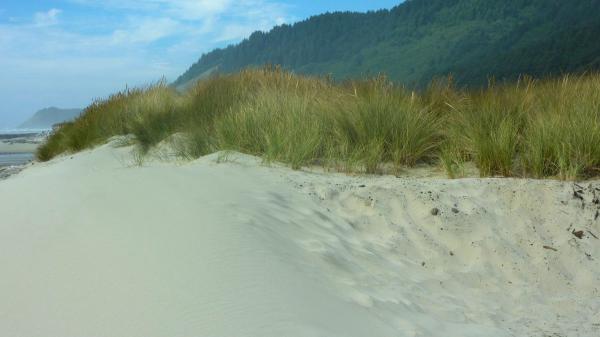
Controlling the spread of European dunegrass has become a complex task due to this plant’s ability to survive and reproduce in such a dynamic environment. Once established, it is difficult to eliminate, as it can withstand being buried under up to a meter of sand per year and spreading through underground rhizomes. Additionally, fragments of these rhizomes can be transported by winter storms and colonize new areas of the coast.
For this reason, Oregon authorities have proposed active control measures in areas considered priority. The State Wildlife Action Plan recommends combining mechanical methods and chemical treatments to reduce the presence of the species, especially in areas important to the western snowy plover and in places where populations of pink sand verbena still survive.
The objective is not only to remove European grass. Management also includes controlling other invasive species that can take advantage of the conditions created by the stabilization of the dunes, including beach grass hybrids, Scotch broom and gorse. Coastal pines and other woody plants can also advance when sand stops moving normally.
If you want to read more articles similar to In 1910, Oregon planted a European grass to stabilize its dunes and ended up transforming its entire coast, we recommend that you enter our Ecosystems category.
