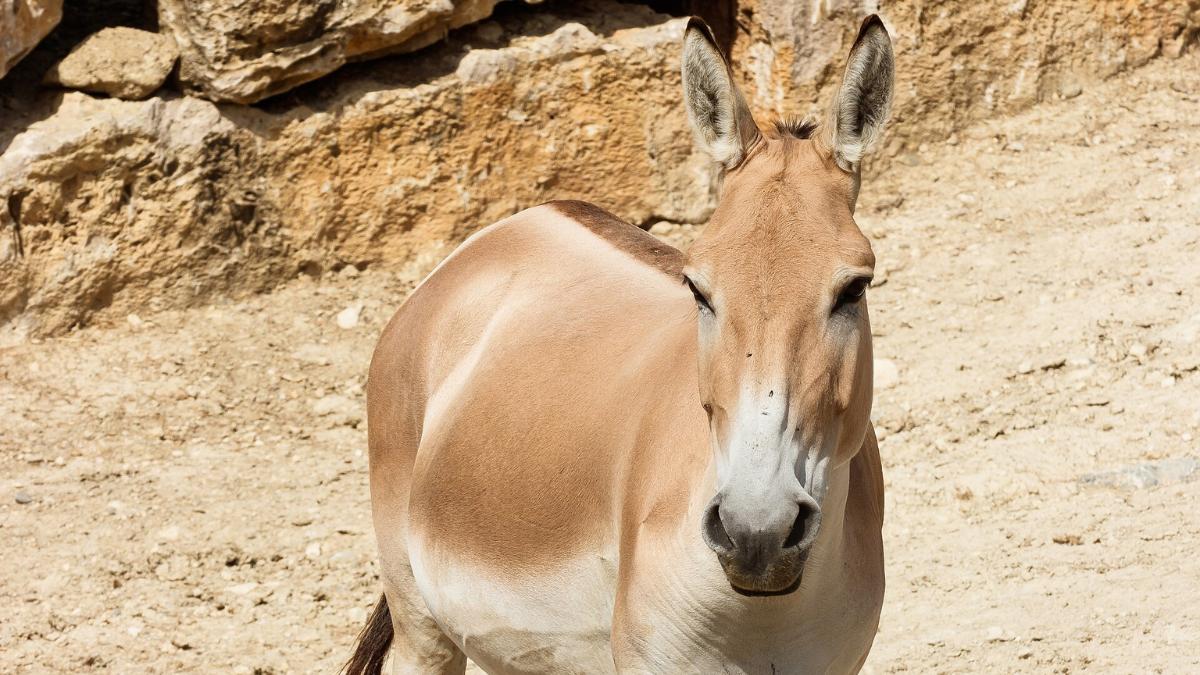
In 1982, 28 wild donkeys were reintroduced to the Negev desert, specifically in the Ramón crater area. More than 40 years later, those animals have left offspring and their return has had effects that go far beyond recovering a species that had disappeared from the area.
These large herbivores now play a role within the ecosystem and benefit other species: by moving and feeding they contribute to the dispersal of seeds and, when searching for water, they can dig in dry channels until they find it. In this way, they create small water points that can also be used by other animals.
From 28 wild donkeys to a population that once again occupied the desert
The Asiatic wild assEquus hemionus) disappeared from different areas of the Middle East during the 20th century due, among other factors, to hunting and the transformation of its habitat. In the case of the Negev, the species had disappeared from the region and conservation projects sought to recover a viable population.
In 1982, reintroduction began in the Makhtesh Ramon area, also known as the Ramon Crater. The first specimens were released after conservation programs managed to have enough animals to start a new population.
The reintroduction began with a group of 14 males and 14 females, released between 1982 and 1987 in Ein Saharonim, within Makhtesh Ramon. These 28 specimens were the basis of a population that began to reproduce and subsequently spread to other areas of the desert.
The project was successful and the donkeys began to reproduce in the wild. Later studies documented sustained population growth and progressive expansion to other arid areas of the Negev.
Recovery was not simply about increasing the number of animals. Over time, researchers observed that the presence of these herbivores could also have consequences on the functioning of the ecosystem itself.
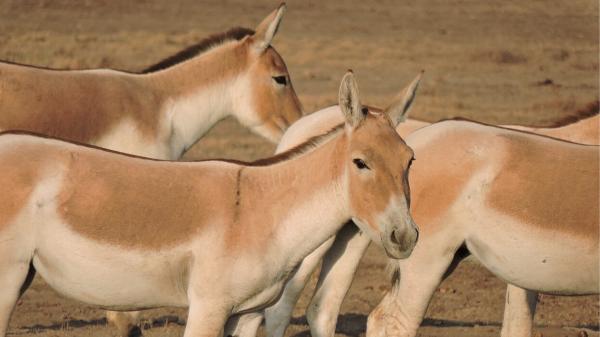
Donkeys dig in the desert and create water points for other animals
In such an arid environment, finding water can make the difference for the survival of numerous species. Wild donkeys have a particularly striking ability to locate it: they dig with their hooves in dry channels until they reach groundwater, creating small spots of water that can be available to other desert animals that do not have the same ability to dig. Gazelles, foxes, birds and small mammals can benefit from these resources when conditions are especially dry. Therefore, your activity can have an effect that goes far beyond your own needs.
Furthermore, the effect goes beyond water. By removing the soil, these equids modify small areas of the land and can allow moisture to remain for longer after the rains. In an environment where every small reserve of water can make a difference, these modifications can have consequences for other species.
That is why the concept of “ecosystem engineers” is used to describe animals capable of physically modifying their environment and generating resources that are subsequently used by other organisms.
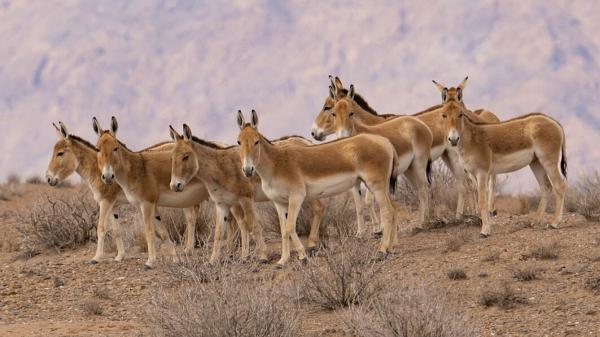
They also help disperse seeds throughout the desert
The feeding of donkeys is another mechanism that can explain their influence on desert vegetation.
Among the plants present in the Negev are acacias, trees that are especially important in these arid environments. Its fruits and pods are part of the diet of different herbivores and its seeds can travel long distances through the animals that consume them.
When a donkey eats fruits and subsequently moves through the desert, it can transport the seeds to places far from the original plant. Some end up being expelled along with feces, which provides organic matter and can favor their establishment when humidity conditions are adequate.
This process turns large herbivores into important seed dispersal agents. It does not mean that donkeys have turned a desert into a forest on their own, but it does mean that their presence can contribute to modifying the distribution of some plants and maintaining certain ecological processes.
In fact, research carried out in the Ramón crater has studied for years the effect of grazing by these animals on plant communities. The results show that its impact on vegetation cannot be summarized simply as “reforestation” and that the effects depend on the specific conditions of the ecosystem.
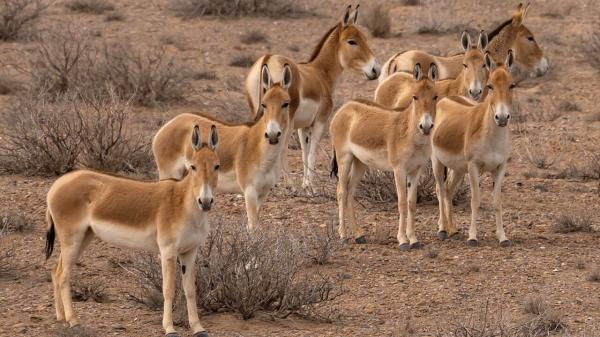
More than 40 years later, its return continues to change the ecosystem
The reintroduction of wild asses has ended up becoming a striking example of how recovering a species can have consequences that go far beyond increasing its population.
The animals have expanded from the initial release areas to other areas of the Negev and have managed to survive in one of the driest and most extreme environments in the region. Recent research estimates that the population currently exceeds 300 individuals, although figures may vary depending on the area and the method used to track it.
Their daily activity also leaves a mark on the landscape: they dig to get water, consume vegetation, transport seeds and generate resources that can be used by other animals.
The case of the Ramón crater thus reminds us that the recovery of a species does not necessarily end when the animals reproduce in the wild again. Under certain circumstances, their return can also recover some of the ecological functions they performed before disappearing.
More than 40 years after that first release, the wild asses of the Negev continue to be an example of how an animal can become, almost without intending to, one of the protagonists of the recovery of its own ecosystem.
If you want to read more articles similar to In 1982, they reintroduced 28 wild donkeys into the desert: 40 years later they have transformed the ecosystem naturally, we recommend that you enter our Ecosystems category.
