
For decades it was planted in different parts of Spain due to its rapid growth and the advantages it offered for wood production and reforestation. However, what once seemed like an effective solution has become a cause of concern for many ecologists due to its ability to expand and displace native vegetation.
The problem does not only affect plants. Where eucalyptus colonizes large areas, the diversity of insects, a fundamental piece of ecosystems, also decreases. This loss ends up having an impact on many insectivorous birds, which find less and less food and fewer suitable habitats to breed.
Various studies warn that the impact of this species can extend to the entire ecological chain. Next, we analyze why the eucalyptus is being considered a threat to biodiversity and what consequences its expansion may have on Spanish fauna and ecosystems.
The reason why eucalyptus leaves many birds without food
For decades, the eucalyptus (Eucalyptus globulus) was used in different areas of Spain due to its rapid growth, its ability to produce shade and its ornamental value. However, recent research and experience in various territories have led to it being considered an exotic species with invasive potential due to its ease of expanding and colonizing new spaces.
One of the main problems is that it forms very dense masses of vegetation that displace native plant species. By changing the composition of the forest or riparian zones, the habitat on which many animals, especially insects and birds, depend, also changes.
Insects are one of the most affected groups. The local fauna has evolved alongside native plants with which it maintains very specific relationships, both to feed itself and to complete its life cycle. Eucalyptus does not offer the same resources, so the abundance and diversity of insects may decrease in areas where this species expands.
This reduction has a direct effect on birdlife. Many insectivorous birds depend on these invertebrates for food and to raise their chicks during the breeding season. If prey availability decreases, the reproductive success and presence of certain species in those environments may also be reduced.
Furthermore, the rapid expansion of eucalyptus makes the regeneration of native vegetation difficult. Its numerous seeds, which are easily dispersed by the wind, allow it to colonize disturbed terrain, river banks or open areas in a short time. As a consequence, the landscape loses plant diversity and the ecological chains that support local fauna are simplified.
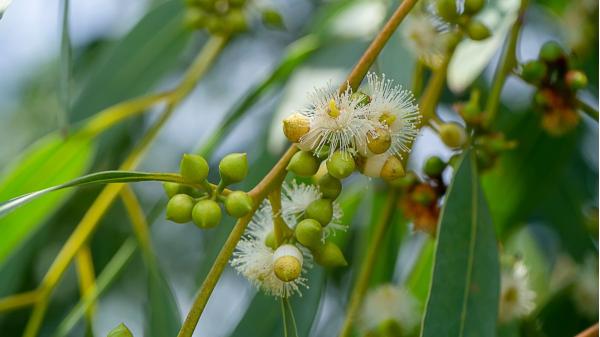
The birds and other animals that suffer the most from the expansion of the eucalyptus
The expansion of eucalyptus does not affect all fauna equally. As we have seen before, the most affected species are insectivorous birds, since they depend on a high availability of insects to feed and raise their chicks. When this tree replaces native vegetation, the resources used by many insects decrease, which ends up having an impact on the entire food chain.
Although there is no closed list of species affected exclusively by the presence of eucalyptus, experts warn that small forest birds are those that present the greatest risk. Among them are titmice, titmice, flycatchers or nuthatches, which need forests with native flora to find food constantly during spring and summer.
Other birds that use native trees for nesting or shelter may also be affected. The progressive replacement of these plant species by stands dominated by eucalyptus reduces habitat diversity and means that many birds find fewer suitable places to reproduce and fewer available food resources.
The problem is not limited to birds. The decrease in insects causes a cascading effect on other animals that also depend on them, such as some reptiles, amphibians or small mammals. Therefore, ecologists consider that controlling the expansion of invasive exotic species is an important measure to conserve biodiversity and maintain the balance of local ecosystems.
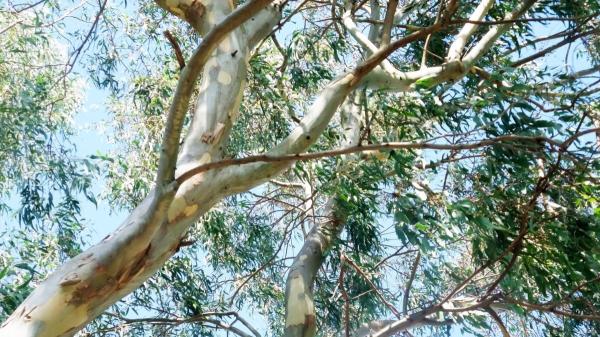
A study reveals that the impact of eucalyptus goes far beyond forests
The effects of an invasive species are not limited to displacing native plants or reducing the presence of certain birds. A study published in 2025 in the journal Forest Ecology and Management points out that the introduction of exotic trees can trigger changes at different levels of the ecosystem, affecting the vegetation, fauna and ecological processes that maintain the balance of the forest.
The researchers highlight that these changes usually occur gradually. As a fast-growing species expands, it changes the availability of light, space, and resources for native plants. As a consequence, the communities of insects, fungi and other organisms that depend on the original vegetation also change.
The study highlights that these alterations generate a cascade effect. When plant and insect diversity declines, so do the resources on which many birds, reptiles, and small mammals depend. This explains why the impact of an invasive species can extend far beyond the flora and end up affecting the entire biodiversity of the environment.
In the case of eucalyptus, its high growth and dispersal capacity means that specialists recommend monitoring its expansion outside the areas where it is grown. The objective is not only to prevent it from displacing native vegetation, but also to prevent ecological changes that, in the long term, can reduce the richness of species present in an ecosystem.
If you want to read more articles similar to It’s not just any tree: in 1960 it was planted in Spain and now it is an invasive species that is destroying insects and birds, we recommend that you enter our Biodiversity category.
