
Microplastics have become one of the most widespread pollutants on the planet and are already present in almost all known ecosystems. Various scientific studies indicate that these tiny particles not only accumulate in oceans and soils, but can also be incorporated into living organisms and alter fundamental biological processes.
Today, the accumulated evidence points to the same conclusion: microplastics are affecting animals, plants and people. From changes at the cellular level to impacts on the health of ecosystems and possible effects on the human body, scientific research continues to expand the real scope of this global problem.
How microplastics affect animal and plant cells
Microplastics (MP) and nanoplastics (NP) are polymer fragments. These particles cross cellular barriers, induce reactive oxygen species, and increase lipid peroxidation, leading to DNA damage, double-strand breaks, and epigenetic alterations such as DNA hypomethylation.
In pigs, an in vivo study was carried out, concluding that the ingestion of PET microplastics causes changes in the expression of 24 genes related to cholesterol metabolism and oxidation, increases catalase and decreases superoxide dismutase and glutathione peroxidase in the liver, with signs of liver dysfunction.
On the other hand, in vegetables, the research published in Frontiers indicates that microplastics accumulate in the roots and penetrate through the vascular system; This exposure reduces biomass, chlorophyll content, photosynthesis, and nutrient uptake. The roots of exposed seedlings show shorter length, chromosomal alterations and decreased mitotic index, indicating cytotoxicity and genotoxicity.
The impact of microplastics on ecosystems and biodiversity
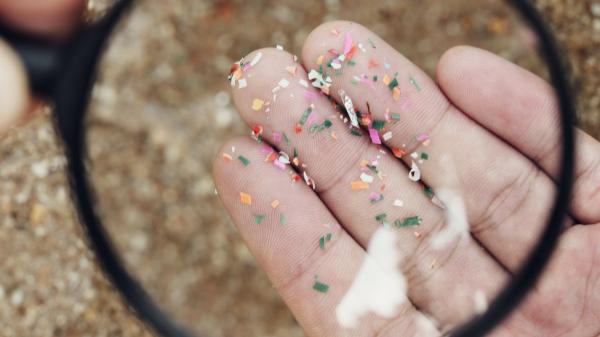
As explained in this publication by Fauna & Flora, an international charity dedicated to wildlife conservation, microplastics have been found in all oceans, from the surface to deep sediments, in polar ice, rivers and agricultural soils.
The small size of microplastics makes them bioavailable and easy to ingest, so they are transferred along food chains: zooplankton, fish, birds and marine mammals ingest them directly or indirectly.
The particles cause suffocation, intestinal obstruction and false satiety, which reduces the growth and reproduction of species, and can weaken the immune system. Plastic additives (bisphenols, flame retardants) and adsorbed contaminants such as PCBs and metals are released into the tissues of organisms, causing metabolic and hormonal alterations.
In terrestrial ecosystems, microplastics change soil structure, affect water retention and the microbial community and, when ingested by invertebrates, can be transferred to vertebrates. More than 80% of microplastics in stormwater come from land-based sources such as tire wear, road dust and litter. This flow adds to atmospheric dispersion, which transports particles to remote areas.
What effects can microplastics have on human health?
Humans are exposed to microplastics through diet, drinking water and inhalation.
An article in Stanford Medicine estimates that a person consumes the equivalent of a credit card per week. The particles have been detected in blood, placenta, lungs, brain, testicles, breast milk and urine. In vitro and in animals, exposure causes inflammation, cellular damage, metabolic imbalance and alterations of the immune system.
On the other hand, a research article published in the New England Journal of Medicine reported that 58.4% of patients undergoing carotid endarterectomy had polyethylene microplastics in arterial plaque, and their presence was associated with an increased risk of heart attack, stroke, or death. Previously, microplastics were also found in placenta, lungs, liver and breast milk, and preclinical models show that they induce oxidative stress, inflammation and apoptosis in vascular cells.
Where do microplastics come from and how do they get into the environment?
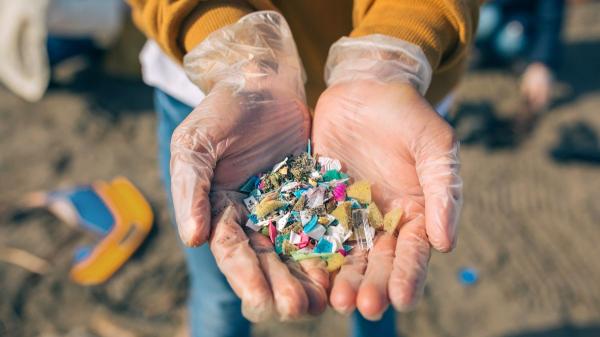
According to the research of Iwanowicz, et al. (2024) there is more than one route by which microplastics reach ecosystems:
- Wastewater treatment: treatment plants remove 95–99% of particles, but the enormous volume of water means that the effluent still contains significant quantities; Dehydrated sludge applied to agricultural soils provides thousands of particles per kilogram.
- Urban runoff: rainwater collects particles from tire wear, road dust, plastic waste and soil, and its loads can be up to 300 times higher than that of wastewater treatment plant effluent. Retention facilities (bioretention, rain gardens) can capture 83–96% of these particles, but require maintenance.
- Atmospheric dispersion is also relevant: microplastics are lifted by the wind from roads, fields and oceans, transported over long distances and deposited even in remote areas; Deposition of 22,000 tons per year is estimated in the continental US.
What is being done to reduce microplastic pollution
In September 2023, the European Union approved a restriction under REACH that prohibits the marketing of microplastics intentionally added to detergents, cosmetics, artificial grass pellets, paints and fertilizers; The measure entered into force on October 17, 2023 and is applied progressively during different transitional periods.
At the global level, the United Nations Environment Assembly approved resolution 5/14 in 2022 to negotiate a legally binding treaty on plastic pollution, including microplastics, covering their entire life cycle; The negotiating committee began its work in 2022 and the treaty is expected to be agreed between 2024 and 2026.
In the United States, for its part, the Environmental Protection Agency (EPA) presented in 2024 a national strategy to prevent plastic pollution that seeks to reduce production, innovate in design, reduce waste generation and improve the management and capture of plastics.
If you want to read more articles similar to Scientists agree: the impact of microplastics affects animals, plants and people, we recommend that you enter our Pollution category.
