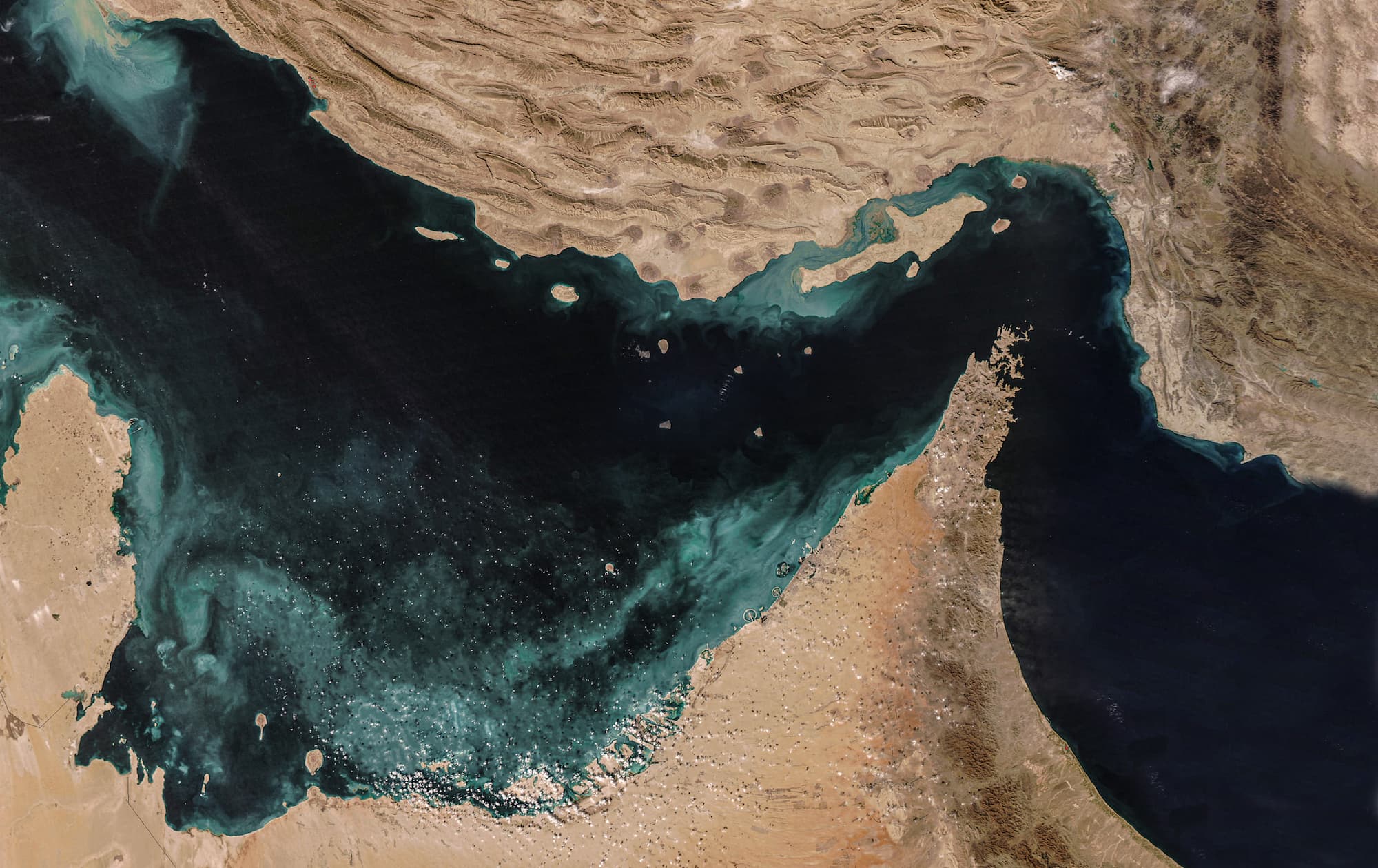
From the Strait of Hormuz to the Suez Canal to the Danish Straits: here are the most strategic bottlenecks for the world economy.
Located at strategic junctions, the straits have always represented the “obligatory” crossing points for global maritime trade. In fact, a significant portion of trade passes through these corridors and, for this reason, navigation is often regulated by international agreements. Here are the crossing points that most impact trade.
Strait of Hormuz
Having recently ended up at the center of the war between the United States and Iran, it is considered the most important “energy strait” on the planet and connects the Persian Gulf to the Arabian Sea between Iran and Oman. Despite being just 39km wide at its narrowest point, 20–21 million barrels of crude oil pass through it every day, equivalent to around a fifth of the world’s supplies.
Strait of Bab el-Mandeb
The only access to the Red Sea from the Indian Ocean, it connects the Gulf of Aden to the Red Sea between Yemen and Djibouti and is just 32 km wide at its narrowest point. About 12% of world trade passes through it. Recent attacks by Yemeni Houthi pirates against transiting ships have demonstrated how its closure can lengthen trade routes.
Suez Canal
Opened in 1869, it separates the Sinai Peninsula from the rest of Egypt and connects the Mediterranean Sea to the Red Sea, representing the main maritime shortcut between Asia and Europe. Its use allows us to avoid the circumnavigation of Africa, shortening the routes by approximately 8,900 km, while approximately 5 million barrels of oil pass through it every day.
Bosphorus Strait
It crosses Istanbul, separating Europe and Asia, and connects the Black Sea to the Sea of Marmara, constituting the only maritime connection between the Black Sea and the Mediterranean. Despite being just 700 meters wide at its narrowest point, thousands of ships pass through it every year carrying oil, gas and goods from Eastern Europe, the Caucasus and Central Asia.
Dardanelles Strait
Known in ancient times as the Hellespont, it also connects the Sea of Marmara to the Aegean Sea, completing the system of the Turkish Straits with the Bosphorus. For thousands of years it has been an obligatory passage for ships heading to and from the Black Sea, so much so that its control made Troy a rich city and, according to tradition, it was one of the main reasons that pushed the Greeks to wage war on it.
Strait of Gibraltar
Identified since ancient times with the legendary Pillars of Hercules and a meeting point between Europe and Africa, it connects the Mediterranean Sea to the Atlantic Ocean and is between 14 and 44 km wide. Today it is one of the busiest maritime corridors, crossed every year by over 100,000 ships transporting goods, oil and gas between Europe, Africa, Asia and the Americas
Strait of Malacca
Located between Malaysia, Singapore and Indonesia, it joins the Indian Ocean to the South China Sea and, despite being just 2.8 km wide at its narrowest point, it is one of the most used sea routes on the planet: around 80% of Chinese oil imports pass through it, making it the main “oil strait” in the world.
Sunda Strait
Located between the Indonesian islands of Java and Sumatra, it is the junction point between the Indian Ocean and the Java Sea and, although it is less frequented than the Strait of Malacca, it represents an alternative route for maritime trade, especially for large ships that cannot cross the Malacca.
Panama Canal
About 82 km long, it was built between 1904 and 1914 to connect the Atlantic Ocean to the Pacific, avoiding the long circumnavigation of South America via Cape Horn. Even today it is fundamental for energy security, since more than 95% of US exports of liquefied petroleum gas (LPG) destined for Asia pass through here.
Danish Straits
Formed by the Øresund, the Great Belt and the Little Belt, they constitute the only connection between the Baltic Sea and the North Sea and are essential for the trade of Sweden, Finland, Poland, the Baltic countries and Germany. Millions of barrels of oil products pass through it, mostly coming from Russian ports in the Baltic.
