
Reforestation is considered one of the main tools to restore degraded ecosystems, protect the soil and contribute to the mitigation of climate change. However, the results depend largely on how these actions are carried out and the species used in each project.
Although planting trees is often automatically associated with environmental benefits, not all reforestations produce the same results. Factors such as species diversity, terrain conditions or long-term planning can make the difference between recovering an ecosystem or altering its natural balance over time.
This is how a reforestation program in Italy has reduced biodiversity after 90 years of repopulation. For this reason, species selection is very important.
Italy’s main idea: planting a forest as a solution
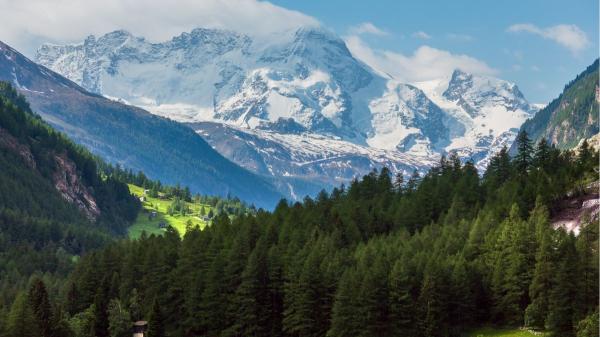
In the 1930s, Italy launched an extensive reforestation program in different areas of the Alps with the aim of stabilizing slopes, reducing soil erosion and guaranteeing timber resources for the future. The initiative also responded to a vision of territorial planning that sought to transform large mountain areas through the massive planting of trees.
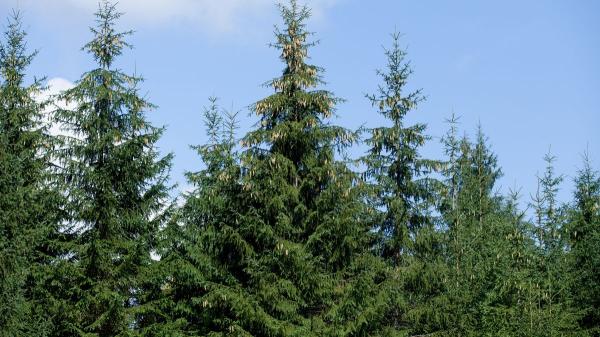
To carry out the project, the Norwegian spruce (Picea abies), a relatively fast-growing fir tree highly valued for the quality of its wood. Millions of specimens were planted in uniform rows on land that previously housed alpine meadows and native forests with a greater variety of species. For decades, these plantations were considered an example of successful forestry engineering, as they met the objectives of soil protection and wood production.
However, the passage of time has made it possible to evaluate the ecological consequences of that decision. What from the outside looked like a healthy and consolidated forest hid a more complex reality. And replacing diverse ecosystems with extensive masses of a single species altered the natural functioning of the environment. This case demonstrates that planting trees does not always equate to restoring a forest, especially when reforestation is based on monocultures that replace habitats previously rich in biodiversity.

Ninety years later the land was stabilized, but biodiversity was reduced
Almost a century after those reforestations, a team of researchers has analyzed the ecological state of these forests to check if the initial benefits have been maintained over time. The results show that, although the plantations have fulfilled their function of stabilizing the land and providing forest cover, they have also caused a significant loss of biodiversity with respect to the original ecosystems.
The study compared Norway spruce plantations with natural forests in the same region and found that the plant diversity present in the understory had been reduced by approximately 50%. The high density of fir trees limits the entry of light to the ground, which hinders the growth of many herbaceous and shrub species that require greater light to develop.
The researchers also verified that these plantations generate a much more homogeneous environment than a natural forest. The accumulation of needles acidifies the soil and modifies its chemical characteristics, favoring only certain species adapted to these conditions. As a consequence, numerous plants that were previously part of the ecosystem disappear, also reducing the resources available for animals, such as insects, birds and mammals that depend on them.
The problem of monoculture in natural ecosystems
One of the main factors that explains the loss of biodiversity observed in these plantations is the monoculture model used during reforestation. Instead of recovering the species diversity that characterized the original alpine forests, it was decided to plant almost exclusively Norway spruce. This strategy facilitated forest management and wood production, but reduced the complexity of the ecosystem.
On the other hand, natural forests are usually made up of trees of different species, ages and sizes. This variety creates different conditions of light, humidity and temperature that allow the coexistence of a large number of plants, fungi, insects, birds, mammals and other animals. On the other hand, a forest dominated by a single species offers fewer habitats and fewer resources for fauna and flora.
The researchers point out that this type of plantation is also less resistant to environmental disturbances. Genetic and structural uniformity means that pests, diseases or extreme weather events can simultaneously affect a large number of trees. In contrast, mixed forests tend to show a greater capacity to adapt to these changes, as species diversity reduces the risk of widespread damage.
What this case demonstrates about reforestation and biodiversity
The case of the Italian Alps shows that environmental restoration actions must be evaluated from a long-term perspective. A measure that at the time solved problems such as soil erosion or wood production can generate unexpected consequences for ecosystem functioning when analyzed several decades later.
The results of this research also reinforce the idea that it is not enough to plant trees to recover a forest. Biodiversity depends on many factors, including the variety of species, the structure of the forest and the conservation of natural habitats. A landscape covered in trees can store carbon or protect the land, but that does not necessarily mean that it has recovered all its ecological wealth.
This conclusion is especially relevant in a context in which numerous countries promote reforestation programs as part of their strategies to combat climate change. Experts remember that these initiatives can provide important benefits, but their design must prioritize the use of native species, biological diversity and adaptation to local conditions to prevent new forests from becoming simplified ecosystems.
If you want to read more articles similar to They planted millions of fir trees in Italy and after 90 years they discovered that they have reduced biodiversity by half, we recommend that you enter our Biodiversity category.
