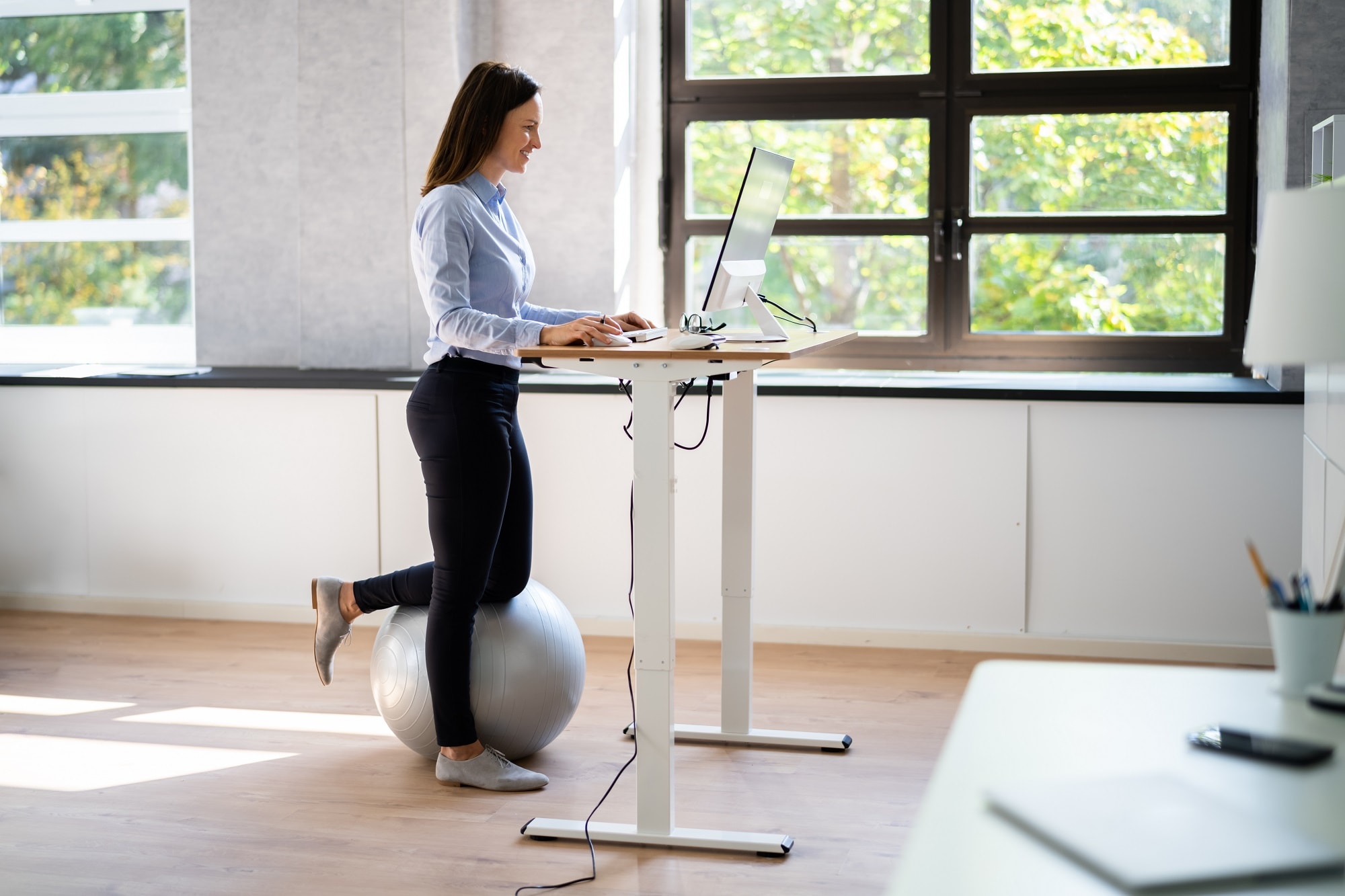
We have often spoken of the benefits of the physical exercise, even moderate, on our health: but if we told you that to improve your quality of life, just stand on the computer, or go down to a couple of bus stops first when you go to work? This is what an article of the Guardianhighlighting the benefits of the movement at ultra-low intensity called zero areaa state just higher than the inactivity during which the heart rate never exceeds 50% of the maximum speed.
Suitable for everyone. One of the reasons, explains the British newspaper, so the zero area is becoming popular is the simplicity with which you can approach: it is suitable for everyone, especially to those who are very sedentary and want to start moving but does not know where to start. The zero area is the way we pass our semi-activated life, a middle ground between the sofa and the gym: walking calmly, sprinkling home, working on the desk.
“The zero area is the bridge between sedentary lifestyle and sustainability,” says Terry Tateossian, personal trainer and nutritionist. “It reduces stress, supports mental clarity, can help blood circulation and improve digestion, and is a more pleasant and flexible way to maintain training over time”.
| Area type | Heart rate | Activity type |
| Area 0 | <50% | Slow walk, light cleaning, work on the desk standing |
| Area 1 | 50-60% |
Light heating, walk with the dog, play football with a two -year -old boy |
| Area 2 | 60-70% | Fast walk, light race, cycling, swimming, rowing |
| Area 3 | 70-80% | Cardio, racing at a sustained pace, cycling with high high to high intensity, constant intensity swimming from moderate to high. |
| Area 4 | 80-90% | Training at intervals, repeated uphill |
| Area 5 | 90-100% | Sprint, training at high intensity intervals and fast running for short periods |
Why is it good? To understand where the benefits of the activity at very low intensity derive from, one must understand how our body works. After meals, the carbohydrates turn and enter into the circle in the blood like glucose (a type of sugar): if we move a little (just a simple digestive walk) that glucose feeds our muscles in motion, and is not transformed into muscle glycogen or preserved in the liver. A 2022 study had shown that moving a little after meals instead of staying sitting drastically reduced the risk of insulin-resistance and type 2 diabetes.
It helps to burn fat. Another reason is that low intensity exercise uses a greater percentage of fat than high intensity exercise, which tends to rely on the immediate supply of energy provided by glucose. This means that to walk slowly for a long time, or walking fasting, our body draws the energy necessary from body fat deposits.
So where to start? Simply startstopping to think that the day is divided between inactivity and training, and starting to integrate movement naturally between an email and a coffee.
