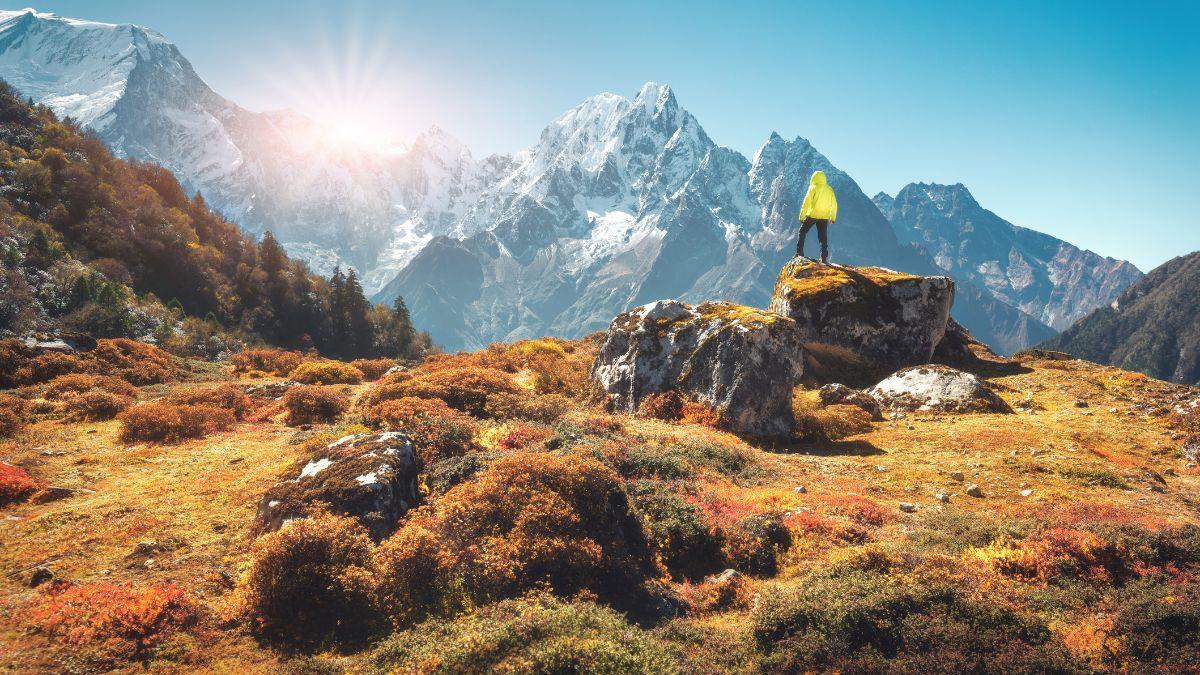
At first glance, the news seems positive: there are more and more trees and vegetation in the Himalayan mountains. However, there are many specialists who consider that this process could become one of the most visible signs of the changes that global warming is causing in one of the most sensitive ecosystems on the planet.
Recent studies based on satellite images have detected a phenomenon known as greening or greening, that is, an increase in plant cover in high mountain areas where alpine grasslands, low shrubs or surfaces practically devoid of vegetation traditionally predominated.
Recent research led by scientists at the University of Exeter concluded that plants are colonizing higher and higher elevations in different regions of the Himalayas. The authors observed significant altitudinal shifts associated with increasing temperatures.
More trees, less biodiversity: the Himalayan paradox that worries scientists
The idea that more vegetation is always beneficial is intuitive, but in ecology the situation is often more complex.
The alpine areas of the Himalayas are home to specialized ecosystems that have evolved over thousands of years under extreme conditions of cold, snow and strong winds. Many plant and animal species depend precisely on these open environments.
When trees advance up mountains, they can displace entire communities adapted to high mountains. Researchers warn that this process reduces the extent of alpine meadows and modifies the composition of ecosystems.
An analysis published by Current World Environment on treeline dynamics in the Himalayas points out that the rise of forests threatens critical habitats for many species and can lead to profound changes in regional biodiversity.
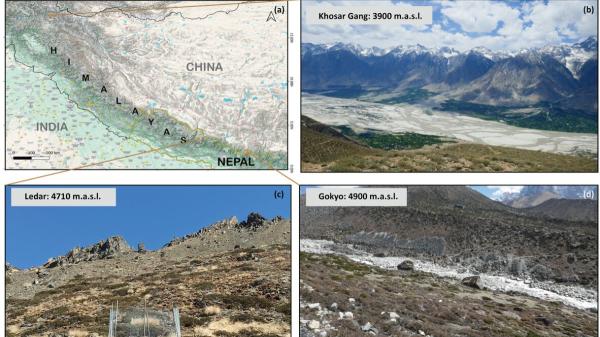
Scientists detect trees above their historical limits
Scientists use the concept of “tree line” (treeline) to describe the maximum altitude at which trees can grow.
For decades, low temperatures acted as a natural barrier that prevented forests from colonizing higher elevations. However, the global increase in temperatures is modifying this biological frontier.
Numerous works have documented that the tree line is gradually moving towards higher elevations in Nepal, India, Tibet and other regions of the Himalayas.
A review published in Earth System Dynamics concluded that there is increasing evidence of recruitment of young trees above traditional forest boundaries, a phenomenon closely linked to climate warming.
Another study carried out in Nepal observed that the dynamics of the forest line are responding to new climatic conditions, favoring the establishment of trees in areas previously too cold for their development.
The change could affect the water of millions of people
Beyond biodiversity, one of the main reasons for concern is the effect that these changes can have on the hydrological cycle.
The Himalayas are known as “the water tower of Asia.” Its glaciers, snow and mountain ecosystems feed some of the most important rivers on the planet, including the Ganges, Brahmaputra and Indus.
According to researchers at the University of Exeter, the expansion of vegetation can alter snow accumulation, soil moisture and water flows that supply millions of people downstream.
Plants modify the amount of solar radiation absorbed by the terrain, change snow retention and affect the evaporation and water storage processes. On a large scale, these changes can influence regional water availability.
Satellites show change already affecting much of Himalayas
The magnitude of the process is so great that it can be observed using satellites. A study published in the journal Remote Sensing documented significant changes in the vegetation structure of the forest transition zones of the Himalayas, detecting modifications in the composition of plant communities and in the colonization patterns of new areas.
Another research found that approximately 17.5% of Himalayan vegetation showed significant changes over the past decades and that the vast majority corresponded to greening trends.
Although factors such as grazing, fires or certain human activities also influence the dynamics of mountain ecosystems, scientists agree that global warming is the main driver of these changes.
The Himalayan region is warming at a faster rate than many lower altitude areas. This thermal increase is altering precipitation patterns, snow cycles and plant growth conditions.
The scientific publication Frontiers in Environmental Science has warned that climate change is generating profound transformations in Himalayan ecosystems, including losses of biodiversity, alterations in water availability and modifications in the distribution of species.
The image of increasingly greener mountains may seem hopeful, but for many scientists it is a warning sign.
The Himalayan alpine ecosystems are among the most vulnerable on the planet. As trees continue to advance to higher elevations, specialized species, water resources and ecological processes that have been in place for thousands of years could experience changes that are difficult to reverse.
If you want to read more articles similar to Concern among scientists: the Himalayas are filling with trees and it is not good news, we recommend that you enter our Ecosystems category.
