
In winter it is common to keep the house closed to conserve heat. However, ventilation is still necessary to renew indoor air and control humidity. The most common question is how long to ventilate the house in winter to renew the air, without losing heat or increasing heating consumption.
In this Evidence Network article we are going to give some advice on how long and how to properly ventilate a house without losing heat and we are going to explain the possible risks of ventilating too little or too much.
Why is it important to ventilate the house in winter?
In winter we tend to use radiators or other heating systems and also keep doors and windows closed for hours or even days to conserve heat. However, because of this, the indoor air becomes loaded with humidity, odors, particles and pollutants that can affect both comfort and health.
Although we may not notice it, carbon dioxide (CO₂), volatile organic compounds from furniture and cleaning products, water vapor generated when cooking or showering, and even microorganisms accumulate inside the home. Without proper ventilation, that air becomes denser and less healthy.
Furthermore, in winter the contrast between indoor and outdoor temperatures favors condensation. That trapped moisture can end up in foggy windows, stains on walls or, in the worst case, mold growth. Ventilating helps to renew the air and balance humidity levels, reducing these risks.
Another important point is general well-being. A stuffy environment can cause feelings of fatigue, headaches or difficulty concentrating. Brief daily ventilation improves air quality.
How long should you ventilate the house in winter?
The good news is that you don’t need to have the windows open for hours to renew the air. In winter, between 5 and 10 minutes a day are usually enough to properly ventilate a home.
The secret is not in the prolonged time, but in the intensity. It is preferable to do brief but effective ventilation. To do this, it is better to open the windows wide and generate cross current if possible. This is much better than leaving a window ajar for a long time. In this way, the air is renewed without the walls, floors and furniture losing too much accumulated heat.
In small homes or with good cross ventilation, even 5 minutes can be enough. In larger houses or with greater occupancy (several people, frequent cooking, hot showers, etc.), it may be advisable to go closer to 10 minutes or repeat ventilation at two or three times of the day.
If there is a lot of humidity, it is advisable to ventilate immediately after it occurs to avoid condensation and the appearance of mold. In these cases, an additional punctual ventilation of a few minutes makes the difference.
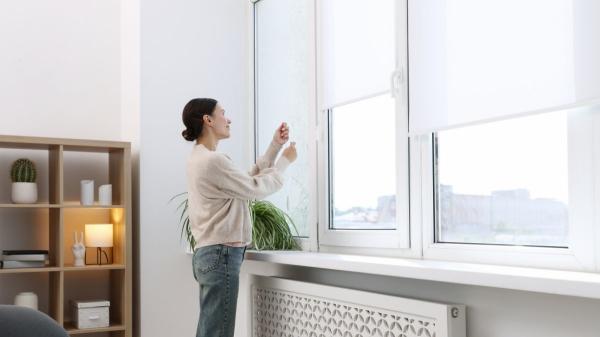
How to ventilate the house in winter without losing heat?
Ventilating in winter does not mean cooling the house completely. If done strategically, the air can be renewed without the interior temperature dropping significantly. Let’s see some ways to ventilate the house without losing heat:
- Ventilate in short, intense bursts: It is most effective to open the windows wide for 5–10 minutes, rather than leaving them ajar for a long time. This way, the air is renewed quickly without walls, ceilings and furniture (which are what really store heat) getting cold.
- Generate cross ventilation: If possible, open windows on opposite sides of the home to create draft. This speeds up air renewal and reduces the time needed. In a few minutes the interior air will have been almost completely replaced.
- Turn off the heating while you ventilate: Keeping the heating on with the windows open only causes unnecessary energy waste.
- Take advantage of the central hours of the day: If the weather permits, ventilate when the outside temperature is highest, usually mid-morning or midday. Thus the thermal contrast will be lower.
- Ventilate by room: On very cold days you can ventilate room by room, closing the doors to the rest of the house. This helps to better conserve the heat accumulated in other areas.
The risks of ventilating too little or too much
Both lack of and excess ventilation can have consequences, although for different reasons. Let’s see what the risks of ventilating too little or too much are:
Ventilate very little
- When the air is hardly renewed in winter, the interior of the home can become a stuffy and humid space. This favors:
- Buildup of moisture and condensation, especially on cold windows and walls.
- Appearance of mold, with possible negative effects on respiratory health.
- Concentration of CO₂ and other pollutants, which can cause fatigue, headache or a feeling of stale air.
- Persistence of odors in the kitchen, bathrooms or textiles.
- In the long term, excess humidity can deteriorate paintings, window frames and furniture.
Ventilate excessively
On the contrary, keeping windows open for long periods in the middle of winter can:
- Cooling the home excessively, forcing the heating to work harder later.
- Increase energy consumption and, therefore, spending.
- Reduce thermal comfort, especially in homes with small children or elderly people.
If you want to read more articles similar to How long to ventilate the house in winter: practical guide to renew the air without losing heat, we recommend that you enter our Energy Savings category.
- How long should I ventilate in winter? Klimaelec. Available at: https://klimaelec.com/cuanto-tiempo-debo-ventilar-en-invierno/
- How to ventilate your house in winter without losing heat. Cold air. Available at: https://www.airefrio.com/blog/como-ventilar-tu-casa-en-invierno-sin-perder-calor/?srsltid=AfmBOoqNr19qG1I-IkQOGowqCpcr036zxhbMi68OVaP1T18rFfXnKk7p
- Ventilate the house in winter: Benefits for your health and your pocket. Via celere. Available at: https://www.viacelere.com/blog/ventilar-casa-en-invierno-beneficios/
