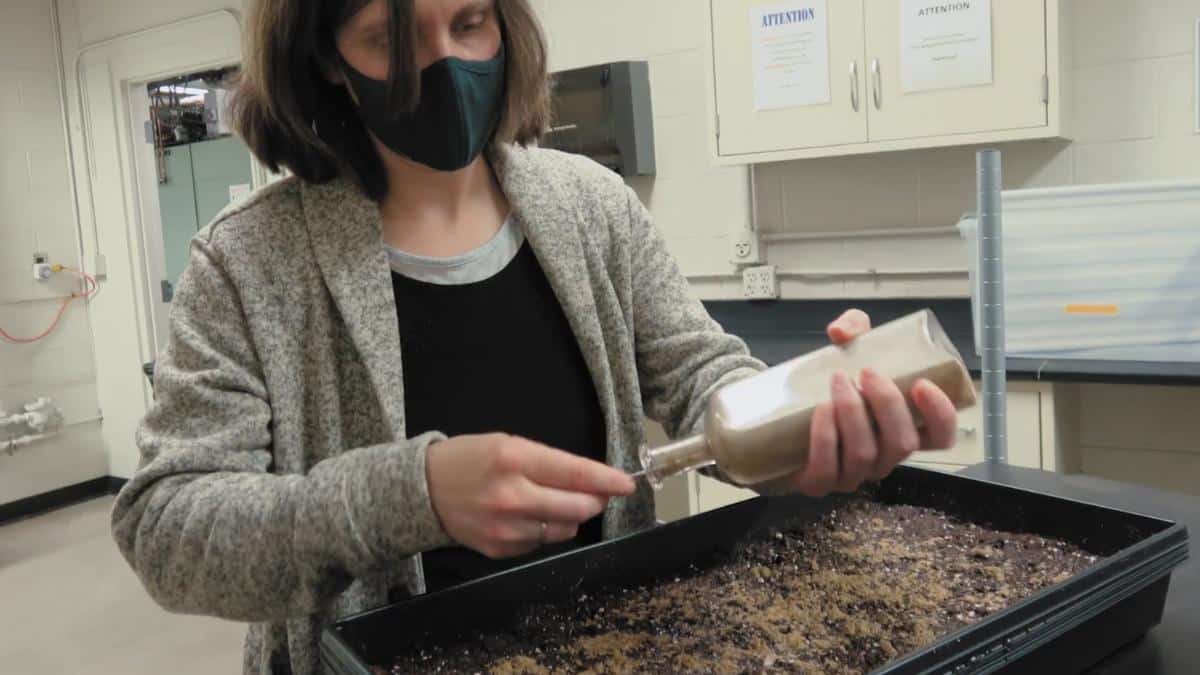
In 1879, American botanist William J. Beal buried 20 glass bottles filled with seeds and sand in a secret location on the campus of Michigan State University. Their goal seemed simple: discover how long seeds could stay alive underground and germinate again when they found the right conditions.
What Beal probably did not imagine is that that experiment would continue more than a century later. In 2021, researchers recovered one of the buried bottles and managed to germinate seeds that had remained underground for 141 years. The scientific study published later confirmed that some were still capable of growing and that the experiment still has bottles to unearth.
The experiment began with 20 bottles buried in 1879
Beal was a professor of botany and was interested in a question that had a very practical application for agriculture: how long weed seeds could remain viable in the soil.
To try to answer it, the experiment began by selecting seeds from 23 different species. He prepared 20 batches, each with seeds mixed with wet sand, and placed them in glass bottles. In each lot there were 50 seeds of each species. The bottles were buried with the opening inclined downward to prevent water from accumulating inside.
The initial idea was to open a bottle every five years and check if the seeds could still germinate. During the first decades this schedule was followed, but later the researchers extended the time between excavations so that the experiment could last for more years.
In 1920, the interval became ten years and, in 1980, it was extended to 20 years. Thus, an experiment initially designed to study the longevity of seeds for a century ended up becoming one of the longest-running scientific studies that are still active.
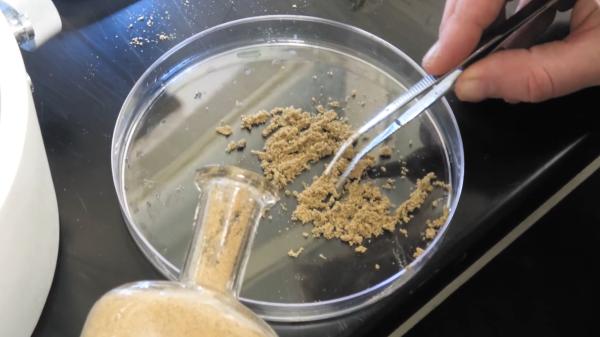
141-year-old seeds could still germinate
The most surprising excavation took place in April 2021 when, according to the published study, researchers recovered one of the bottles that had remained buried for 141 years.
The contents were taken to the laboratory to check if any of the seeds retained their ability to germinate. The result was unexpected: 20 seeds germinated during the experiment, and some did so just a few days after starting the tests.
They all belonged to the genus Verbascum. Nineteen were identified as Verbascum blattariaknown as moth mullein, while another plant turned out to be a hybrid between Verbascum blattaria and Verbascum thapsusthe common mullein. The researchers also used DNA analysis to confirm the identity of the plants, something that was obviously not available when Beal began the experiment.
The result is of special interest because not all species retained their viability for so long. According to the researchers, most of the species included in the experiment had stopped producing seeds capable of germinating during the first 60 years.
On the other hand, some seeds of Verbascum They demonstrated extraordinary resistance. Of the 50 seeds of this genus that were originally in the bottle recovered in 2021, 20 germinated, that is, 40% were still viable after 141 years.
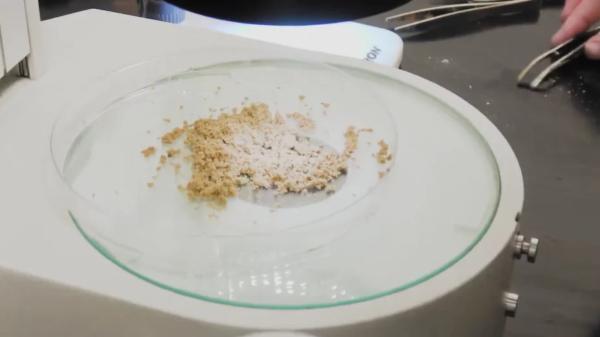
An experiment that is not over yet
The most striking thing about the story is that researchers still do not know what the survival limit of these seeds is. The fact that some have germinated after 141 years shows that they can remain viable for a very long time, but it does not allow us to establish how long they can last.
In addition, there are still buried bottles. The bottle recovered in 2021 was one of the last in the experiment and there are currently four bottles pending to be unearthed. The next one is scheduled for 2040. If the seeds germinate again, the researchers are even considering extending the interval between excavations even further.
In this way, the experiment started by Beal in the 19th century will continue at least until 2100, when the last bottle is planned to be recovered. In total, more than two centuries will have passed since the seeds were buried.
Why these seeds may be important for agriculture and conservation
Although Beal began the experiment primarily thinking about crop weeds, his results have much broader applications today.
The ability of some plants to maintain viable seeds for decades or even centuries helps to better understand the so-called soil seed banks: reserves of seeds that remain buried and can germinate again when the right conditions appear.
This knowledge is especially relevant for ecosystem restoration. For example, when land that was previously used for agriculture is recovered, knowing how long the seeds of certain species can remain viable allows us to anticipate which plants could appear years later.
The Michigan State University researchers point out precisely that the results of the experiment can help better understand the longevity of seeds and decide which species may represent a problem in restoration projects and which are less likely to persist for long periods in the soil.
If you want to read more articles similar to A scientist buried 20 bottles with seeds in 1879 and they are still digging them up: the experiment that can last until 2100, we recommend that you enter our Biodiversity category.
