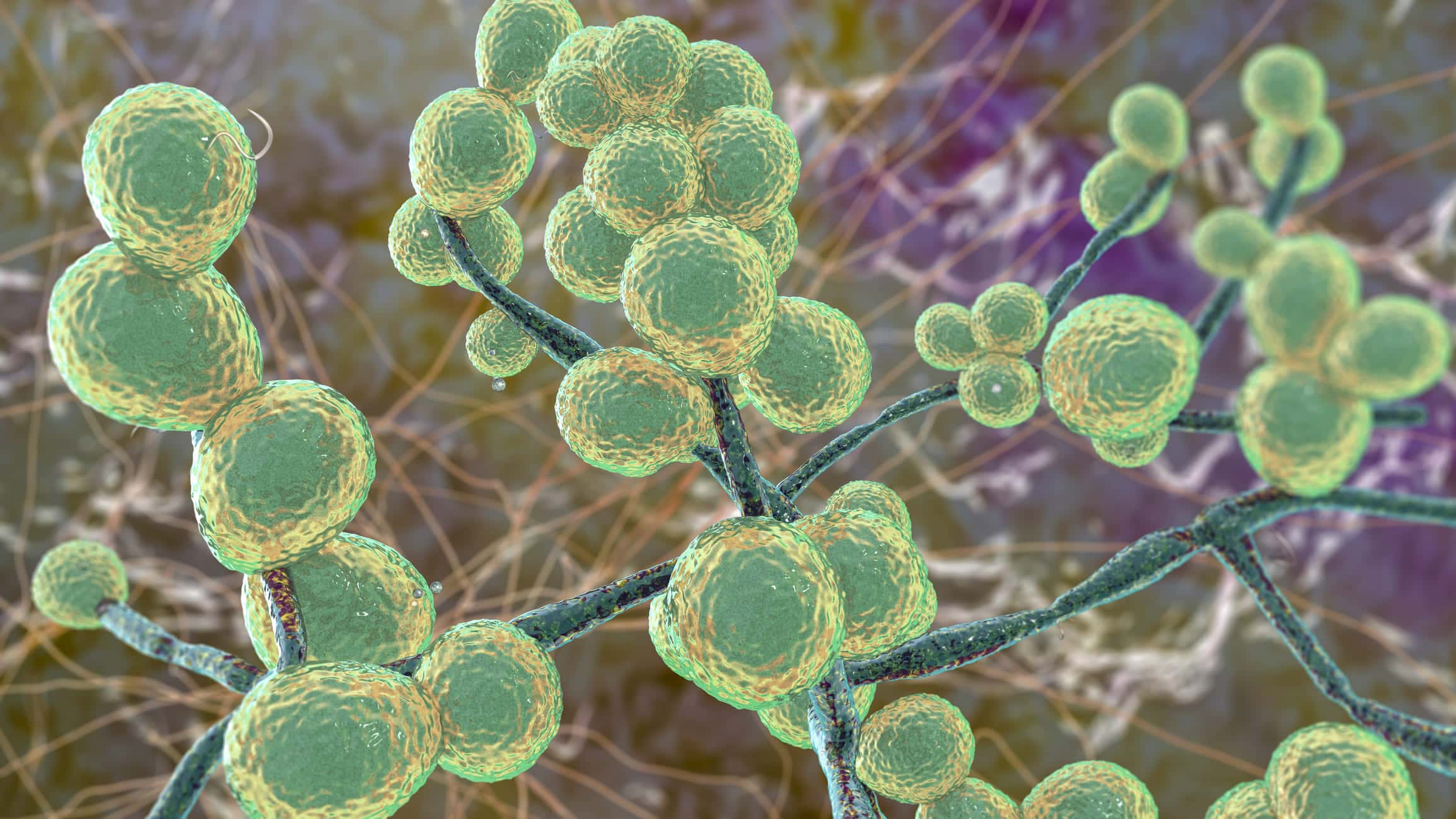
A strategy unmasked that is the lethal mushroom
Candida auris
uses to escape antifungal drugs: the hope is to weaken his resistance.
New research has revealed one of the tricks up the sleeve with which the lethal mushroom Candida aurisresponsible for highly treatment-resistant infections, escapes the action of antifungals. The microorganism is in fact capable of creating multiple copies of its entire genome, thus increasing the possibility of mutating and favoring the mutation of a gene important for the integrity of the cell wall.
The discovery, published on the server biorXiv and in publication on Nature Communicationscould facilitate new ways of combating the fungus, which is highly transmissible and difficult to eradicate, a lethal threat for patients forced into long hospital stays.
Candida auris: why it is so feared
There Candida auris is a fungus responsible for infections acquired in hospital environments in various sites of the human body, such as the skin, the urogenital tract, the respiratory tract. Very infectious, the microorganism attaches itself to medical equipment and can cause serious infections in people who are already immunocompromised: in its invasive form it can spread to the blood, bones, central nervous system, kidneys, and be highly lethal. If the infection enters the bloodstream of a vulnerable patient, the mortality rate is 45%.
There Candida auris it is often resistant to the most common antifungal drugs and is therefore considered by the WHO to be a priority to fight among pathogenic fungi.
A chance discovery
A group of mycologists from the University of Exeter were testing cultures of drugs for resistance Candida auris in the laboratory when one of the incubation plates has been left in contact with high concentrations of an antifungal for longer than expected. Unexpectedly, a tiny population of cells Candida auris she had survived antifungal treatment.
“We were surprised to find that the surviving cells had produced multiple copies of their entire genome. This is a strategy already used in the past by other mushrooms, but not very well known C. auris» explains Hugh Gifford, author of the study. This operation had in fact increased the fungus’ chances of developing favorable mutations.
Diversify your options
The cells in the culture that survived the antifungal drugs appeared to be divided into two distinct populations, some slow-growing, others faster-growing. A diversification strategy: it is in fact known to science that bacteria are able to diversify tactics to increase the chances of surviving treatments.
The fastest growing cells had a wide range of mutations in a gene – called “Crazy-one” (CRZ1) – which meant that the fungal cell walls were not as affected by the antifungal attack.
Antifungal drugs usually act on enzymes that make up cell walls, for example by increasing their permeability and thus causing fungal cells to die.
Attack from multiple fronts
The discovery demonstrates that infections from Candida auris they are more complex than previously believed, because during the same infection different populations of cells with different strategies can coexist. Now researchers will evaluate the effects of combined antifungal therapies, based on drugs with different mechanisms of action, to seek greater efficacy.
