
“Vertigo”
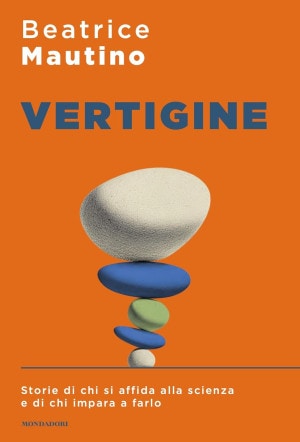
by Beatrice Mautino is a journey between science, emotions and disinformation. From osteopathy to new drugs, rigor and critical thinking.
What happens when science, which you have always told with rigor and lucidity, presents the account and throws you on the other side of the barricade? Beatrice Mautino, driven by a family story that forces her to confront the disease, takes us by the hand and accompanies us in his “Vertigo”. It is the disorientation of those who, accustomed to handling data and certainties, find themselves dealing with hope, fear and a complex health system. The result is an extraordinary book, which combines the warmth of the personal narrative with the crystalline clarity of the best dissemination.
For readers of Evidence Network“Vertigo” is an indispensable reading for at least two reasons. First, Mautino has a rare talent in disassembling and explaining complex topics, from the frontier of gene therapy to the functioning of the new drugs for obesity, with a depth that satisfies scientific curiosity without ever becoming academic. Second, the book is a powerful manual of skepticism applied: by analyzing emblematic cases such as stamina, the beautiful method or the derives of the world of well -being, it teaches us to recognize the traps of disinformation and to use the tools of critical thinking just when emotions risk taking over. It is an honest and necessary exploration of our time, which gives us back a more mature trust in science and, above all, in ourselves.
To follow, we offer you an extract from the book (© Mondadori):

What is osteopathy
Osteopathy enjoys a “natural” and safe image, which leads us to lower the critical defenses. But what’s behind the manipulations and the “scrotto” that depopulate on social networks? The extract analyzes the risks, often underestimated, of these practices, comparing them with the rigor required of traditional medicine. A journey to the origins of the discipline, founded by Andrew Taylor Still after a family tragedy, to ask us because we deal more indulgence with a practice that can have even serious adverse effects.
Osteopathy is perceived as a more natural form of medicine, capable of rebalancing the body without the need for medicines or procedures that we associate with traditional medicine. Like all the things we perceive as more natural, it also seems potentially less harmful and therefore we lower our critical defenses. We do not take into account the possible side effects with the same meter that we use, perhaps reluctantly, for a drug or surgery. We let ourselves be seduced by the promise of well -being, by manual skills, by the immediate liberation of the blockade, by the anecdotal story. We choose more lightly, perhaps based on those videos seen on social networks, without asking us much if they have a real therapeutic sense and if those who perform them have adequate training and take responsibility for their work.
Yet the risks are there. From the analysis of epidemiological studies carried out over the years we know that about half of all cervical and spinal manipulations cause adverse effects. In the vast majority of cases they are mild and transient, such as headache or discomfort in the treated area. In some cases, however, things get complicated. The probability of having a serious problem (…) would increase five times in the week following the “scrocchion”, with a reduction in the decline due to the difficulty of putting the two events in direct correlation.
There is no clear consensus in this regard. There are studies that demonstrate even high risk and others that instead reduce the question. The still points are that the risk is there and is often dependent on the operator. It happens less if the osteopath is also physiotherapist or doctor, it happens more if it is a figure who has no adequate health training. This data reinforces the need for caution, but also the importance of contacting health professionals with rigorous and recognized training, when they consider treatments involving the cervical trait.
The British scientific journalist Simon Singh, in an article published in the newspaper “The Guardian”, wrote that “if spinal manipulation was a drug with adverse effects so serious and so few benefits that would have been almost certainly withdrawn from the market”. A very strong position, for which he had received a complaint for defamation by the Association of British chiropractors, then withdrawn, but which presents a fundamental point. If it is a practice with serious risks, why do we deal with it differently, with more indulgence, from medical practices?
“Our goal has always been to arrive at a definition of osteopathy as a health profession,” explains Paola Scomachen, who with Roi has carried out a decades of course and very rough for legislative recognition, “with all the obligations of the case, professional, ethical and ethical.”
The bones of Dr. Still
It is therefore worth trying to understand how we arrived at this point. Osteopathy is a practice born well before social media, and today it is located in the center of polarized reactions: on the one hand a huge popularity and trust on the part of many patients, on the other, consistent scientific doubts, real risks and a path of institutional recognition not yet completed. To try to understand it, we must venture on a journey back in time to the origins of osteopathy.
Our journey begins one hundred and fifty years ago between Kansas and Missouri, in the midst of what would become the United States we know today. Andrew Taylor Still is a young aspiring doctor who was enrolled as a hospital assistant in a battalion of the unionist forces that fought against the so -called confederation in the American civil war.
Still’s is one of those dense stories of those who live in a border territory, between an improvised dressing for a soldier and a clash with snakes and rates, as he writes in the over five hundred pages of his autobiography. The frontier, for Still, is the very source of knowledge, is a good place to find the truth because “there is no one to disturb you”. It is here, much more than at the university, that he thinks of dedicating himself to the study of the “great book of nature”, observing wild animals and analyzing the remains of thousands of exhumed bodies of indigenous indigenous “until they become completely familiar with every bone of the human body”.
Andrew Taylor Still could have become a naturalist, but in the spring of 1864 something happened that changed his story forever and, in some ways, ours too. “A new enemy made his appearance” we read in the story of those tragic moments, an enemy who makes him even regret the war that, in comparison, had been merciful towards his family. Three of his children were affected by the “dark wings of meningitis”, the doctors tried to take care of them with the remedies available at the time, the priests offered comfort and prayers, “but everything was in vain”. The children died and Still began to do what we all do in front of the tragedies: seeking their meaning. Or build it.
Is it possible, wondering, that God left us alone “in a world of assumptions”? We must hypothesize what the cause of a disease is, what the solution can be and also imagine the result. And maybe, then, when someone dies, to think about where his soul will go. “At that moment” writes Still “I decided that God was not a God of assumptions, but a God of truth.”
It is with this thought that the story of that discipline begins that today we know with the name of osteopathy, from the union of Greek words osteon (bones) and pathos (pain, suffering). Still convinced himself that the body’s diseases are closely linked to problems of the musculoskeletal system and that consequently one should intervene on the latter to put things right and return healthy. Trusting that a loving and intelligent creator had placed the remedies to treat any disease in the human body, Still focused on the search for the right conditions so that these remedies could combine with each other to relieve suffering and developed his theories, asking their patients not to undergo traditional medicine and to follow his advice. An attitude that today we would call “by charlatan”, but we must remember that we are talking about a century and a half ago, when medicine was very different from what we know today, full of remedies that were not really such, of potions containing toxic substances and approaches without scientific value. It therefore happened that the treatments could cause more damage than the disease itself.
In a context like this, Still’s approach, which provided for particular manipulations of the body whose purpose was to restore harmony in the body to encourage healing, could really solve some problems, if only those that would still have passed by themselves. In twenty -five years of work, Still collected proselytes and made its theories more elaborate, starting from the idea that the structure and function are connected to each other in the body and that every part of the body is essential for its harmonious. In 1892 he founded the American school of osteopathy and in the same year he published a book that explained the various practices. Shortly thereafter, the spiritist Daniel David Palmer, perhaps inspired by Still’s work, developed the chiropractic, a theory according to which the misalignment of the bones, especially in the spine, is the cause of various ailments, from the specific ones of the musculoskeletal system to the most disparate conditions, such as cardiovascular diseases or even deafness.
The scientific community of the time accused Still of not having conducted controlled experiments to demonstrate the effectiveness of his treatments. However, those ideas were fascinating and found more and more supporters, conditioning the way not only to do, but also to regulate medicine, first in the United States, then in Italy. (…)
