
In Obernai, Alsace (France), Calluna Vulgaris plants are dyed with water paints on the buds: it is a local decorative practice for autumn-winter.
The opening photo portrays the Florovivaistic company fields located in the surroundings of Obeterni in Alsace, France. Here is an innovative coloring technique of Calluna Vulgariswhich transforms these ornamental plants into spectacular multicolor mosaics.
There Calluna Vulgaris It is a perennial shrub that grows spontaneously on poor soils in temperate regions. Traditionally linked to the landscapes of Brugiera, in Alsace it has become the protagonist of an ornamental practice that transforms it into a real mosaic of colors.
What are the tinted callunes
The so -called Colored callunes (in Italy they are also called colored Erics) are plants that have undergone a natural coloring treatment, capable of offering a surprising range of shades: from blue to purple, from red to orange, to green and yellow. The procedure does not alter the vitality of the plant: the callunes remain Rustic, live and resistant to the cold, even after coloring.
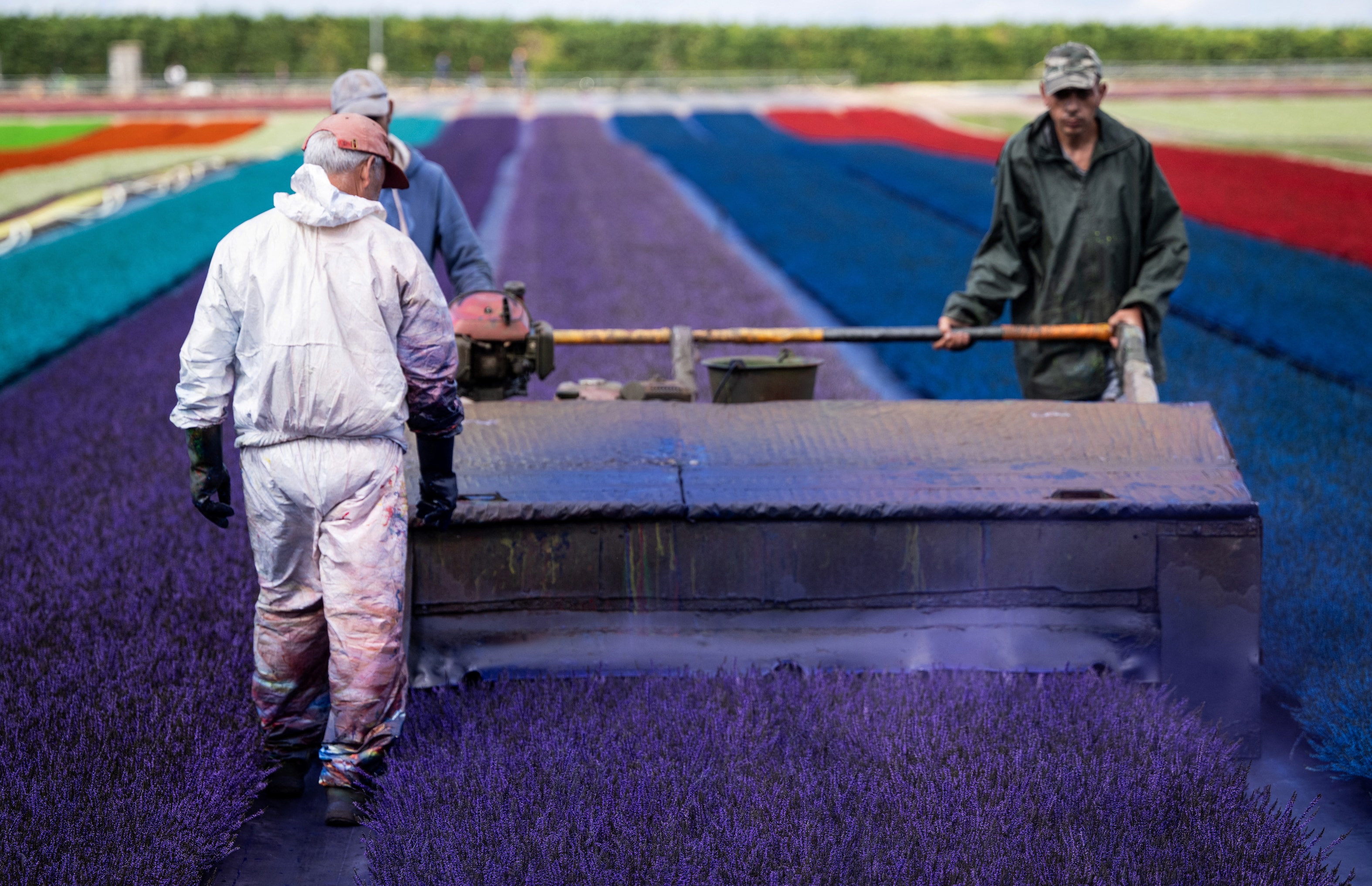
How water coloring works
The process is based on one water -based solution, natural pigments and resin. The technique, applied by fine nebulization, allows the color to fix on the florist buds, leaving the natural structure of the plant visible. In this way, the callunes take on a decorative aspect that lasts throughout the cold season. The environmental impact is contained thanks to agricultural practices that limit the use of herbicides, favor the sustainable management of water and involve the recycling of cultivation and packaging materials.
