
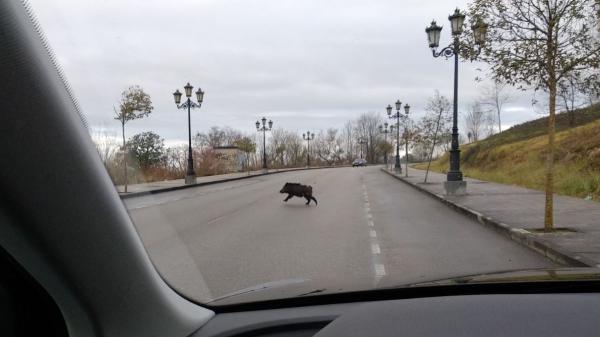
A wild boar crossing a highway in the middle of the night or a deer caught between two lanes usually generates the same reaction: the sensation that wildlife “enters” human spaces. But this reading, increasingly questioned by contemporary ecology, reverses the problem.
In reality, many specialists remember, what is happening is something else: the fauna’s territory has been progressively divided by human infrastructures. The professor of Ecology Joan Pino summarizes it with a phrase that has become a reference: «It is not wild boars or roe deer that cross our roads; “It is our roads that cross their habitats.”
Behind this idea there is a growing scientific consensus: roads, housing estates and industrial areas not only take up space, but fragment entire ecosystems, altering the movements of thousands of species and even affecting the functioning of nature in cities.
A divided territory: when infrastructure breaks ecological continuity
Roads are one of the most widespread infrastructures on the planet, and also one of the most transformative from an ecological point of view. Where there was previously continuity of forests, fields or riverbanks, lines appear that separate, isolate and condition the movement of fauna.
This phenomenon is not a metaphor: it is measurable. Habitat fragmentation reduces population sizes, makes reproduction difficult, and limits genetic exchange. In some cases, even common species begin to show signs of isolation.
The researcher specialized in infrastructure ecology Hugo Coitiño summarizes it directly by pointing out that roads “fragment the landscape”, altering the connectivity between animal populations. It is not just about abuses, but about a structural transformation of the territory.
In the same sense, the international scientific literature on landscape ecology insists that many animals cross roads because both sides remain part of their original territory, even if it is physically cut off by asphalt and traffic.
The idea is reinforced in a frequently repeated formulation in environmental dissemination: “It is not the fauna that crosses the road, it is the road that crosses its habitat”, a phrase that appears in works and analyzes on ecological fragmentation and that summarizes a broader technical consensus.
Organizations such as the International Union for Conservation of Nature and European research centers have been warning for years that ecological connectivity is as important as the protection of isolated natural spaces. Without connection between habitats, ecosystems lose resilience and capacity to adapt.
Cities are also ecosystems: biodiversity in unexpected spaces
The same logic that explains the fragmentation of natural habitats is increasingly applied to cities. Far from being completely artificial spaces, urban environments are also ecosystems where biodiversity persists, adapts and, in some cases, expands.
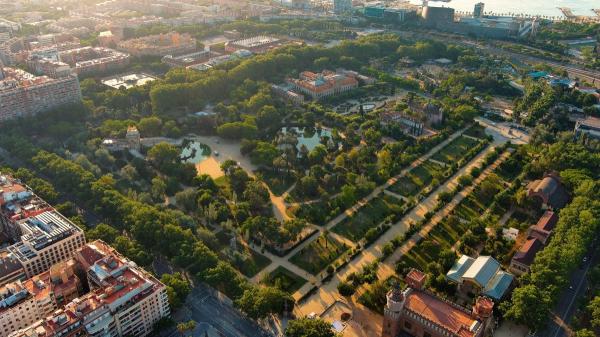
Urban parks, riverbanks, gardens, abandoned lots or green infrastructures function as refuges for birds, pollinating insects, small mammals and even larger species. The problem appears when these spaces are isolated from each other.
The ecologist Joan Pino has described urban nature as “nature in a small pot: fragile and particular”, underlining that its survival depends largely on the design of the city. It is not an autonomous nature, but deeply conditioned by urban planning.
He has also warned of a global phenomenon: “The cities of the planet are increasingly similar to each other, also in terms of their biodiversity”, a trend that ecology calls biotic homogenization. That is, many local species disappear while others, more generalists, expand in similar urban environments around the world.
This change has led organizations such as the European Environment Agency to defend more strongly the creation of connected green infrastructure: ecological corridors, interconnected parks and networks of natural spaces that allow the movement of species within cities.
Some European and Asian cities are already applying these ideas. In Barcelona, Amsterdam or Singapore, urban planning increasingly incorporates solutions based on nature, not only as an aesthetic element, but as a functional part of the urban system.
The invisible impact: noise, light and traffic as ecological forces
Habitat fragmentation is not just physical. Cities and roads also generate a series of invisible impacts that profoundly modify the behavior of fauna.
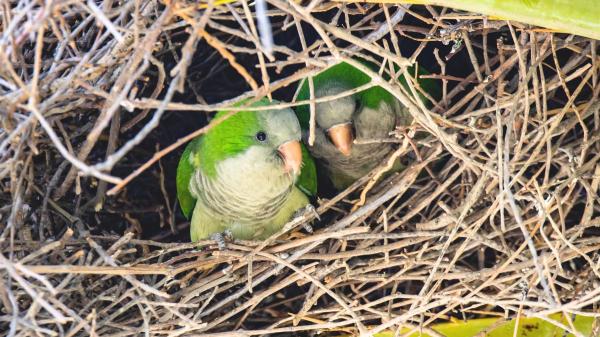
Traffic noise is one of the most studied. In urban environments, some birds have been observed modifying the frequency of their songs in order to communicate. Others alter their activity schedules to avoid the hours of greatest human presence.
Artificial light adds another layer of pressure. Light pollution affects nocturnal insects, migratory birds and bats, altering their orientation, feeding and reproduction patterns.
Organizations such as WWF and BirdLife International have warned that biodiversity loss is not only due to the destruction of habitats, but also to the degradation of those that remain.
In this context, experts insist that increasing green areas is not enough if their ecological quality and, above all, their connection are not improved. An isolated park can function as a temporary shelter, but not as part of a functional network.
Redesigning the territory: from coexistence to connectivity
The idea that runs through all these visions is simple but disruptive: the problem is not the fauna, but the design of the territory.
Joan Pino’s metaphor about ecosystems as an airplane from which parts are being removed helps to understand this: each road, urbanization or infrastructure may seem like a minor change, but the accumulated effect alters the overall functioning of the system.
In this context, the so-called wildlife crossings, ecoducts and ecological corridors are not accessory solutions, but rather attempts to reconstruct lost connections. Its objective is not only to avoid accidents, but also to recover basic ecological processes.
At the same time, urban biodiversity has become a key piece of the future of cities. Not as a decorative element, but as essential infrastructure for environmental health, climate regulation and human well-being.
The conclusion that more and more ecologists share is clear: we do not live outside of nature, but within it, although we often forget it. And as long as infrastructure continues to cross habitats without taking into account their functioning, animals will continue to do what they have always done: move through a territory that they still recognize as theirs.
If you want to read more articles similar to Ecologists agree: “It is not the wild boars who cross the roads, but the roads that cross their habitats”, we recommend that you enter our Ecosystems category.
