
In a country like Spain, where droughts are increasingly frequent and rain is distributed very unevenly, reservoirs are infrastructures that play a fundamental role in storing and managing an essential resource.
Spain has one of the largest networks of reservoirs in Europe, spread throughout practically the entire territory. Its distribution responds both to the characteristics of the climate and geography and to the needs of supply, agriculture, energy production and protection against floods.
Knowing how many reservoirs there are, where they are concentrated and which ones have the greatest capacity allows us to better understand how water is managed in Spain and why these infrastructures are essential to face periods of water scarcity and guarantee supply to millions of people.
The fact that almost no one knows: how many reservoirs there really are in Spain
In Spain there are more than 375 reservoirs distributed throughout practically all the provinces of the country. These reservoirs vary in size and function, and include everything from large hydraulic infrastructures to smaller capacity dams used for water supply, agricultural irrigation or hydroelectric energy production. In addition to the main reservoirs that are regularly monitored, there is a set of dams and smaller reservoirs that are also part of the national hydraulic inventory.
These reservoirs form an essential network for water management in Spain, given that the country lacks large natural lakes and relies heavily on these structures to regulate its water resources.
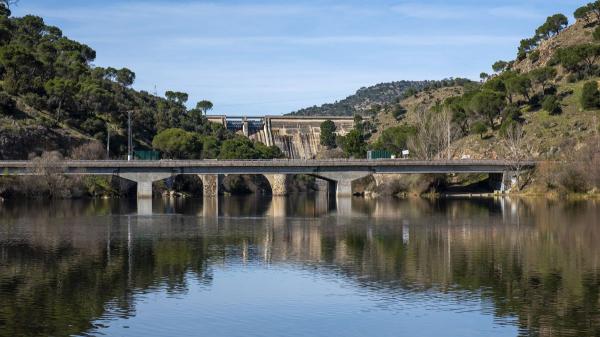
The autonomous communities that concentrate the most reservoirs in Spain
The distribution of reservoirs by autonomous communities is not homogeneous and responds to both geographical and climatic factors, in addition to the historical water management needs in each territory.
The communities with the greatest number of reservoirs tend to be those with large hydrographic basins and a strong dependence on irrigation and river regulation. Particularly noteworthy are Castilla y León, Andalusia, Castilla-La Mancha and Catalonia, which account for a very significant part of the national total. In these regions, reservoirs fulfill key functions for urban supply, agriculture and, in some cases, hydroelectric production.
In the north of Spain, communities such as Galicia, Asturias and Cantabria have a smaller number of reservoirs, but many of them have a high relative capacity thanks to the abundance of rainfall and the orography favorable for the construction of dams. In these areas, water regulation is less critical than in drier regions.
On the contrary, in communities with a smaller territorial area or with a lower availability of suitable spaces, such as Madrid, La Rioja, Murcia or the Balearic Islands, the number of reservoirs is smaller. Even so, its role is strategic to guarantee water supply in periods of drought and to sustain urban and agricultural consumption.
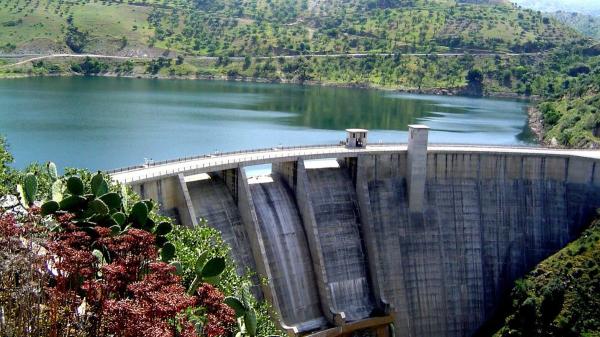
The water giants in Spain: where are the reservoirs with the greatest capacity
The largest reservoirs in Spain are located mainly in the interior of the peninsula and in large hydrographic basins, where the orography and the availability of land have allowed the construction of high-capacity infrastructures. Its main function is usually the regulation of water for irrigation, supply and hydroelectric production.
- The La Serena reservoir, located in the province of Badajoz (Extremadura) and belonging to the Guadiana basin, is considered the largest in Spain by capacity. It plays a key role in regulating the Guadiana River and supporting agriculture in the area.
- Very close in importance is the Alcántara reservoir, also in Extremadura and on the Tagus River, in the province of Cáceres. In addition to its great capacity, it stands out for its relevance in the generation of hydroelectric energy.
- In Castilla-La Mancha, the Buendía reservoir, located between the provinces of Cuenca and Guadalajara, is one of the best known. It is part of the Tagus headwater system and is closely linked to the management of the Tagus-Segura transfer.
- Another notable reservoir is the Mequinenza reservoir, located in the province of Zaragoza, on the Ebro river. Together with the Ribarroja and Flix reservoirs, it forms an important group for the regulation of the Ebro and electricity production in the northeast of the peninsula.
Spain has hundreds of reservoirs, but are they enough to protect us from drought?
Having hundreds of reservoirs does not mean that Spain is completely protected from drought. These infrastructures can only store the water they receive and, when rainfall is scarce for several months or dry years follow, the reserves decrease even though there is a large storage capacity.
Furthermore, national data can hide very different situations. One basin may present relatively high levels while another is experiencing a critical situation, since rainfall, agricultural and urban demand, and water availability are not distributed uniformly throughout the territory.
Reservoirs save time and reduce the impact of dry periods, but they do not create water. To face prolonged droughts, savings, irrigation efficiency, loss reduction and management adapted to the conditions of each basin are also essential.
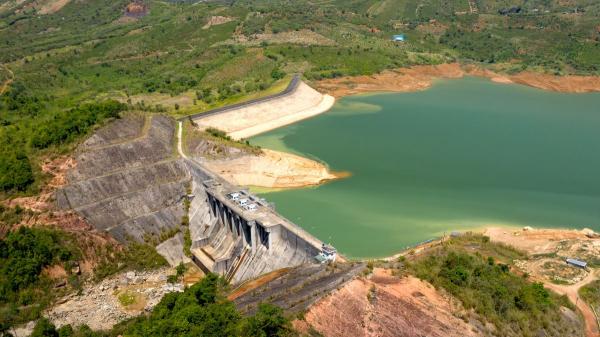
Much more than storing water: this is how reservoirs help in everyday life
Reservoirs in Spain fulfill multiple functions that are essential for water management and for different economic and social activities. Let’s see what its main uses and functions are:
- Drinking water supply: Reservoirs guarantee the supply of water to cities and urban centers, especially in periods of drought. They allow water to be stored during rainy seasons to ensure domestic and industrial consumption when rainfall is scarce.
- Agricultural irrigation: One of the most important functions in Spain, where much of the territory has a dry or irregular climate. Reservoirs regulate the flow of rivers and ensure water for agriculture, increasing productivity and reducing dependence on rainfall.
- Hydroelectric energy production: Many reservoirs are used to generate electricity by taking advantage of the power of water. This energy is renewable and contributes to reducing emissions.
- Flood control: Reservoirs act as natural regulators, retaining large volumes of water in episodes of intense rain. In this way, they reduce the risk of flooding downstream and protect urban, agricultural areas and infrastructure.
- Maintenance of ecological flows: They allow water to be released in a controlled manner to maintain the minimum necessary flow in rivers, favoring the conservation of aquatic ecosystems and associated biodiversity.
- Industrial use: Certain industrial sectors depend on water stored in reservoirs for their production processes, both as raw material and for cooling or cleaning.
- Leisure and tourism: Many reservoirs have become recreational spaces where activities such as fishing, water sports or rural tourism are practiced.
- Strategic reserve against droughts: In a context of climate variability, reservoirs function as a security reserve that allows us to face prolonged periods of water scarcity with greater response capacity.
If you want to read more articles similar to “Having many reservoirs does not prevent drought”: how many there are in Spain and where they are concentrated, we recommend that you enter our Other environment category.
