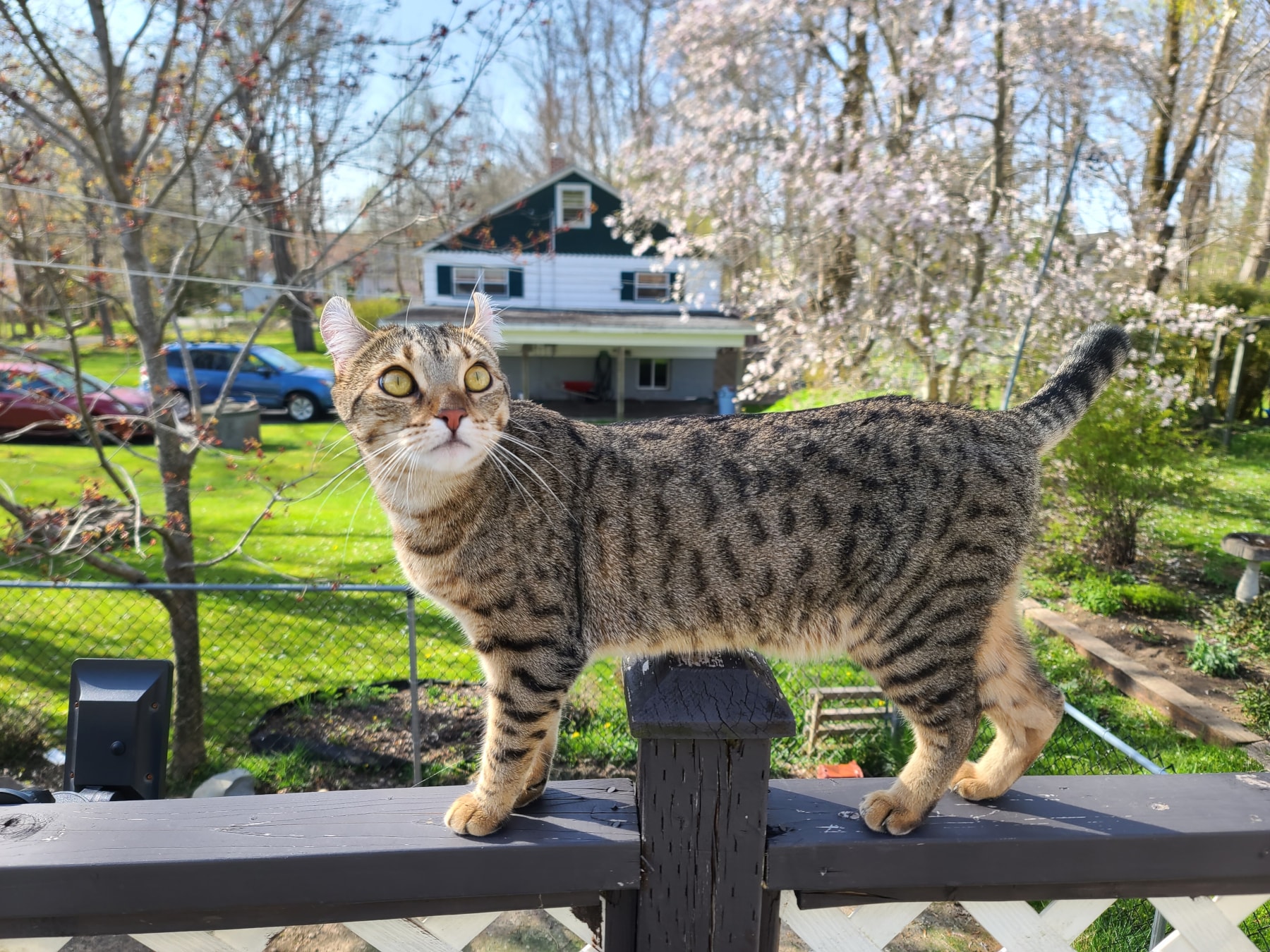
There is a new feline breed in the city: it is called Highlander and, although the breeders have been working on it since 2004, it has been recognized as such only recently by the International Cat Association, and is still being evaluated at other similar associations.
Plush cat? Created to look like a lynx, but with curious ears folded over themselves, the Highlander race was born in order to have a cat with the appearance of a large feline without for the same predatory instincts as the wild ones.
This breed has not been recognized by some associations because there are big doubts about possible health problems, especially caused by the ears.
Highlander, the immortal mix. The history of the Highlander race begins in 2004: it is an intersection of two other recognized breeds, one of which considered “experimental”. This is the desert Lynx, a breed created especially to look like Linci, complete with a short and squatting tail and the same decorations on the fur. The other breed that composes the mix of the highlander is the jungle curl, in turn a mix between an tame breed (the American curl) and a wild (the Afro -Asian wild cat).
The mixture between the two breeds has therefore generated the highlander, which looks very like a lynx (but not necessarily it has a short tail: it is one of the most variable features inside the breed) but has the curious folded ears of the jungle curl.
They are cats of important dimensions: from adults they reach 10 kg, which makes them one of the largest breeds in the world (the Maine Coon still beats them). And above all, the associations that deal with feline breeds describe it as extremely playful and affectionate towards humans, even those who know little.
The problems of the immortal. As always when it comes to pure breeds, however, especially the most experimental ones, doubts also arise, such as about the highlander cat.
The first is obviously linked to the shape of the ears: the risk that it can create their health problems, so much so that the most important English association that deals with feline breeds, the GCCF, classifies the highlander as “breed not recognized due to health risks”, a consequence of the mix of different races, including some wild.
The ethical question. Then there are more general problems related to selective breeding and the creation of artificial breeds: obviously it is not a question linked only to the highlander but to all pets, and to doubt about how ethical it is to treat them as a commodity (a specimen of highlander can cost up to € 2,000).
But this, in fact, is a wider speech, which deserves a separate study …
